

Gain insight into traumatic brain injury, its impact on health, and the importance of early diagnosis and intervention.
Table of Contents
Introduction
Traumatic brain injury (TBI) is a significant cause of death and disability worldwide. This condition results from an external force impacting the head, which can lead to both immediate and lasting effects on the brain, nervous system, musculoskeletal system, and other vital organs. The growing complexity and prevalence of TBI make it essential for healthcare professionals such as chiropractors and nurse practitioners to understand its mechanisms, symptoms, and the value of an integrative, holistic approach to care.
What Is a Traumatic Brain Injury?
A traumatic brain injury is any non-congenital, nondegenerative injury to the brain caused by an external physical force. This force can result in temporary or permanent alterations in consciousness, cognitive function, or physical ability. TBIs range from mild (commonly called concussions) to severe injuries that can result in long-term disability or death (Mayo Clinic, 2021).
Causes of Traumatic Brain Injury
TBI commonly arises from situations where rapid movement, violent jolt, or direct blow to the head or body affects brain tissue. Typical causes include:
-
Falls: These are the most frequent cause, particularly in young children and older adults.
-
Motor vehicle accidents: Collisions involving cars, bikes, motorcycles, or pedestrians.
-
Violence: Assaults, gunshots, domestic violence, or shaken baby syndrome.
-
Sports injuries: Activities like football, soccer, hockey, boxing, and skating.
-
Military service: Blast injuries from explosions.
-
Other incidents: Workplace accidents, recreational injuries, and accidents involving sharp or blunt objects.
The degree of damage depends on various factors, including the nature and intensity of the force involved (Mayo Clinic, 2021).
Symptoms of Traumatic Brain Injury
Symptoms vary based on the injury’s severity and can be physical, sensory, cognitive, emotional, or behavioral. They may develop immediately after injury or take hours, days, or weeks to emerge.
Mild TBI (Concussion) Symptoms
-
Physical: Headache, nausea, vomiting, fatigue, dizziness, or problems with speech.
-
Sensory: Blurred vision, sensitivity to light/noise, ringing in the ears, change in smell or taste.
-
Cognitive/mental: Short-term memory issues, slow thinking, confusion, difficulty concentrating, feeling dazed.
-
Sleep: Difficulty falling asleep, insomnia, or excessive sleep.
-
Behavioral/emotional: Mood swings, depression, irritability, anxiety.
Moderate to Severe TBI Symptoms
-
Physical: Persistent or worsening headache, seizures, repeated vomiting, loss or fluctuation of consciousness, clear fluid from nose/ears, weakness or numbness, loss of coordination.
-
Cognitive/mental: Profound confusion, slurred speech, agitation, combativeness, difficulty awakening from sleep, coma.
-
Other signs: Dilated pupils, visual disturbances, facial muscle paralysis, difficulty swallowing, hearing loss.
Additional Clinical Signs Uncovered by History and Questioning
Chiropractors and nurse practitioners often identify subtle symptoms through detailed patient history and clinical questioning:
-
Visual problems
-
Balance and coordination issues
-
Nausea and digestive complaints
-
Sensitivity to light/sound
-
Cognitive difficulties: Slower reading, slow information processing, and confusion.
-
Emotional changes: Anxiety, depression, irritability.
-
Insomnia and disrupted sleep patterns
-
Fatigue
Uncovering these issues often requires looking beyond obvious trauma to examine recent changes in daily functioning, attention, sleep, or relationships (Mayo Clinic, 2021; Cleveland Clinic, 2024).
How TBI Affects the Body: Musculoskeletal, Neurological, and Vital Organ Systems
Neurological Effects:
TBI primarily disrupts the nervous system by:
-
It can damage brain tissue, nerves, and blood vessels.
-
Causing either focal (localized) or diffuse (widespread) injuries.
-
Leading to neurochemical imbalances and chronic inflammation, which can impair function for months or years (Jassam et al., 2017; Risbrough et al., 2022).
Musculoskeletal Effects:
The impacts of TBI often reverberate through the:
-
Neck and spinal musculature: Whiplash and associated neck pain or instability can occur with head trauma.
-
Muscular coordination: Damage to brain areas governing movement can result in poor motor control, spasticity, or joint instability.
-
Posture and balance: Vestibular and proprioceptive dysfunction manifest as dizziness, frequent falls, and abnormal gait.
Vital Organ Effects:
TBI can also have indirect effects on organs such as the heart, lungs, and gastrointestinal system through:
-
Disrupted autonomic regulation (e.g., changes in heartbeat, breathing).
-
Increased risk for hormonal and metabolic imbalances.
-
Sleep disruption and chronic stress effects impact overall health (Kaur & Sharma, 2018).
Clinical Assessment: Chiropractors and Nurse Practitioners
A thorough evaluation by a chiropractor or nurse practitioner involves:
-
Detailed history: Questioning about recent head injuries, accidents, sports participation, or falls.
-
Symptom inventory: Assessing for memory gaps, sleep changes, mood, sensitivity to the environment, and unexplained pain.
-
Functional neurological examination: Testing muscle strength, reflexes, sensation, eye movements, and balance.
-
Assessment tools: Glasgow Coma Scale (for acute assessment), postural and balance testing, visual tracking, cranial nerve exams, and cognitive screening tools.
Early recognition of subtle changes is key to appropriate management and referral for further diagnostics or specialty care (Galgano et al., 2017).
A Hidden-Symptom Checklist Example You Can Bring To Your Visit
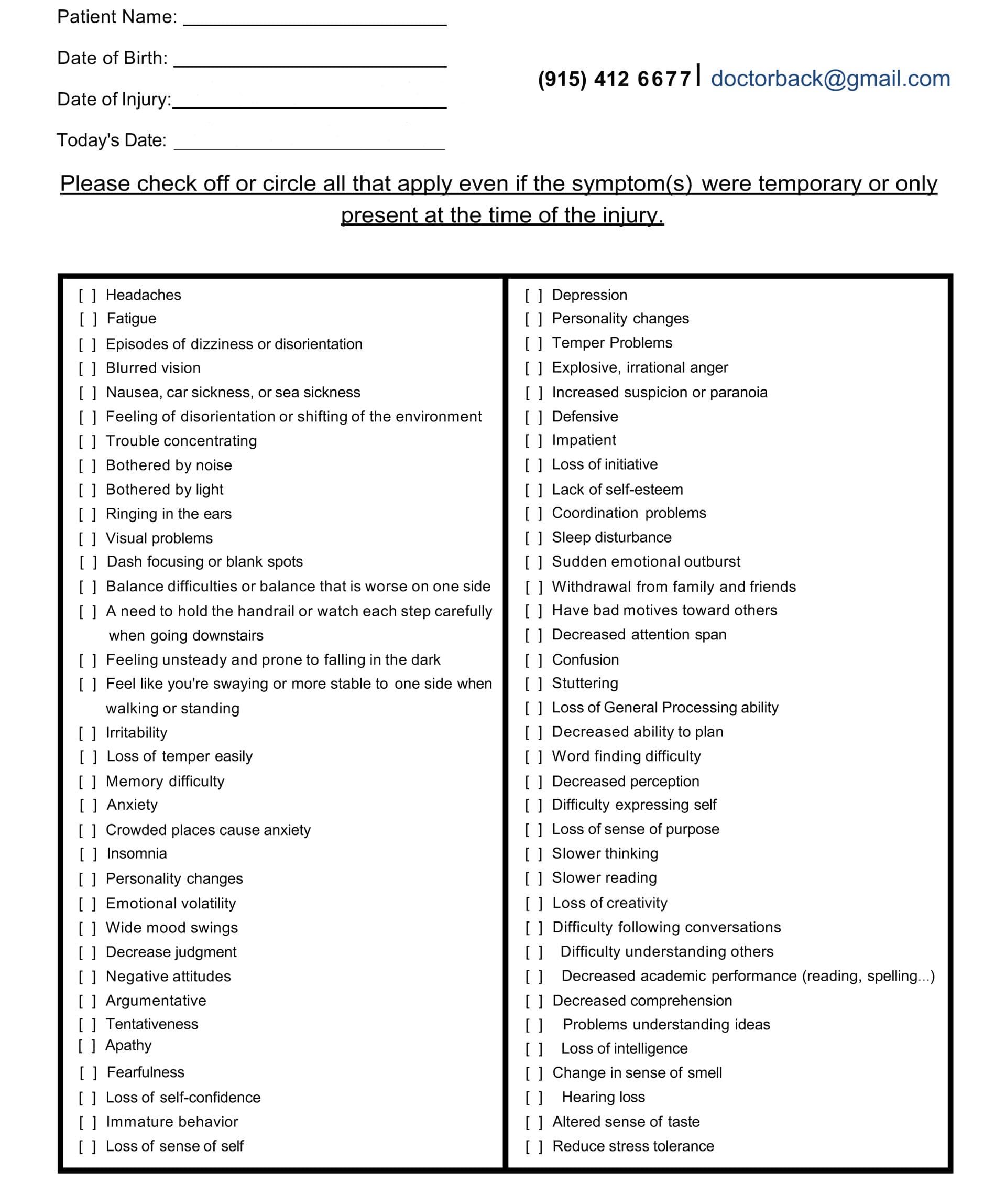
Integrative Approaches to TBI: The Role of Chiropractic and Nurse Practitioner Care
An integrative approach leverages the unique strengths of both chiropractic and nurse practitioner disciplines. This coordinated care strategy addresses both physical and nonphysical consequences of TBI through collaborative management.
Chiropractic Care:
-
Spinal adjustments: Restore movement and function to the spine, reduce nervous system irritation, and potentially relieve headaches, neck pain, or musculoskeletal symptoms.
-
Soft-tissue therapies —massage, myofascial release, and stretching — help reduce muscle tension and improve circulation.
-
Rehabilitation exercises —vestibular (balance), proprioceptive (body awareness), and postural—train the nervous system to compensate for deficits.
-
Neuro-functional integration: Addressing the connection between brain injury, coordination, posture, and muscle activation.
Nurse Practitioner Management:
-
Medical oversight: Monitoring for cognitive, behavioral, and metabolic complications.
-
Medication management: Controlling symptoms such as headaches, mood disorders, seizures, or spasticity.
-
Cognitive support: Guiding patients with cognitive rehabilitation, memory strategies, and referrals to occupational or speech therapists as needed.
-
Emotional and social support: Addressing depression, anxiety, and stress. Connecting families with resources.
A joint care plan ensures regular communication and thorough monitoring, allowing early detection of complications and adjusting treatment as recovery progresses (Vella et al., 2017).
Holistic/Comprehensive Treatment Plan for TBI
An effective, holistic TBI management plan may include:
-
Spinal and musculoskeletal care: Gentle chiropractic adjustment, posture correction, and manual therapies to reduce nervous system load and support healing.
-
Exercise and rehabilitation: Targeted movement re-education to improve strength, balance, eye-hand coordination, and gait stability.
-
Dietary and metabolic support: Nutritional guidance to support brain healing (anti-inflammatory diets, proper hydration, nutrient supplementation).
-
Cognitive training: Home-based brain games and memory exercises.
-
Emotional counseling: Referrals for psychological support or counseling, mindfulness training, and stress management.
-
Sleep optimization: Strategies to restore healthy sleep cycles (sleep hygiene, relaxation techniques, adjustments to medication).
-
Medical monitoring: Nurse practitioners track for infection, seizures, blood pressure issues, and provide prescriptions or advanced therapies as needed.
-
Patient and family education: Clear explanations, supportive resources, and hands-on demonstrations ensure safety, engagement, and empowerment in recovery.
Clinical observations by Dr. Alexander Jimenez, DC, APRN, FNP-BC, suggest that early detection of subtle neurological signs, ongoing musculoskeletal assessment, and a collaborative, individualized care plan greatly improve functional outcomes for TBI patients (Jimenez, 2025).
Conclusion
Traumatic brain injuries have complex and far-reaching effects beyond the brain itself. Symptoms often include headaches, dizziness, cognitive problems, mood shifts, sensory disturbances, sleep challenges, and musculoskeletal discomfort. Chiropractors and nurse practitioners are uniquely positioned to uncover and address these issues through collaborative, integrative care. By combining hands-on therapies, medical oversight, targeted exercises, emotional and lifestyle support, and vigilant monitoring, an integrative approach can support optimal recovery and long-term well-being for those living with TBI.
References
-
Acute Management of Traumatic Brain Injury (Vella et al., 2017)
-
An update on diagnostic and prognostic biomarkers for traumatic brain injury (Wang et al., 2018)
-
Dr. Alexander Jimenez, DC, APRN, FNP-BC. Clinical Observations (Jimenez, 2025)
-
Kaur, P., & Sharma, S. (2018). Recent Advances in Pathophysiology of Traumatic Brain Injury (Kaur & Sharma, 2018)
-
May Clinic: Traumatic Brain Injury – Symptoms & Causes (2021)
-
Neuroimmunology of Traumatic Brain Injury (Jassam et al., 2017)
-
Role of inflammation in TBI-associated risk for neuropsychiatric disorders (Risbrough et al., 2022)
-
Traumatic Brain Injury (Bailes & Borlongan, 2020)
-
Traumatic brain injury: Current treatment strategies and future endeavors (Galgano et al., 2017)
-
What is the role of chiropractic care in the management of mild traumatic brain injury? Experience and cases (Jimenez, 2025)
Feeling Better Than Ever After a Semi-Truck Accident- Video
Post Disclaimer
General Disclaimer, Licenses and Board Certifications *
Professional Scope of Practice *
The information herein on "Traumatic Brain Injury: Understanding the Long-Term Effects" is not intended to replace a one-on-one relationship with a qualified health care professional or licensed physician and is not medical advice. We encourage you to make healthcare decisions based on your research and partnership with a qualified healthcare professional.
Blog Information & Scope Discussions
Welcome to El Paso's Premier Wellness and Injury Care Clinic & Wellness Blog, where Dr. Alex Jimenez, DC, FNP-C, a Multi-State board-certified Family Practice Nurse Practitioner (FNP-BC) and Chiropractor (DC), presents insights on how our multidisciplinary team is dedicated to holistic healing and personalized care. Our practice aligns with evidence-based treatment protocols inspired by integrative medicine principles, similar to those on this site and on our family practice-based chiromed.com site, focusing on naturally restoring health for patients of all ages.
Our areas of multidisciplinary practice include Wellness & Nutrition, Chronic Pain, Personal Injury, Auto Accident Care, Work Injuries, Back Injury, Low Back Pain, Neck Pain, Migraine Headaches, Sports Injuries, Severe Sciatica, Scoliosis, Complex Herniated Discs, Fibromyalgia, Chronic Pain, Complex Injuries, Stress Management, Functional Medicine Treatments, and in-scope care protocols.
Our information scope is multidisciplinary, focusing on musculoskeletal and physical medicine; wellness; contributing etiological viscerosomatic disturbances within clinical presentations; associated somato-visceral reflex clinical dynamics; subluxation complexes; sensitive health issues; and functional medicine articles, topics, and discussions.
We provide and present clinical collaboration with specialists from various disciplines. Each specialist follows their professional scope of practice and licensure jurisdiction. We use functional health & wellness protocols to treat and support care for musculoskeletal injuries or disorders.
Our videos, posts, topics, and insights address clinical matters and issues that directly or indirectly relate to our clinical scope of practice.
Our office has made a reasonable effort to provide supportive citations and has identified relevant research studies that support our posts. We provide copies of supporting research studies upon request to regulatory boards and the public.
For further discussion on how this information relates to specific care plans or treatment protocols, please ask Dr. Alex Jimenez, DC, APRN, FNP-BC, or contact us at 915-850-0900.
We are here to help you and your family.
Blessings
Dr. Alex Jimenez DC, MSACP, APRN, FNP-BC*, CCST, IFMCP, CFMP, ATN
Email: [email protected]
Multidisciplinary Licensing & Board Certifications:
Licensed as a Doctor of Chiropractic (DC) in Texas & New Mexico*
Chiropractic Licenses:
Texas DC License #: TX5807, Verified: TX5807
New Mexico DC License #: NM-DC2182, Verified: NM-DC2182
Nurse Practitioner Licenses:
Texas APRN License #: 1191402, Verified: 1191402 *
New Mexico CNP License #: 90560, Verified 90560
Florida APRN License #: 11043890, Verified: APRN11043890 *
Colorado License #: C-APN.0105610-C-NP, Verified: C-APN.0105610-C-NP
New York License #: N25929, Verified N25929
Georgia APRN License #: GAA-NP005701
Multi-State Advanced Practice Registered Nurse (APRN*) Texas & Multi-States
Multi-state Compact APRN License by Endorsement (43 States)
Compact Status: Multi-State License: Authorized to Practice in 43 States*
Nursing Licensure Compact: Updated Here
DEA Registration: (Drug Enforcement Agency Registered)
All medical (MDs) and family practice providers (FNP-APRN) are registered and licensed to offer various levels of medication.
Verify Providers' DEA Registration Here
License Verification Link: Nursys License Verifier
* Prescriptive Authority Authorized (DEA Registered Providers). Call if Required
Board Certification:
ANCC FNP-BC: Board Certified Nurse Practitioner*
Education:
Graduate with Honors: ICHS: MSN-FNP (Family Nurse Practitioner Program)
Degree Granted. Master's in Family Practice, MSN Diploma (Cum Laude)
Dr. Alex Jimenez, DC, APRN, FNP-BC*, CFMP, IFMCP, ATN, CCST
(Board Certified: Family Practice Nurse Practitioner—Multistate)*
(Licensed Nurse Practitioner & Chiropractor - Multistate)*
Clinical Director
DC & FNP License (Review Above)
Digital Business Card
NPI: 1205907805
Dr. Maria Cardenas, MD
(Board Certified: Internal Medicine)
(Licensed Medical Doctor)
Medical Director, Clinical Director & Collaborative Physician
NPI # 1164426748
MD License #: J2933
Licenses and Board Certifications:
MD: Medical Doctor
DC: Doctor of Chiropractic
APRNP: Advanced Practice Registered Nurse
FNP-BC: Family Practice Specialization (Multi-State Board Certified)
FNP-BC: Family Practice Across Life Span (Neonatal to Geriatrics)
RN: Registered Nurse (Multi-State Compact License)
CFMP: Certified Functional Medicine Provider
MSN-FNP: Master of Science in Family Practice Medicine
MSACP: Master of Science in Advanced Clinical Practice
IFMCP: Institute of Functional Medicine
CCST: Certified Chiropractic Spinal Trauma
ATN: Advanced Translational Neutrogenomics
Family with Primary Care Focus (Family Nurse Practitioner or FNP)
- The Family Nurse Practitioner (FNP) promotes, maintains, and restores health for individuals and families across the lifespan. FNPs also identify health risks, promote wellness, and diagnose and manage acute and chronic illness.
- The FNP focuses on comprehensive primary care, promoting healthy lifestyles for patients across the lifespan in settings such as private practice, physician offices, and community health centers.
Memberships & Associations:
TCA: Texas Chiropractic Association: Member ID: 104311
TNA: Texas Nurse Association: Member ID: 06458222
TNP: Texas Nurse Practitioner Association ID: 2025091511
AANP: American Association of Nurse Practitioners: Member ID: 2198960
ANA: American Nurses Association: Member ID: 06458222 (District TX01)
| Primary Taxonomy | Selected Taxonomy | State | License Number |
|---|---|---|---|
| No | 111N00000X - Chiropractor | NM | DC2182 |
| Yes | 111N00000X - Chiropractor | TX | DC5807 |
| Yes | 363LF0000X - Nurse Practitioner - Family | TX | 1191402 |
| Yes | 363LF0000X - Nurse Practitioner - Family | FL | 11043890 |
| Yes | 363LF0000X - Nurse Practitioner - Family | CO | C-APN.0105610-C-NP |
| Yes | 363LF0000X - Nurse Practitioner - Family | NY | N25929 |
| Yes | 363LF0000X - Nurse Practitioner - Family | NM |
90560 |
| Yes | 363LF0000X - Nurse Practitioner - Family | GA | GAA-NP005701 |
Dr. Alex Jimenez, DC, APRN, FNP-BC*, CFMP, IFMCP, ATN, CCST
(Board Certified: Family Practice Nurse Practitioner—Multistate)*
(Primary Care Across Lifespan—Neonatal / Pediatric / Adult / Geriatrics)
(Licensed Nurse Practitioner & Chiropractor - Multistate)*
Clinical Director
Digital Business Card
NPI: 1205907805
Dr. Maria Cardenas, MD
(Board Certified: Internal Medicine)*
(Licensed Medical Doctor)*
Medical Director, Clinical Director & Collaborative Physician
NPI # 1164426748
MD License #: J2933
📆 Schedule Appointment: Schedule 24/7 (Click Here)