
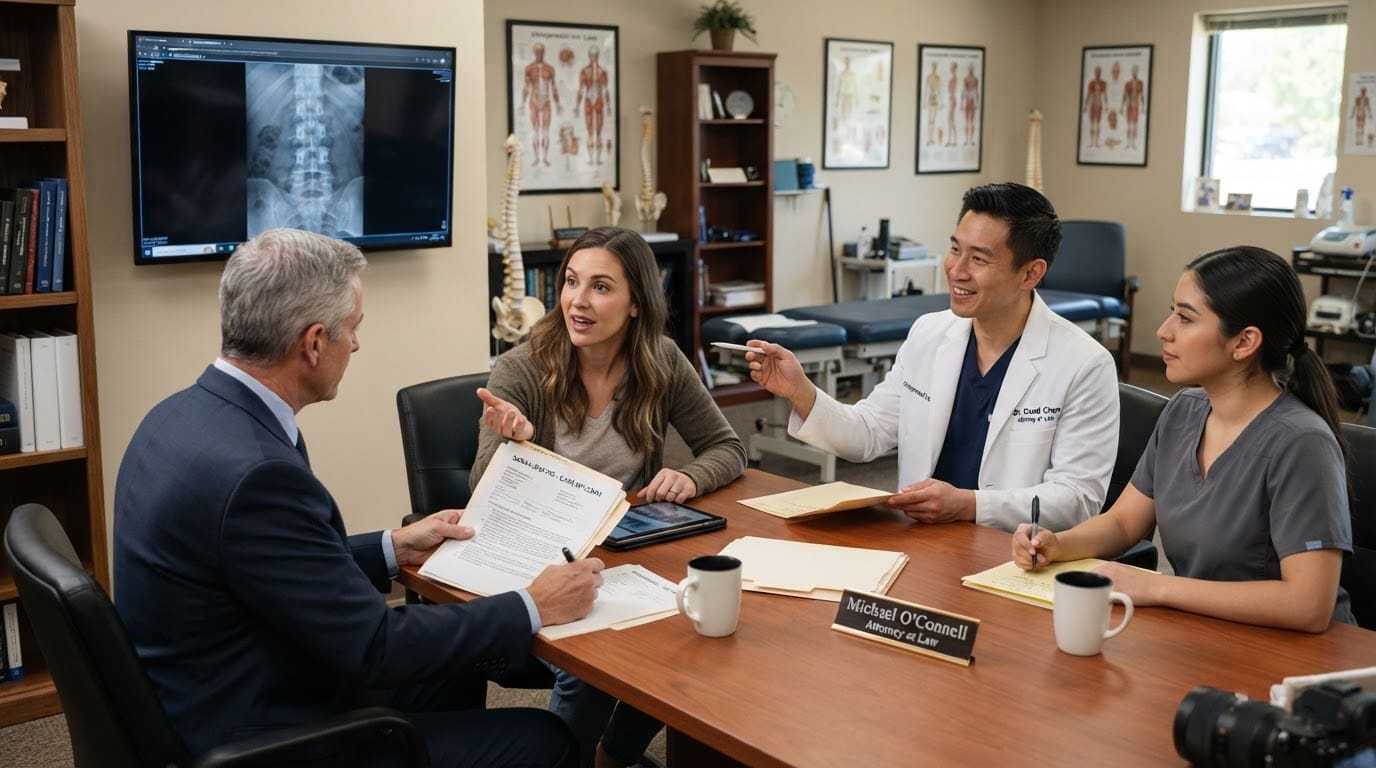
In personal injury cases involving chiropractic care, establishing causation between injuries and traumatic events is vital. Find out more.
Table of Contents
Abstract
Causation is the essential legal and medical bridge that connects a traumatic event—such as a motor vehicle collision, slip-and-fall, or workplace incident—to the injuries that support recovery in personal injury claims. Without clear, documented proof that the event caused or materially contributed to the harm, even significant pain and disability may not result in full compensation. In clinical practice at Injury Medical Clinic PA (also known as Mission Plaza Injury Medical Clinic) in El Paso, Texas, musculoskeletal injuries from trauma rarely exist in isolation. They disrupt joint mechanics, muscle balance, nerve signaling, and overall function, often leading to secondary problems such as chronic pain, reduced mobility, sleep disruption, compensatory strain, and broader systemic effects. Chiropractic care addresses these issues by restoring joint motion, modulating abnormal afferent input to the nervous system, decreasing local inflammation, and supporting natural healing processes. When integrated with medical oversight from Dr. Maria Guadalupe Cardenas, MD (Board Certified in Internal Medicine, NPI #1164426749, Texas MD License #J2933), functional medicine principles, targeted rehabilitation, and other non-surgical options, this multidisciplinary approach delivers both clinical recovery and the objective documentation needed to establish medical causation to a reasonable degree of medical probability. This educational post for attorneys, clinicians, and patients explains what causation requires in the courtroom, what chiropractic care is, how the two work together, why evidence-based chiropractic care reduces musculoskeletal injuries and their comorbidities, and how an integrative team model supports durable non-surgical recovery. Drawing on current evidence from leading researchers and decades of clinical observation, the goal is to clarify the journey from injury event to functional restoration and legally supported causation.
Why Causation Is Important and Required in the Courtroom for Injuries
In personal injury litigation, the plaintiff must prove that the defendant’s negligent or wrongful act caused the claimed injuries. Courts and insurance evaluators require evidence of both actual cause and proximate cause. Actual cause, often evaluated by the “but-for” test, asks whether the injury would have occurred but for the incident. Proximate cause asks whether the harm was a reasonably foreseeable result of the conduct and whether the connection is sufficiently close to justify liability. Medical causation is typically established to a reasonable degree of medical probability—more likely than not—that the trauma caused or substantially contributed to the diagnosed condition (Hill, 1965; American Medical Association, 2008).
Without this link, plaintiffs cannot fully recover damages for pain, suffering, medical expenses, lost wages, and future care. Attorneys rely on treating providers to provide contemporaneous records and expert opinions that link the mechanism, timing, clinical findings, and treatment response. Defense strategies frequently argue that symptoms stem from pre-existing degeneration, unrelated events, or natural progression. Robust documentation of temporality, biological plausibility, and the absence of more probable alternative explanations counters these arguments.
The Bradford Hill criteria, proposed in 1965 by epidemiologist Sir Austin Bradford Hill, offer a structured framework for evaluating whether an association is likely causal. The criteria include strength of association, consistency, specificity, temporality, biological gradient (dose-response), biological plausibility, coherence, experimental evidence, and analogy (Hill, 1965). In musculoskeletal trauma, temporality and biological plausibility carry particular weight. Symptoms that begin or clearly worsen after a documented collision, with a mechanism consistent with known tissue tolerances, support causation. Serial clinical findings that improve in parallel with expected healing phases further strengthen the link.
What Chiropractic Care Is
Chiropractic care is a licensed healthcare profession focused on diagnosing, treating, and preventing disorders of the neuromusculoskeletal system, particularly those involving the spine and extremities. Doctors of Chiropractic evaluate joint dysfunction, soft-tissue injury, and related functional impairments, then deliver manual therapies—most commonly spinal and extremity adjustments or mobilizations—along with rehabilitative exercise, soft-tissue techniques, and patient education. The core clinical goal is to restore normal joint motion, reduce abnormal mechanical stress, modulate pain signaling, and support thebody’ss capacity for recovery without unnecessary surgery or long-term pharmaceuticals.
Modern, evidence-based chiropractic practice is grounded in biomechanics and neurophysiology. High-velocity, low-amplitude thrusts and graded mobilizations stimulate mechanoreceptors in joint capsules, ligaments, and muscle spindles. This afferent barrage can produce short-term changes in segmental spinal excitability, alter descending pain-modulatory pathways, and reduce local muscle hypertonicity (Pickar, 2002). Clinical practice guidelines support spinal manipulative therapy as part of multimodal care for low back pain, neck pain, and certain headache presentations (Rubinstein et al., 2019; Globe et al., 2016).
How Chiropractic Care Works Hand in Hand with Causation
Chiropractic care and causation evidence reinforce each other in practical ways attorneys value. The initial examination captures the patient’s mechanism of injury in their own words and correlates it with clinical findings. A restrained driver who reports neck pain after a rear-end impact, demonstrates restricted cervical rotation, and exhibits positive orthopedic tests for soft-tissue strain supplies the temporality and biological plausibility elements of causation analysis. Subsequent visits document the recovery trajectory through decreasing pain scores, increasing measurable range of motion, improved strength, and reduced functional limitations. These serial observations create a clear timeline that is difficult to dismiss as unrelated to the incident.
Chiropractic providers routinely record objective data—goniometric measurements, muscle testing, orthopedic special tests, and postural observations—that can be compared over time. When these findings improve in parallel with the expected phases of tissue healing (inflammatory, proliferative, and remodeling), the records support the conclusion that the trauma produced a treatable injury whose resolution is consistent with the care provided. Documentation of the absence of prior similar symptoms, or clear aggravation of pre-existing conditions, is essential when the defense argues natural progression of degenerative changes.
The treating chiropractor’s ongoing relationship with the patient provides continuity that a one-time independent medical examination cannot match. When the same provider observes both the acute presentation and the response to care, the opinion that the incident caused or materially contributed to the injury rests on direct clinical observation. Courts and juries give substantial weight to this contemporaneous evidence, especially when it is consistent across chiropractic and medical notes within the same clinic. Recent appellate decisions in jurisdictions such as Virginia and Michigan have affirmed that properly qualified chiropractors may offer causation testimony within the scope of their practice regarding musculoskeletal conditions (Foster v. Commonwealth, 2025; Infinity Physical Therapy, LLC v. Meemic Ins. Co., 2025).
Physiological Underpinnings of Chiropractic Care for Musculoskeletal Injuries
Spinal and extremity joints that lose normal motion after trauma generate continuous abnormal input from mechanoreceptors and nociceptors. This input can facilitate segmental spinal cord neurons, expand pain receptive fields, and maintain protective muscle co-contraction that further restricts motion. High-velocity, low-amplitude manipulation produces a brief, high-frequency burst of discharge from muscle spindle primary afferents and other dynamically sensitive receptors. Studies show that this afferent volley can reduce the excitability of dorsal horn neurons involved in pain transmission and modulate descending inhibitory pathways originating in the brainstem and higher centers (Pickar, 2002; Bialosky et al., 2009).
Restoring joint motion improves local circulation and reduces inflammatory mediator concentrations in peri-articular tissues. When synovial fluid redistributes and capsular tension normalizes, the chemical environment that sustains peripheral sensitization improves. Soft-tissue techniques used with joint mobilization address myofascial trigger points and adhesions that develop from muscle guarding. Together, these changes reduce the mechanical and chemical drivers of pain, allowing patients to resume more normal movement patterns that further promote healing.
For disc-related injuries, controlled distraction or flexion-distraction techniques can reduce intradiscal pressure and may improve nutrient diffusion into the avascular disc. Combined with core stabilization exercises, this strategy aims to restore load sharing among the spine’s passive (ligaments and discs), active (muscles), and neural control subsystems. Clinical observations confirm that patients who regain segmental motion early and then progress through graded loading recover function more reliably than those who remain immobilized or who rely solely on passive modalities.
How Chiropractic Care Reduces Musculoskeletal Injuries and Their Comorbidities
Musculoskeletal injuries from trauma commonly produce a cascade of secondary problems. Restricted motion leads to muscle atrophy and altered recruitment patterns. Persistent nociceptive input can contribute to central sensitization, sleep fragmentation, and reduced physical activity. Reduced activity then worsens cardiovascular fitness, glycemic control, and mood. Chiropractic care interrupts this cascade at several points.
Systematic reviews and meta-analyses indicate that spinal manipulative therapy produces effects similar to recommended therapies for chronic low back pain, with small to moderate improvements in pain and function compared with non-recommended or sham interventions, and no serious adverse events reported in the large majority of trials (Rubinstein et al., 2019; Colter et al., 2018). Observational data among older Medicare beneficiaries with chronic low back pain and multiple comorbidities found lower overall costs and lower rates of subsequent surgery among those who received chiropractic manipulative treatment (Weeks et al., 2016). Guidelines from the Canadian Chiropractic Guideline Initiative and others recommend multimodal approaches for acute and chronic back pain that include spinal manipulative therapy, education, and exercise (Bussières et al., 2018).
In personal injury populations, common comorbidities include compensatory shoulder or hip strain from altered gait or posture, tension-type or cervicogenic headache secondary to upper cervical dysfunction, and sleep disruption that prolongs recovery. By restoring cervical and lumbar motion, reducing muscle hypertonicity, and enabling earlier return to graded activity, chiropractic care decreases the likelihood that these secondary problems become entrenched. Patients who recover segmental mobility and core endurance report better tolerance for work and daily activities, which in turn supports mental health and reduces the risk of prolonged opioid exposure.
Integrative Chiropractic Care in Non-Surgical Treatments
Non-surgical management of traumatic musculoskeletal injury is most effective when mechanical, neurological, and systemic factors are addressed together. Integrative chiropractic care combines joint mobilization or manipulation with rehabilitative exercise, soft-tissue therapy, nutritional support for tissue repair, and, when indicated, regenerative options under appropriate medical direction. The reasoning is straightforward: restoring motion reduces abnormal loading and afferent drive, while progressive loading stimulates collagen remodeling and motor-pattern retraining. A functional medicine evaluation can identify co-factors—such as vitamin D insufficiency, sleep disruption, or inflammatory dietary patterns—that slow healing even when local mechanics improve.
At Injury Medical Clinic PA, Dr. Alexander Jimenez, DC, APRN, FNP-BC, CFMP, IFMCP, ATN, CCST, and Dr. Maria Guadalupe Cardenas, MD, operationalize this model through collaboration. Dr. Cardenas, with over 40 years of experience as a board-certified internist, serves as Medical Director and Collaborative Physician. She provides medical direction, oversight for complex medical issues, coordination of diagnostics when needed, and collaborative input on systemic factors that influence recovery. This multidisciplinary setup is common in strong integrative and injury care clinics: the MD supplies medical direction and collaborative physician oversight. At the same time, the chiropractor delivers hands-on spinal and extremity care focused on biomechanical restoration. Together, the team integrates chiropractic care, functional medicine principles, personal injury documentation, rehabilitation, and related services into coordinated plans that prioritize safety, measurable progress, and non-surgical options whenever appropriate.
Clinical observations from more than three decades of practice in El Paso show that patients who receive early, coordinated care—capturing mechanism, establishing objective baselines, initiating motion restoration, and addressing systemic contributors—tend to demonstrate clearer recovery trajectories and stronger causal linkages in the medical record. Case examples involving rear-end collisions with cervical and lumbar sprains, or sequential collisions complicating recovery, illustrate how serial examinations, range-of-motion measurements, and functional progress notes create a coherent narrative of trauma-related injury and response to care.
Key Elements That Strengthen Causation Documentation for Attorneys
- Detailed history of the incident mechanism, patient position, restraint use, and direction of forces.
- Clear timeline of symptom onset or aggravation relative to the event.
- Objective baseline and serial measurements (range of motion, strength, orthopedic tests, functional scales).
- Correlation of clinical findings with imaging when indicated.
- Documentation of pre-injury status and distinction from post-injury changes.
- Response to conservative care consistent with expected healing phases.
- Collaborative notes that integrate chiropractic biomechanical findings with medical evaluation of systemic or neurological issues.
- Opinions expressed to a reasonable degree of medical probability, grounded in clinical observation and current literature.
Conclusion
Causation is not an abstract legal concept; it is the practical requirement that links a traumatic event to measurable injury and justifies recovery. Evidence-based chiropractic care, grounded in biomechanics and neurophysiology, provides both effective non-surgical treatment and contemporaneous clinical data to support causation opinions. When delivered within an integrative team that includes medical direction from an experienced internist such as Dr. Maria Guadalupe Cardenas, MD, and incorporates functional medicine and rehabilitation, the approach addresses the full cascade of musculoskeletal injury and its comorbidities while generating the documentation attorneys need. Patients benefit from restored motion, reduced pain, and improved function; the legal record reflects a clear, biologically plausible chain of events from trauma to recovery.
References
American Medical Association. (2008). Guides to the evaluation of permanent impairment (6th ed.). American Medical Association.
Bialosky, J. E., Bishop, M. D., Price, D. D., Robinson, M. E., & George, S. Z. (2009). The mechanisms of manual therapy in the treatment of musculoskeletal pain: A comprehensive model. Manual Therapy, 14(5), 531–538. https://doi.org/10.1016/j.math.2008.09.001
Bussières, A. E., Stewart, G., Al-Zoubi, F., Decina, P., Descarreaux, M., Haskett, D., … & Ornelas, J. (2018). Spinal manipulative therapy and other conservative treatments for low back pain: A guideline from the Canadian Chiropractic Guideline Initiative. Journal of Manipulative and Physiological Therapeutics, 41(4), 265–293. https://doi.org/10.1016/j.jmpt.2017.12.004
Colter, I. D., Crawford, C., Hurwitz, E. L., Vernon, H., Khorsan, R., Suttorp Booth, M., & Herman, P. M. (2018). Manipulation and mobilization for treating chronic low back pain: A systematic review and meta-analysis. The Spine Journal, 18(5), 866–879. https://doi.org/10.1016/j.spinee.2018.01.013
Hill, A. B. (1965). The environment and disease: Association or causation? Proceedings of the Royal Society of Medicine, 58(5), 295–300.
Pickar, J. G. (2002). Neurophysiological effects of spinal manipulation. The Spine Journal, 2(5), 357–371. https://doi.org/10.1016/s1529-9430(02)00400-x
Rubinstein, S. M., de Zoete, A., van Middelkoop, M., Assendelft, W. J. J., de Boer, M. R., & van Tulder, M. W. (2019). Benefits and harms of spinal manipulative therapy for the treatment of chronic low back pain: Systematic review and meta-analysis of randomized controlled trials. BMJ, 364, l689. https://doi.org/10.1136/bmj.l689
Weeks, W. B., Leininger, B., Whedon, J. M., Lurie, J. D., Tosteson, T. D., Swenson, R., … & Goertz, C. M. (2016). The association between use of chiropractic care and costs of care among older Medicare patients with chronic low back pain and multiple comorbidities. Journal of Manipulative and Physiological Therapeutics, 39(2), 63–75.e2. https://doi.org/10.1016/j.jmpt.2016.01.006
Clinical observations and case insights drawn from practice at Injury Medical Clinic PA, El Paso, Texas. For further reading on related topics, visit https://dralexjimenez.com/ and https://www.linkedin.com/in/dralexjimenez/.
SEO Tags: causation personal injury, chiropractic care courtroom, medical causation attorneys, integrative chiropractic El Paso, non-surgical injury treatment, musculoskeletal injury comorbidities, Dr. Alexander Jimenez, Dr. Maria Guadalupe Cardenas, Bradford Hill criteria injury, spinal manipulative therapy evidence, personal injury documentation chiropractor, Injury Medical Clinic PA El Paso
Post Disclaimer
General Disclaimer, Licenses and Board Certifications *
Professional Scope of Practice *
The information herein on "Causation Explained with Chiropractic Care for Personal Injury" is not intended to replace a one-on-one relationship with a qualified health care professional or licensed physician and is not medical advice. We encourage you to make healthcare decisions based on your research and partnership with a qualified healthcare professional.
Blog Information & Scope Discussions
Welcome to El Paso's Premier Wellness and Injury Care Clinic & Wellness Blog, where Dr. Alex Jimenez, DC, FNP-C, a Multi-State board-certified Family Practice Nurse Practitioner (FNP-BC) and Chiropractor (DC), presents insights on how our multidisciplinary team is dedicated to holistic healing and personalized care. Our practice aligns with evidence-based treatment protocols inspired by integrative medicine principles, similar to those on this site and on our family practice-based chiromed.com site, focusing on naturally restoring health for patients of all ages.
Our areas of multidisciplinary practice include Wellness & Nutrition, Chronic Pain, Personal Injury, Auto Accident Care, Work Injuries, Back Injury, Low Back Pain, Neck Pain, Migraine Headaches, Sports Injuries, Severe Sciatica, Scoliosis, Complex Herniated Discs, Fibromyalgia, Chronic Pain, Complex Injuries, Stress Management, Functional Medicine Treatments, and in-scope care protocols.
Our information scope is multidisciplinary, focusing on musculoskeletal and physical medicine; wellness; contributing etiological viscerosomatic disturbances within clinical presentations; associated somato-visceral reflex clinical dynamics; subluxation complexes; sensitive health issues; and functional medicine articles, topics, and discussions.
We provide and present clinical collaboration with specialists from various disciplines. Each specialist follows their professional scope of practice and licensure jurisdiction. We use functional health & wellness protocols to treat and support care for musculoskeletal injuries or disorders.
Our videos, posts, topics, and insights address clinical matters and issues that directly or indirectly relate to our clinical scope of practice.
Our office has made a reasonable effort to provide supportive citations and has identified relevant research studies that support our posts. We provide copies of supporting research studies upon request to regulatory boards and the public.
For further discussion on how this information relates to specific care plans or treatment protocols, please ask Dr. Alex Jimenez, DC, APRN, FNP-BC, or contact us at 915-850-0900.
We are here to help you and your family.
Blessings
Dr. Alex Jimenez DC, MSACP, APRN, FNP-BC*, CCST, IFMCP, CFMP, ATN
Email: [email protected]
Multidisciplinary Licensing & Board Certifications:
Licensed as a Doctor of Chiropractic (DC) in Texas & New Mexico*
Chiropractic Licenses:
Texas DC License #: TX5807, Verified: TX5807
New Mexico DC License #: NM-DC2182, Verified: NM-DC2182
Nurse Practitioner Licenses:
Texas APRN License #: 1191402, Verified: 1191402 *
New Mexico CNP License #: 90560, Verified 90560
Florida APRN License #: 11043890, Verified: APRN11043890 *
Colorado License #: C-APN.0105610-C-NP, Verified: C-APN.0105610-C-NP
New York License #: N25929, Verified N25929
Georgia APRN License #: GAA-NP005701
Multi-State Advanced Practice Registered Nurse (APRN*) Texas & Multi-States
Multi-state Compact APRN License by Endorsement (43 States)
Compact Status: Multi-State License: Authorized to Practice in 43 States*
Nursing Licensure Compact: Updated Here
DEA Registration: (Drug Enforcement Agency Registered)
All medical (MDs) and family practice providers (FNP-APRN) are registered and licensed to offer various levels of medication.
Verify Providers' DEA Registration Here
License Verification Link: Nursys License Verifier
* Prescriptive Authority Authorized (DEA Registered Providers). Call if Required
Board Certification:
ANCC FNP-BC: Board Certified Nurse Practitioner*
Education:
Graduate with Honors: ICHS: MSN-FNP (Family Nurse Practitioner Program)
Degree Granted. Master's in Family Practice, MSN Diploma (Cum Laude)
Dr. Alex Jimenez, DC, APRN, FNP-BC*, CFMP, IFMCP, ATN, CCST
(Board Certified: Family Practice Nurse Practitioner—Multistate)*
(Licensed Nurse Practitioner & Chiropractor - Multistate)*
Clinical Director
DC & FNP License (Review Above)
Digital Business Card
NPI: 1205907805
Dr. Maria Cardenas, MD
(Board Certified: Internal Medicine)
(Licensed Medical Doctor)
Medical Director, Clinical Director & Collaborative Physician
NPI # 1164426748
MD License #: J2933
Licenses and Board Certifications:
MD: Medical Doctor
DC: Doctor of Chiropractic
APRNP: Advanced Practice Registered Nurse
FNP-BC: Family Practice Specialization (Multi-State Board Certified)
FNP-BC: Family Practice Across Life Span (Neonatal to Geriatrics)
RN: Registered Nurse (Multi-State Compact License)
CFMP: Certified Functional Medicine Provider
MSN-FNP: Master of Science in Family Practice Medicine
MSACP: Master of Science in Advanced Clinical Practice
IFMCP: Institute of Functional Medicine
CCST: Certified Chiropractic Spinal Trauma
ATN: Advanced Translational Neutrogenomics
Family with Primary Care Focus (Family Nurse Practitioner or FNP)
- The Family Nurse Practitioner (FNP) promotes, maintains, and restores health for individuals and families across the lifespan. FNPs also identify health risks, promote wellness, and diagnose and manage acute and chronic illness.
- The FNP focuses on comprehensive primary care, promoting healthy lifestyles for patients across the lifespan in settings such as private practice, physician offices, and community health centers.
Memberships & Associations:
TCA: Texas Chiropractic Association: Member ID: 104311
TNA: Texas Nurse Association: Member ID: 06458222
TNP: Texas Nurse Practitioner Association ID: 2025091511
AANP: American Association of Nurse Practitioners: Member ID: 2198960
ANA: American Nurses Association: Member ID: 06458222 (District TX01)
| Primary Taxonomy | Selected Taxonomy | State | License Number |
|---|---|---|---|
| No | 111N00000X - Chiropractor | NM | DC2182 |
| Yes | 111N00000X - Chiropractor | TX | DC5807 |
| Yes | 363LF0000X - Nurse Practitioner - Family | TX | 1191402 |
| Yes | 363LF0000X - Nurse Practitioner - Family | FL | 11043890 |
| Yes | 363LF0000X - Nurse Practitioner - Family | CO | C-APN.0105610-C-NP |
| Yes | 363LF0000X - Nurse Practitioner - Family | NY | N25929 |
| Yes | 363LF0000X - Nurse Practitioner - Family | NM |
90560 |
| Yes | 363LF0000X - Nurse Practitioner - Family | GA | GAA-NP005701 |
Dr. Alex Jimenez, DC, APRN, FNP-BC*, CFMP, IFMCP, ATN, CCST
(Board Certified: Family Practice Nurse Practitioner—Multistate)*
(Primary Care Across Lifespan—Neonatal / Pediatric / Adult / Geriatrics)
(Licensed Nurse Practitioner & Chiropractor - Multistate)*
Clinical Director
Digital Business Card
NPI: 1205907805
Dr. Maria Cardenas, MD
(Board Certified: Internal Medicine)*
(Licensed Medical Doctor)*
Medical Director, Clinical Director & Collaborative Physician
NPI # 1164426748
MD License #: J2933
📆 Schedule Appointment: Schedule 24/7 (Click Here)