
Table of Contents
TBI Toxicity After Head Injuries: How Secondary Biochemical Cascades, the Gut–Brain Axis, and Integrative Care Shape Recovery for Adults and Their Care Teams

Overview: Why the brain “keeps getting hurt” after the initial injury
A traumatic brain injury (TBI) does not end when the impact stops. The first injury (the primary injury) is the mechanical blow. What follows is the secondary cascade—a complex, body-wide response that can create a toxic environment inside and around brain cells for days to weeks. This cascade encompasses excitotoxicity (excessive neurotransmitter release), oxidative stress (reactive oxygen species damaging cells), neuroinflammation (activation of immune pathways), edema, disruption of the blood–brain barrier (BBB), and alterations in the gut–brain axis. Together, these events can worsen symptoms, slow healing, and—if poorly managed—raise the risk of later neurodegeneration. (Rauchman, 2023; Schimmel et al., 2017; Wu et al., 2022). PMC+2PMC+2
Recent work highlights how these toxic effects can persist for weeks in experimental models and why antioxidant strategies are being studied to reduce secondary damage—especially relevant to adults recovering from a car crash, sports concussion, or on-the-job head trauma. (Missouri S&T News, 2025; The Conversation, 2025). News and Events+1
The secondary cascade in plain language
1) Excitotoxicity: when “too much signal” becomes toxic
After a TBI, damaged neurons can dump glutamate, the brain’s main excitatory transmitter, into the space between cells. This glutamate surge overactivates receptors, floods cells with calcium, and triggers enzymes that damage structures such as mitochondria and membranes. This process, known as excitotoxicity, is a core driver of secondary injury. (Guerriero et al., 2015; Baracaldo-Santamaría et al., 2022). PMC+1
Clinically, excitotoxicity helps explain why some people worsen after seeming stable and why symptoms like headaches, dizziness, brain fog, and noise/light sensitivity can persist. Public-facing explanations often emphasize the same physiology in accessible terms. (Brain Injury Law Center, 2025). brain-injury-law-center.com
2) Oxidative stress: chemical “rusting” inside cells
The excitotoxic surge and mitochondrial dysfunction generate reactive oxygen species (ROS)—high-energy molecules that “nick,” oxidize, and disable proteins, lipids, and DNA. The brain’s Nrf2 pathway normally activates antioxidant defenses; after TBI, researchers study how to enhance Nrf2 to limit oxidative injury. (Wu et al., 2022; Fesharaki-Zadeh, 2022). PMC+1
Animal and early translational studies suggest antioxidant materials or combinations may reduce long-term toxicity and improve function, though large human trials are still limited. (Missouri S&T News, 2025; Davis et al., 2022; Di Pietro et al., 2020). News and Events+2PMC+2
3) Neuroinflammation: the immune system’s double-edged sword
After TBI, microglia (the brain’s resident immune cells) and astrocytes respond quickly. They can release inflammatory signals that exacerbate damage, but they also produce anti-inflammatory factors that aid in cleanup and repair. Over several weeks, circulating CCR2+ monocytes and other immune cells infiltrate the injured areas, further shaping the outcomes. Long-lasting, smoldering neuroinflammation can sustain symptoms. (Denniss et al., 2023; McKee et al., 2016; Schimmel et al., 2017). PMC+2PMC+2
Natural-killer (NK) cells—especially those from the liver-immune interface—also interact with brain inflammation in systemic illnesses; abnormal activation may amplify the neuroimmune response after trauma. (Pan et al., 2025). PMC
4) Edema and BBB disruption: “leaky gates” and swelling
The blood–brain barrier (BBB) is a tight gatekeeper. After TBI, it can become leaky, allowing proteins and immune cells to enter the brain and promoting edema (swelling). Cytotoxic edema reflects water drawn into injured cells; vasogenic edema reflects water leaking into tissues when the BBB is disrupted. Both raise pressure and reduce perfusion. (Salehi et al., 2017; Price & Mathis, 2016). PMC+1
Multiple reviews show BBB dysfunction as an early event that can set the stage for persistent problems and later neurodegeneration, underscoring why early management and ongoing monitoring matter. (Chodobski et al., 2011; Hay et al., 2015; Alluri et al., 2015; Abrahamson et al., 2020; StatPearls BBB, 2025). NCBI+4PMC+4PMC+4
5) The gut–brain axis: why digestion and cognition can worsen together
TBI is associated with alterations in intestinal motility, barrier function, and microbiome composition, which can have a feedback effect on brain inflammation and recovery. Many adults report new GI issues after a head injury; supporting gut health may help reduce systemic inflammatory “noise.” (Cannon et al., 2023). PMC
Public-facing resources now explain how vagus nerve tone, microbiota, and intestinal permeability connect with brain symptoms after injury, informing nutrition and lifestyle strategies in rehabilitation. (Heuer Fischer, 2023). PMC
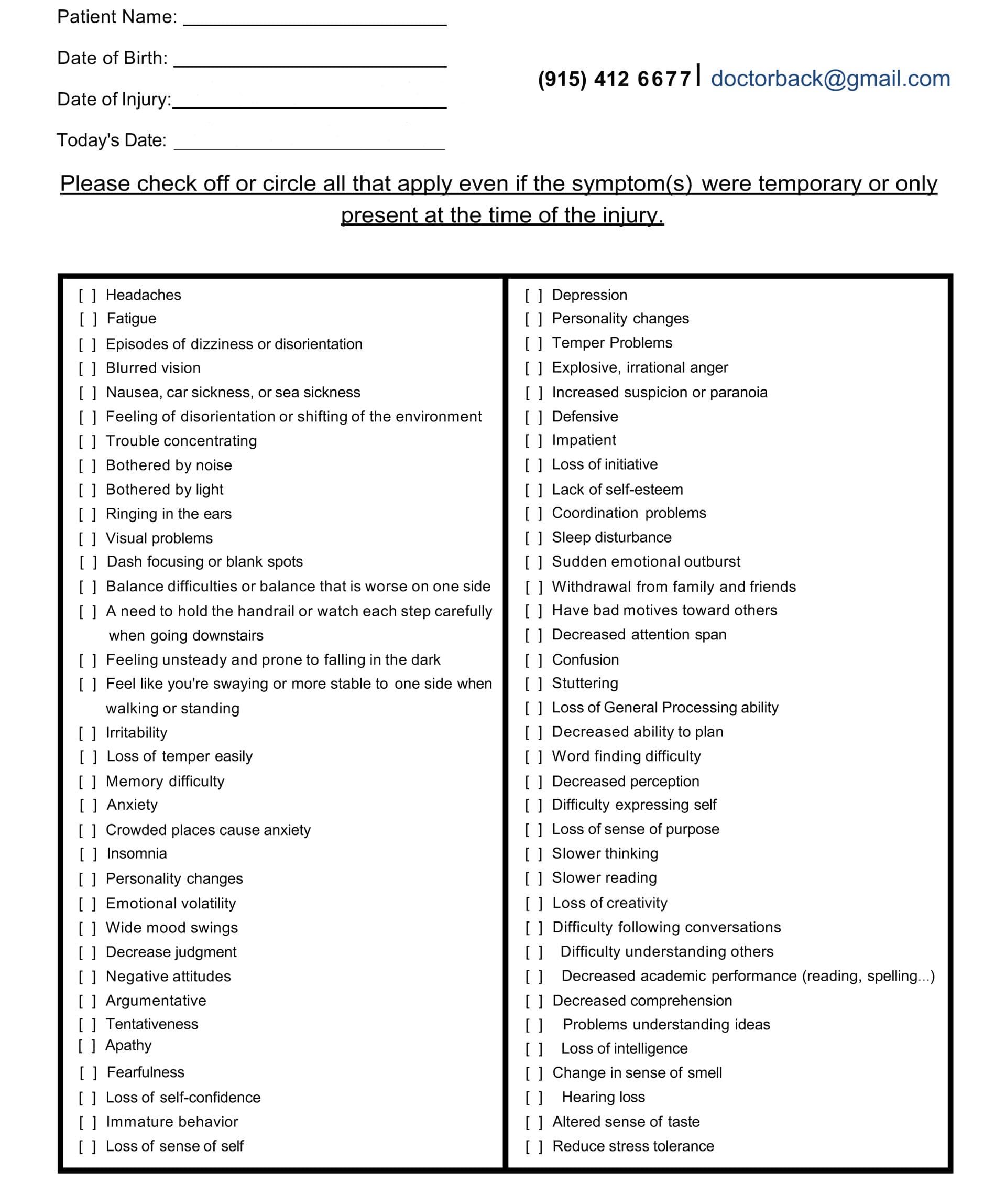
Symptom Questionnaire:
Why does this chemistry matter to your recovery
For adults and families, the takeaway is simple: the brain is still “in play” after the impact. Your choices—sleep, nutrition, light activity, medical follow-up, and a coordinated integrative plan—can help lower secondary toxicity and create a more supportive healing environment.
-
Symptoms that fit the cascade include brain fog, headaches, dizziness, visual strain, neck pain, mood and sleep changes, light/noise sensitivity, and gastrointestinal upset.
-
Why pacing matters: pushing too intensely too soon can spike excitatory signaling and stress responses; a graded return to work/sport helps the brain recalibrate while minimizing inflammatory surges. (Rauchman, 2023; Denniss et al., 2023). PMC+1
Long-term risk: from chronic inflammation to neurodegeneration (and what to do about it)
Epidemiology links TBI to later Alzheimer’s disease, Parkinson’s disease, CTE, and mixed dementias. The exact risk depends on the severity of the injury, repetition, age, genetics, and post-injury care. Mechanisms include tau and amyloid accumulation, axonal injury, and BBB failure. (Brett et al., 2021; Graham & Sharp, 2019; Hay et al., 2015; Zedde et al., 2025). MDPI+3PMC+3PubMed+3
This is not meant to scare you—it’s meant to justify early, sustained, whole-person care that calms the cascade and restores resilience.
Integrative care with Chiropractic Nurse Practitioners (CNPs): a whole-body plan to reduce toxicity and support recovery
Chiropractic nurse practitioners (CNPs) work at the intersection of neuromusculoskeletal care and medical management, providing comprehensive care that integrates both approaches. In an integrative, team-based model, they coordinate with primary care, neurology, physical therapy, vestibular therapy, behavioral health, nutrition, and, when needed, neuropsychology. The aim is to reduce excitotoxic and inflammatory loads, restore autonomic balance, enhance cervical and vestibular mechanics, and promote gut-brain health.
Core elements of an integrative CNP-led plan
-
Safety first and medical coordination
-
Screen red flags (worsening neurologic signs, anticoagulant use, severe headache “different from usual,” repeated vomiting, new focal deficits).
-
Coordinate imaging and neuro evaluations as indicated; monitor for edema/BBB-related complications and persistent neuroinflammation in the subacute window. (Price & Mathis, 2016; Alluri et al., 2015). NCBI+1
-
-
Cervical spine and vestibular assessment
-
Cervicogenic headache, neck stiffness, and oculomotor strain can perpetuate dizziness and fog. Precise manual therapy and exercise may reduce nociceptive input and sympathetic overdrive that feed the secondary cascade, while vestibular rehab recalibrates balance pathways. (Salehi et al., 2017). PMC
-
Many integrative clinics report improved autonomic balance and cerebrospinal fluid dynamics with the careful application of chiropractic methods alongside rehabilitation—a growing practice area that should be individualized and safety-screened. (Sea Change Chiropractic; Apex Chiro; Northwest Florida Physicians Group; Dr. Kal). charliewaterslaw.com+1
-
-
Graded activity and sub-symptom exertion
-
Avoid strict bed rest beyond the acute phase of illness. Utilize paced, sub-symptom aerobic activity to support cerebral blood flow and mitochondrial recovery, while avoiding excitotoxic spikes. (Rauchman, 2023). PMC
-
-
Sleep as an antioxidant therapy
-
Deep sleep supports the brain’s glymphatic system for waste clearance, potentially reducing ROS and inflammatory by-products. (Wu et al., 2022). PMC
-
-
Nutrition and gut–brain support
-
Emphasize whole foods, omega-3 fats, polyphenol-rich plants, hydration, and fiber for microbiome health.
-
Address post-TBI GI motility and barrier issues that can amplify systemic inflammation; consider referral for targeted GI care when symptoms persist. (Cannon et al., 2023). PMC
-
-
Oxidative-stress–targeted strategies
-
Clinicians are following emerging evidence on antioxidant nutrients and pharmacological agents (e.g., Nrf2 activators), while acknowledging that large-scale clinical trials are limited. Care plans often combine dietary antioxidants with rehabilitative strategies, rather than relying solely on supplements. (Di Pietro et al., 2020; Wu et al., 2022). MDPI+1
-
-
Neuroimmune modulation and pacing
-
Because CCR2+ monocytes, microglia, and peripheral immune cells can extend inflammation days to weeks, CNPs often design stepwise plans that avoid “boom-bust” exertion patterns and track sleep, HRV, and symptom diaries. (McKee et al., 2016; Denniss et al., 2023). PMC+1
-
-
Behavioral health and cognitive support
-
Mood, anxiety, irritability, and attention changes are common and biologically grounded in the cascade. Early psychological support and structured return-to-work planning can reduce stress chemistry that fuels excitotoxic and inflammatory load. (Rauchman, 2023; NIH Bookshelf neuroplasticity chapter). PMC+1
-
What families and care teams can do
-
Stabilize your routine: maintain consistent sleep/wake times, a dark and cool bedroom, and limit late-night screen use. (Wu et al., 2022). PMC
-
Feed recovery: protein at each meal, omega-3–rich fish or plant sources, colorful fruits/vegetables, and plenty of water; reduce alcohol and ultra-processed foods that can increase inflammation. (Cannon et al., 2023). PMC
-
Move gently, progress slowly: light walks or stationary cycling below symptom threshold; add vestibular and cervical exercises prescribed by your clinician. (Rauchman, 2023). PMC
-
Track symptoms: note triggers (noise, light, visual motion, screen time), GI changes, and sleep quality.
-
Coordinate care: align follow-ups across primary care, CNPs, PT/OT, vestibular therapy, and behavioral health; share a single plan and calendar.
-
Know warning signs: sudden severe headache, repeated vomiting, weakness/numbness, slurred speech, seizures, or rapidly worsening confusion → seek urgent care. (Alluri et al., 2015). PubMed
Dr. Alexander Jimenez, DC, APRN, FNP-BC: dual-scope, integrative observations
In a dual-scope clinical setting (chiropractic and advanced practice nursing), Dr. Alexander Jimenez emphasizes:
-
Early multidisciplinary triage, imaging when indicated, and careful cervical-vestibular screening to remove mechanical drivers of dizziness and headache.
-
A graded, data-tracked rehabilitation arc (pacing, breathwork for autonomic balance, sub-symptom cardio).
-
Nutrition and GI support are implemented to reduce the systemic inflammatory load.
-
Collaboration with neuro/behavioral health for cognitive and mood support. (Jimenez, n.d.; Jimenez, LinkedIn). NCBI
Explore Dr. Jimenez’s clinical insights and integrative approach: (Dr. Alex Jimenez site; LinkedIn). NCBI
Caution on “quick fixes” and why personalization matters
Despite promising preclinical studies on antioxidants and novel materials, experts stress the need for standardized clinical trials and personalized plans. No single supplement or device replaces a comprehensive, stepwise program that addresses cervical and vestibular drivers, sleep, graded activity, stress chemistry, and gut-brain health. (Di Pietro et al., 2020; Davis et al., 2022; Missouri S&T News, 2025). MDPI+2PMC+2
Putting it together: a practical integrative roadmap
-
Weeks 0–2 (Acute/Subacute)
-
Medical screening, imaging if indicated; symptom-paced rest (not bed rest); light mobility; gentle cervical/vestibular evaluation; sleep and nutrition reset; hydration; reduce screen and sensory load. (Alluri et al., 2015; Salehi et al., 2017). PubMed+1
-
-
Weeks 2–6 (Early Rehab)
-
Structured vestibular/oculomotor therapy; cervical joint/soft-tissue work as appropriate; sub-symptom aerobic training 4–6 days/week; progressive cognitive load (short blocks); fiber-rich, anti-inflammatory diet; stress-reduction skills. (Rauchman, 2023; Cannon et al., 2023). PMC+1
-
-
Weeks 6+ (Re-conditioning and Return)
-
Tighten sleep/exercise rhythm; strength and balance work; job-specific or sport-specific graded tasks; continued behavioral health; monitor for lingering symptoms that suggest persistent neuroinflammation or autonomic imbalance; coordinate specialist referrals as needed. (Denniss et al., 2023; Hay et al., 2015). PMC+1
-
Key takeaways for adults, families, and care teams
-
The secondary cascade is real—and manageable.
-
Whole-person, integrative care with a CNP-led team can lower toxic load, support the BBB and gut–brain axis, and speed function back to work, sport, and life.
-
Personalization beats one-size-fits-all: the best results come from aligning medical, musculoskeletal, vestibular, nutritional, and behavioral strategies to your specific pattern of injury and goals.
References
-
Abrahamson, E. E., & Ikonomovic, M. D. (2020). Blood–brain barrier dysfunction following traumatic brain injury. Brain Research Bulletin. https://pubmed.ncbi.nlm.nih.gov/32092298/ PubMed
-
Alluri, H., Wiggins-Dohlvik, K., Davis, M. L., Huang, J. H., & Tharakan, B. (2015). Blood–brain barrier dysfunction after TBI. Metabolic Brain Disease. https://pubmed.ncbi.nlm.nih.gov/25624154/ PubMed
-
Baracaldo-Santamaría, D., et al. (2022). Revisiting excitotoxicity in TBI. Frontiers in Neuroscience. https://pmc.ncbi.nlm.nih.gov/articles/PMC8781803/ PMC
-
Brett, B. L., et al. (2021). TBI and risk of neurodegenerative disorder. Frontiers in Neuroscience. https://pmc.ncbi.nlm.nih.gov/articles/PMC8636548/ PMC
-
Cannon, A. R., et al. (2023). TBI-induced inflammation and GI dysfunction. Cells. https://pmc.ncbi.nlm.nih.gov/articles/PMC10065904/ PMC
-
Chodobski, A., et al. (2011). BBB pathophysiology in TBI. Journal of Cerebral Blood Flow & Metabolism. https://pmc.ncbi.nlm.nih.gov/articles/PMC3268209/ PMC
-
Davis, C. K., et al. (2022). Antioxidant + ER stress combo therapy after TBI (mice). The Journal of Neuroscience. https://pmc.ncbi.nlm.nih.gov/articles/PMC9436019/ PMC
-
Denniss, R. J., et al. (2023). Brain trauma and the secondary cascade in humans. Frontiers in Neurology. https://pmc.ncbi.nlm.nih.gov/articles/PMC10215746/ PMC
-
Di Pietro, V., et al. (2020). Antioxidant therapies in TBI. Antioxidants. https://www.mdpi.com/2076-3921/9/3/260 MDPI
-
Fesharaki-Zadeh, A., et al. (2022). Oxidative stress in TBI; KEAP1-Nrf2. Antioxidants. https://pmc.ncbi.nlm.nih.gov/articles/PMC9657447/ PMC
-
Graham, N. S. N., & Sharp, D. J. (2019). Understanding neurodegeneration after TBI. Translational Psychiatry. https://pubmed.ncbi.nlm.nih.gov/31542723/ PubMed
-
Guerriero, R. M., et al. (2015). Glutamate/GABA imbalance after TBI. Current Neuropharmacology. https://pmc.ncbi.nlm.nih.gov/articles/PMC4640931/ PMC
-
Hay, J., et al. (2015). Early BBB breakdown and later dementia risk after TBI. Acta Neuropathologica Communications. https://pmc.ncbi.nlm.nih.gov/articles/PMC8744142/ PMC
-
McKee, C. A., & Lukens, J. R. (2016). Emerging immune roles in TBI; CCR2+ monocytes. Frontiers in Immunology. https://pmc.ncbi.nlm.nih.gov/articles/PMC5137185/ PMC
-
Missouri S&T News. (2025, May 22). Traumatic brain injuries have toxic effects that last weeks after initial impact − an antioxidant material reduces this damage in mice. https://news.mst.edu/2025/05/traumatic-brain-injuries-have-toxic-effects-that-last-weeks-after-initial-impact-%E2%88%92-an-antioxidant-material-reduces-this-damage-in-mice/ News and Events
-
Pan, L., et al. (2025). Brain–liver–gut axis in neurological disorders; NK cells. Frontiers in Cellular Neuroscience. https://pmc.ncbi.nlm.nih.gov/articles/PMC12048006/ PMC
-
Price, L., & Mathis, J. (2016). Blood–brain barrier pathophysiology. StatPearls. https://www.ncbi.nlm.nih.gov/books/NBK326726/ NCBI
-
Rauchman, S. H. (2023). TBI: Mechanisms, manifestations, and management. Disease-a-Month. https://pmc.ncbi.nlm.nih.gov/articles/PMC9995859/ PMC
-
Salehi, A., et al. (2017). Cerebral vasculature response; edema types after TBI. Frontiers in Cellular Neuroscience. https://pmc.ncbi.nlm.nih.gov/articles/PMC5531360/ PMC
-
StatPearls. (2025). Physiology, blood–brain barrier. https://www.ncbi.nlm.nih.gov/books/NBK557721/ NCBI
-
The Conversation. (2025, Feb.). TBI toxicity lasts weeks; antioxidant material reduces damage—in mice. https://ground.news/article/traumatic-brain-injuries-have-toxic-effects-that-last-weeks-after-initial-impact-an-antioxidant-material-reduces-this-damage-in-mice Ground News
Practice-oriented resources (patient-facing):
-
Heuer Fischer. (2023). TBI and gut health. https://www.heuerfischer.com/firm-overview/blog/tbi-and-gut-health/ PMC
-
Sea Change Chiropractic. Resetting the nervous system after crash trauma. https://seachangechiropractic.com/how-chiropractic-helps-reset-the-nervous-system-after-car-crash-trauma/ charliewaterslaw.com
-
Apex Chiropractic. How chiropractic may support TBI recovery. https://apexchiroco.com/updates/how-chiropractic-care-can-treat-a-traumatic-brain-injury/ charliewaterslaw.com
-
Northwest Florida Physicians Group. Chiropractic relief for accident head injuries. https://drkal.com/chiropractic-relief-for-accident-head-injuries/ charliewaterslaw.com
Dr. Alexander Jimenez (dual-scope integrative care):
-
Jimenez, A. (n.d.). Clinical insights and integrative care resources. https://dralexjimenez.com/ NCBI
-
Jimenez, A. (n.d.). Professional profile. https://www.linkedin.com/in/dralexjimenez/ NCBI
Note: Many antioxidant and device-based approaches remain preclinical; personalization and team care are essential. (Di Pietro et al., 2020). MDPI
Post Disclaimer
General Disclaimer, Licenses and Board Certifications *
Professional Scope of Practice *
The information herein on "TBI Toxicity After Head Injuries: An Integrative Plan" is not intended to replace a one-on-one relationship with a qualified health care professional or licensed physician and is not medical advice. We encourage you to make healthcare decisions based on your research and partnership with a qualified healthcare professional.
Blog Information & Scope Discussions
Welcome to El Paso's Premier Wellness and Injury Care Clinic & Wellness Blog, where Dr. Alex Jimenez, DC, FNP-C, a Multi-State board-certified Family Practice Nurse Practitioner (FNP-BC) and Chiropractor (DC), presents insights on how our multidisciplinary team is dedicated to holistic healing and personalized care. Our practice aligns with evidence-based treatment protocols inspired by integrative medicine principles, similar to those on this site and on our family practice-based chiromed.com site, focusing on naturally restoring health for patients of all ages.
Our areas of multidisciplinary practice include Wellness & Nutrition, Chronic Pain, Personal Injury, Auto Accident Care, Work Injuries, Back Injury, Low Back Pain, Neck Pain, Migraine Headaches, Sports Injuries, Severe Sciatica, Scoliosis, Complex Herniated Discs, Fibromyalgia, Chronic Pain, Complex Injuries, Stress Management, Functional Medicine Treatments, and in-scope care protocols.
Our information scope is multidisciplinary, focusing on musculoskeletal and physical medicine; wellness; contributing etiological viscerosomatic disturbances within clinical presentations; associated somato-visceral reflex clinical dynamics; subluxation complexes; sensitive health issues; and functional medicine articles, topics, and discussions.
We provide and present clinical collaboration with specialists from various disciplines. Each specialist follows their professional scope of practice and licensure jurisdiction. We use functional health & wellness protocols to treat and support care for musculoskeletal injuries or disorders.
Our videos, posts, topics, and insights address clinical matters and issues that directly or indirectly relate to our clinical scope of practice.
Our office has made a reasonable effort to provide supportive citations and has identified relevant research studies that support our posts. We provide copies of supporting research studies upon request to regulatory boards and the public.
For further discussion on how this information relates to specific care plans or treatment protocols, please ask Dr. Alex Jimenez, DC, APRN, FNP-BC, or contact us at 915-850-0900.
We are here to help you and your family.
Blessings
Dr. Alex Jimenez DC, MSACP, APRN, FNP-BC*, CCST, IFMCP, CFMP, ATN
Email: [email protected]
Multidisciplinary Licensing & Board Certifications:
Licensed as a Doctor of Chiropractic (DC) in Texas & New Mexico*
Chiropractic Licenses:
Texas DC License #: TX5807, Verified: TX5807
New Mexico DC License #: NM-DC2182, Verified: NM-DC2182
Nurse Practitioner Licenses:
Texas APRN License #: 1191402, Verified: 1191402 *
New Mexico CNP License #: 90560, Verified 90560
Florida APRN License #: 11043890, Verified: APRN11043890 *
Colorado License #: C-APN.0105610-C-NP, Verified: C-APN.0105610-C-NP
New York License #: N25929, Verified N25929
Georgia APRN License #: GAA-NP005701
Multi-State Advanced Practice Registered Nurse (APRN*) Texas & Multi-States
Multi-state Compact APRN License by Endorsement (43 States)
Compact Status: Multi-State License: Authorized to Practice in 43 States*
Nursing Licensure Compact: Updated Here
DEA Registration: (Drug Enforcement Agency Registered)
All medical (MDs) and family practice providers (FNP-APRN) are registered and licensed to offer various levels of medication.
Verify Providers' DEA Registration Here
License Verification Link: Nursys License Verifier
* Prescriptive Authority Authorized (DEA Registered Providers). Call if Required
Board Certification:
ANCC FNP-BC: Board Certified Nurse Practitioner*
Education:
Graduate with Honors: ICHS: MSN-FNP (Family Nurse Practitioner Program)
Degree Granted. Master's in Family Practice, MSN Diploma (Cum Laude)
Dr. Alex Jimenez, DC, APRN, FNP-BC*, CFMP, IFMCP, ATN, CCST
(Board Certified: Family Practice Nurse Practitioner—Multistate)*
(Licensed Nurse Practitioner & Chiropractor - Multistate)*
Clinical Director
DC & FNP License (Review Above)
Digital Business Card
NPI: 1205907805
Dr. Maria Cardenas, MD
(Board Certified: Internal Medicine)
(Licensed Medical Doctor)
Medical Director, Clinical Director & Collaborative Physician
NPI # 1164426748
MD License #: J2933
Licenses and Board Certifications:
MD: Medical Doctor
DC: Doctor of Chiropractic
APRNP: Advanced Practice Registered Nurse
FNP-BC: Family Practice Specialization (Multi-State Board Certified)
FNP-BC: Family Practice Across Life Span (Neonatal to Geriatrics)
RN: Registered Nurse (Multi-State Compact License)
CFMP: Certified Functional Medicine Provider
MSN-FNP: Master of Science in Family Practice Medicine
MSACP: Master of Science in Advanced Clinical Practice
IFMCP: Institute of Functional Medicine
CCST: Certified Chiropractic Spinal Trauma
ATN: Advanced Translational Neutrogenomics
Family with Primary Care Focus (Family Nurse Practitioner or FNP)
- The Family Nurse Practitioner (FNP) promotes, maintains, and restores health for individuals and families across the lifespan. FNPs also identify health risks, promote wellness, and diagnose and manage acute and chronic illness.
- The FNP focuses on comprehensive primary care, promoting healthy lifestyles for patients across the lifespan in settings such as private practice, physician offices, and community health centers.
Memberships & Associations:
TCA: Texas Chiropractic Association: Member ID: 104311
TNA: Texas Nurse Association: Member ID: 06458222
TNP: Texas Nurse Practitioner Association ID: 2025091511
AANP: American Association of Nurse Practitioners: Member ID: 2198960
ANA: American Nurses Association: Member ID: 06458222 (District TX01)
| Primary Taxonomy | Selected Taxonomy | State | License Number |
|---|---|---|---|
| No | 111N00000X - Chiropractor | NM | DC2182 |
| Yes | 111N00000X - Chiropractor | TX | DC5807 |
| Yes | 363LF0000X - Nurse Practitioner - Family | TX | 1191402 |
| Yes | 363LF0000X - Nurse Practitioner - Family | FL | 11043890 |
| Yes | 363LF0000X - Nurse Practitioner - Family | CO | C-APN.0105610-C-NP |
| Yes | 363LF0000X - Nurse Practitioner - Family | NY | N25929 |
| Yes | 363LF0000X - Nurse Practitioner - Family | NM |
90560 |
| Yes | 363LF0000X - Nurse Practitioner - Family | GA | GAA-NP005701 |
Dr. Alex Jimenez, DC, APRN, FNP-BC*, CFMP, IFMCP, ATN, CCST
(Board Certified: Family Practice Nurse Practitioner—Multistate)*
(Primary Care Across Lifespan—Neonatal / Pediatric / Adult / Geriatrics)
(Licensed Nurse Practitioner & Chiropractor - Multistate)*
Clinical Director
Digital Business Card
NPI: 1205907805
Dr. Maria Cardenas, MD
(Board Certified: Internal Medicine)*
(Licensed Medical Doctor)*
Medical Director, Clinical Director & Collaborative Physician
NPI # 1164426748
MD License #: J2933
📆 Schedule Appointment: Schedule 24/7 (Click Here)