

Table of Contents
Regenerative Joint Pain Care After Auto and Work Accidents
Abstract
Automobile crashes and work accidents can injure joints, muscles, ligaments, tendons, spinal discs, and nerves. Pain may continue when inflammation stays active, tissue heals poorly, or the body begins moving in an unhealthy way. Regenerative medicine may support repair by placing concentrated healing signals or supportive tissue near the injured area. Options may include platelet-rich plasma (PRP), platelet-fibrin products (PFP), micro-fragmented adipose tissue (MFAT), epidural spinal injections, and selected peptide therapies. These treatments may work best as part of a complete plan that also includes chiropractic care, physical rehabilitation, medical oversight, and healthy lifestyle support.
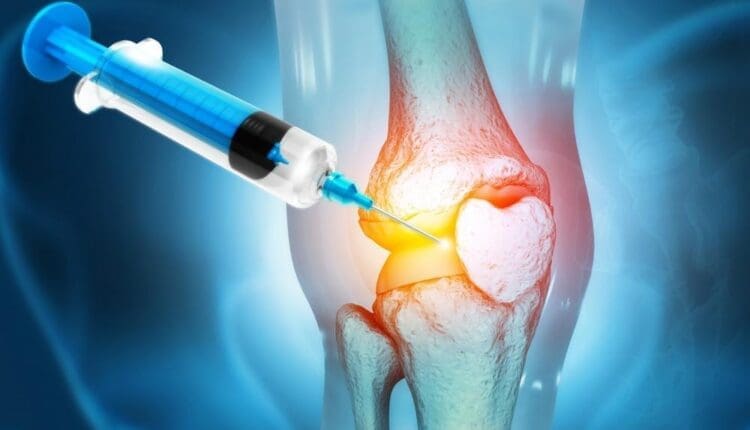
Why Joint Pain Can Continue After an Accident
A car crash, fall, lifting injury, or workplace accident may damage several tissues at once. A joint may be sprained, a tendon may be partly torn, a ligament may be stretched, or a spinal nerve may become irritated. Swelling and muscle guarding can then limit normal movement.
As the person tries to avoid pain, they may begin to walk, sit, lift, or turn differently. These changes can place extra stress on nearby joints and muscles. A knee injury, for example, may change the person’s walking pattern and place greater pressure on the hip or lower back.
Pain medicine may help provide short-term comfort, but it does not rebuild a weak tendon or correct an unhealthy movement pattern. Regenerative and rehabilitative care takes a wider approach. The goals are to identify the injury, control inflammation, support healing, restore motion, rebuild strength, and help the patient return to normal activity safely (D’Souza et al., 2024; UPMC, n.d.).
What Regenerative Medicine Can—and Cannot—Do
Regenerative medicine uses biological materials or healing signals to improve the environment around damaged tissue. Some treatments use the patient’s own blood or fat. These treatments may reduce pain and improve function in selected joint and soft-tissue conditions.
However, the word “regenerative” does not mean that every injection grows new cartilage, repairs every tear, or prevents surgery. Research shows that symptoms and function may improve even when an MRI or another imaging test does not show complete tissue regrowth (D’Souza et al., 2024).
A proper diagnosis must come first. The healthcare provider should review:
- How the accident happened
- The location and type of pain
- Physical examination findings
- Imaging and medical records
- Current medications
- Previous treatments
- Health conditions that may affect healing
The best treatment depends on the injured tissue, the severity of the damage, the patient’s goals, and the quality of evidence supporting the procedure.
PRP: Healing Signals From the Patient’s Blood
Platelet-rich plasma begins with a blood draw. The blood is placed in a centrifuge, which spins the sample and separates its different parts. This process creates a plasma solution with a higher concentration of platelets. The prepared PRP is then injected into a selected joint, tendon, ligament, muscle, or other injured area.
Platelets help the blood clot, but they also release growth factors and chemical signals involved in tissue repair. PRP may help control inflammation, support collagen production, and improve the healing environment around injured tissue.
It is commonly studied for:
- Knee osteoarthritis
- Rotator cuff and shoulder injuries
- Tennis elbow
- Achilles tendon injuries
- Patellar tendon problems
- Ligament sprains
- Muscle injuries
- Selected cartilage conditions
PRP uses material from the patient’s own blood and delivers concentrated healing signals to a targeted area. Studies and clinical guidelines report possible pain and function improvements in several joint and tendon conditions, although results vary by diagnosis and patient (Phoenix Integrated Medical Center, n.d.; University of Iowa Health Care, n.d.).
PRP is not one standard product. Several factors can affect the results:
- The number of platelets
- The amount of white blood cells
- The preparation equipment
- The injection location
- The use of imaging guidance
- The severity of the injury
- The rehabilitation plan after treatment
PRP is not a guaranteed cure. Its purpose is to support the body’s healing response rather than simply cover up pain symptoms (D’Souza et al., 2024; FoRM Health, 2025).
PFP: A Fibrin Framework for Repair
Platelet-fibrin products, or PFP, are blood-based products that include a fibrin matrix. The term may overlap with platelet-rich fibrin, or PRF, depending on how the product is prepared and named.
Fibrin works like a soft net or scaffold. It may help hold platelets and growth factors close to the injured area instead of allowing them to move away quickly. This may provide a slower and more controlled release of healing signals.
PFP may be considered for selected:
- Tendon injuries
- Ligament injuries
- Joint conditions
- Soft-tissue weakness
- Chronic musculoskeletal injuries
Research suggests that platelet concentrates may support cell communication, blood vessel development, inflammation control, and tissue repair. However, preparation methods differ, and the evidence is not equally strong for every injury or joint (Mariani & Pulsatelli, 2020).
Before treatment, patients should ask:
- What exact platelet-fibrin product will be used?
- How is it different from PRP?
- Why is it being recommended for this injury?
- Will ultrasound or another imaging method guide the injection?
- What rehabilitation plan will follow the procedure?
MFAT: Supportive Tissue From the Patient’s Own Fat
Micro-fragmented adipose tissue comes from a small amount of the patient’s own fat. The tissue is often collected from the abdomen, waist, or side of the body. It is then cleaned and mechanically processed into very small fragments before being placed into an injured joint or soft-tissue area.
MFAT contains structural tissue, signaling cells, blood-vessel-related cells, and natural cushioning materials. It should not automatically be described as laboratory-grown stem cell therapy. It is a minimally processed tissue product that keeps several natural parts of fat tissue together (University of Iowa Health Care, n.d.).
MFAT is often discussed for more advanced or long-lasting joint problems, especially knee osteoarthritis. It may be considered when a joint has greater tissue breakdown or when simpler treatment methods have not provided enough improvement.
Studies report possible improvements in pain, mobility, and joint function. However, MFAT research is still developing, and it is not proven to rebuild every damaged joint.
Possible risks include:
- Soreness
- Swelling
- Bruising
- Bleeding
- Infection
- Pain at the collection site
- Temporary joint stiffness
Patients must be screened carefully before the procedure (Li et al., 2023).
Epidural Injections: Calming an Irritated Spinal Nerve
Epidural spinal injections are different from PRP, PFP, and MFAT. A standard epidural steroid injection is mainly an anti-inflammatory pain treatment. It is not normally considered a tissue-regeneration procedure.
During the procedure, corticosteroid medication, often combined with a local anesthetic, is placed into the epidural space around irritated spinal nerves.
An epidural injection may be considered when an accident-related disc injury or spinal condition causes:
- Sciatica
- Radiating leg pain
- Radiating arm pain
- Numbness
- Tingling
- Nerve-root inflammation
- Pain that limits walking or sleep
- Pain that prevents participation in rehabilitation
A 2025 American Academy of Neurology review found that epidural steroid injections provide limited benefits. Their clearest value is short-term improvement for some patients with cervical or lumbar radiculopathy, which is pain caused by an irritated or compressed nerve root (Armon et al., 2025).
An epidural injection may reduce inflammation and make it easier for the patient to walk, sleep, and participate in rehabilitation. However, it cannot correct weak core muscles, stiff joints, poor posture, or unsafe lifting habits.
Researchers are also studying epidural PRP for disc-related pain and radiculopathy. Epidural PRP must be discussed separately from a standard steroid epidural because the injected material, treatment goal, evidence level, and regulatory concerns are different.
All epidural procedures require careful screening, sterile technique, imaging guidance, and an appropriately licensed healthcare professional.
Peptide Therapies: Promising but Still Emerging
Peptides are short chains of amino acids that act as signals in the body. Scientists are studying peptide-based treatments for inflammation, nerve support, wound healing, and musculoskeletal repair.
BPC-157 and thymosin-related products are often discussed in sports medicine and regenerative medicine. Laboratory and animal studies have reported possible effects on blood vessel development, inflammation, tendon healing, and tissue repair.
However, the level of evidence is important. Much of the support for injury-related peptides comes from laboratory or animal research. Human studies are small, limited, or missing. A recent orthopedic review found possible future value for peptide-based treatments, but stronger research is needed to determine effective doses, delivery methods, long-term safety, and clinical results (Goulian et al., 2025).
The U.S. Food and Drug Administration has identified safety and quality concerns involving several bulk peptide substances used in compounding, including BPC-157 and thymosin beta-4 fragments. Compounded drugs are not FDA-approved. This means the FDA does not verify their safety, effectiveness, or quality before they are marketed (U.S. Food and Drug Administration [FDA], 2026).
Peptide therapy should not be promoted as a proven cure for accident-related joint damage. Patients need:
- Medical screening
- Clear informed consent
- Reliable product sourcing
- A review of possible side effects
- An explanation of the evidence
- A discussion of approved, off-label, compounded, or investigational status
How Chiropractic Care and Rehabilitation Fit In
An injection can target injured tissue or an irritated nerve, but it cannot complete the full recovery process. The body must also regain normal movement, strength, balance, and coordination.
Chiropractic care may include:
- Spinal manipulation
- Gentle joint mobilization
- Soft-tissue treatment
- Posture training
- Movement education
- Corrective exercises
- Spinal decompression when appropriate
- Home exercise recommendations
The goal is to improve joint motion and function. It is not simply to “put bones back in place.” Chiropractors commonly evaluate musculoskeletal problems and use manual treatment, exercise, and patient education to improve mobility and function (National Center for Complementary and Integrative Health, 2019).
For example, a knee injury may change the way a person walks and strain the hip or lower back. A shoulder injury may cause the neck and upper back to compensate. A lower-back injury may lead to stiff hips and weak abdominal muscles.
A combined treatment plan may include:
- A regenerative or pain-relieving injection when appropriate
- Chiropractic care to improve motion and reduce stiffness
- Physical rehabilitation to rebuild strength and stability
- Balance and walking retraining
- Posture correction
- Work-specific lifting education
- A gradual return to work and exercise
Dr. Alexander Jimenez, DC, APRN, FNP-BC, CCST, CFMP, IFMCP, ATN, has described a clinical model in which regenerative medicine supports the biological side of healing while chiropractic care and rehabilitation address movement, strength, and repeated mechanical stress.
These are Dr. Jimenez’s clinical observations and practice principles. They are not a promise that one treatment combination will work for every patient (Jimenez, 2026a, 2026b).
Multidisciplinary Care at Injury Medical Clinic PA
At Injury Medical Clinic PA in El Paso, Texas, Dr. Jimenez works within a multidisciplinary model that combines:
- Chiropractic care
- Functional medicine
- Personal injury care
- Medical evaluation
- Physical rehabilitation
- Musculoskeletal treatment
- Spinal care
- Related wellness services
According to the practice’s published professional profile, Dr. Maria Guadalupe Cardenas, MD, is Board Certified in Internal Medicine and has more than 40 years of experience as an internist. She serves as Medical Director and Collaborative Physician at Injury Medical Clinic PA. The practice lists her NPI as #1164426749 and her Texas medical license as #J2933 (Jimenez, 2026c).
Dr. Jimenez focuses on chiropractic evaluation, musculoskeletal function, personal injury care, functional medicine, and rehabilitation. Dr. Cardenas provides medical direction and collaborative oversight.
Internal medicine review may be especially important when a patient has:
- Diabetes
- High blood pressure
- Cardiovascular disease
- Obesity
- Thyroid problems
- Medication concerns
- A bleeding disorder
- Another condition that may affect healing
This type of collaboration helps the team consider both the accident injury and the patient’s overall health.
Functional medicine services may review nutrition, sleep, physical activity, blood sugar, body composition, and other health factors that can support or slow recovery. These services do not replace emergency care, surgery, medication, or treatment for a diagnosed disease. They add another layer to a coordinated care plan.
A Clear Recovery Path After an Accident
A patient-centered recovery plan may move through several stages.
1. Identify the Injury
The team reviews the patient’s symptoms, range of motion, strength, neurological findings, medical history, and imaging.
2. Control Pain and Inflammation
Treatment may include activity changes, chiropractic care, medication, physical therapy, or a targeted injection.
3. Support Damaged Tissue
PRP, PFP, or MFAT may be considered when the diagnosis and available evidence support the choice.
4. Restore Movement
Chiropractic care, mobility exercises, and soft-tissue treatment may help improve joint motion and reduce harmful compensation.
5. Rebuild Strength
Rehabilitation exercises improve stability, endurance, balance, coordination, and safer movement.
6. Track Progress
The healthcare team measures changes in pain, motion, strength, neurological findings, daily function, and work ability.
7. Return Gradually
Work duties, exercise, lifting, and normal daily activities are increased according to the patient’s objective progress.
Clear records are also important in personal injury and workplace accident care. Documentation may include the diagnosis, examination findings, treatment response, activity limits, work restrictions, referrals, and progress over time.
Final Thoughts
Regenerative medicine may help selected patients with joint pain after automobile and work accidents, but each treatment has a different purpose.
PRP and PFP deliver platelet-based healing signals. MFAT provides a more complex tissue environment with structural and signaling components. Standard epidural injections mainly reduce inflammation around irritated spinal nerves. Peptide therapies remain an emerging area with major evidence, safety, and regulatory limits.
The strongest plan is usually not based on one injection alone. It combines an accurate diagnosis, medical oversight, targeted treatment, chiropractic care, physical rehabilitation, and attention to the patient’s overall health.
This coordinated approach supports both sides of recovery: helping injured tissue while teaching the body to move safely again.
References
Armon, C., et al. (2025). Epidural steroids for cervical and lumbar radicular pain and spinal stenosis: A systematic review summary.
D’Souza, R. S., et al. (2024). Evidence-based clinical practice guidelines on regenerative medicine treatment for chronic pain. Journal of Pain Research, 17, 2951–3001.
FoRM Health. (2025, March 12). Understanding regenerative injection therapies: PRP, MFAT, and prolotherapy.
Georgia Injury Centers. (2024, September 30). Treatment for back injuries after a car accident.
Goulian, A. J., et al. (2025). Advancements in regenerative therapies for orthopedics. Journal of Clinical Medicine, 14(6), 2061.
Jimenez, A. (2026a, July 27). How regenerative medicine and chiropractic care work together.
Jimenez, A. (2026b). Regenerative options for personal injury recovery.
Jimenez, A. (2026c). Dr. Maria Cardenas, MD: Board-certified internal medicine specialist.
Li, W., Guo, H., Wang, C., Zhang, Y., and Wang, J. (2023). Autologous micro-fragmented adipose tissue in the treatment of knee osteoarthritis: A systematic review and meta-analysis. PLOS ONE, 18(8), e0289610.
Mariani, E., and Pulsatelli, L. (2020). Platelet concentrates in musculoskeletal medicine. International Journal of Molecular Sciences, 21(4), 1328.
National Center for Complementary and Integrative Health. (2019). Chiropractic: In depth.
New Jersey Pain Therapy. (n.d.). Epidural injections.
Orthopedic Specialty Institute. (n.d.). Peptide injections vs. platelet-rich plasma therapy for musculoskeletal injuries.
Phoenix Integrated Medical Center. (n.d.). The science behind PRP injections for joint regeneration.
Physicians Group LLC. (n.d.). Regenerative therapy for joint pain: A modern approach.
University of Iowa Health Care. (n.d.). Regenerative medicine.
UPMC. (n.d.). Regenerative injection therapy.
Wesley Chapel Spine & Sports Medicine. (n.d.). Regenerative medicine relief and how it works.
Woodlands Pain Doctor. (2026, January 14). Regenerative medicine for chronic pain: PRP and stem cell therapy explained.
YouTube. (n.d.). Regenerative medicine video resource for knee and joint care.
Post Disclaimer
General Disclaimer, Licenses and Board Certifications *
Professional Scope of Practice *
The information herein on "Regenerative Joint Pain Care After MVAs and Work Injuries" is not intended to replace a one-on-one relationship with a qualified health care professional or licensed physician and is not medical advice. We encourage you to make healthcare decisions based on your research and partnership with a qualified healthcare professional.
Blog Information & Scope Discussions
Welcome to El Paso's Premier Wellness and Injury Care Clinic & Wellness Blog, where Dr. Alex Jimenez, DC, FNP-C, a Multi-State board-certified Family Practice Nurse Practitioner (FNP-BC) and Chiropractor (DC), presents insights on how our multidisciplinary team is dedicated to holistic healing and personalized care. Our practice aligns with evidence-based treatment protocols inspired by integrative medicine principles, similar to those on this site and on our family practice-based chiromed.com site, focusing on naturally restoring health for patients of all ages.
Our areas of multidisciplinary practice include Wellness & Nutrition, Chronic Pain, Personal Injury, Auto Accident Care, Work Injuries, Back Injury, Low Back Pain, Neck Pain, Migraine Headaches, Sports Injuries, Severe Sciatica, Scoliosis, Complex Herniated Discs, Fibromyalgia, Chronic Pain, Complex Injuries, Stress Management, Functional Medicine Treatments, and in-scope care protocols.
Our information scope is multidisciplinary, focusing on musculoskeletal and physical medicine; wellness; contributing etiological viscerosomatic disturbances within clinical presentations; associated somato-visceral reflex clinical dynamics; subluxation complexes; sensitive health issues; and functional medicine articles, topics, and discussions.
We provide and present clinical collaboration with specialists from various disciplines. Each specialist follows their professional scope of practice and licensure jurisdiction. We use functional health & wellness protocols to treat and support care for musculoskeletal injuries or disorders.
Our videos, posts, topics, and insights address clinical matters and issues that directly or indirectly relate to our clinical scope of practice.
Our office has made a reasonable effort to provide supportive citations and has identified relevant research studies that support our posts. We provide copies of supporting research studies upon request to regulatory boards and the public.
For further discussion on how this information relates to specific care plans or treatment protocols, please ask Dr. Alex Jimenez, DC, APRN, FNP-BC, or contact us at 915-850-0900.
We are here to help you and your family.
Blessings
Dr. Alex Jimenez DC, MSACP, APRN, FNP-BC*, CCST, IFMCP, CFMP, ATN
Email: [email protected]
Multidisciplinary Licensing & Board Certifications:
Licensed as a Doctor of Chiropractic (DC) in Texas & New Mexico*
Chiropractic Licenses:
Texas DC License #: TX5807, Verified: TX5807
New Mexico DC License #: NM-DC2182, Verified: NM-DC2182
Nurse Practitioner Licenses:
Texas APRN License #: 1191402, Verified: 1191402 *
New Mexico CNP License #: 90560, Verified 90560
Florida APRN License #: 11043890, Verified: APRN11043890 *
Colorado License #: C-APN.0105610-C-NP, Verified: C-APN.0105610-C-NP
New York License #: N25929, Verified N25929
Georgia APRN License #: GAA-NP005701
Multi-State Advanced Practice Registered Nurse (APRN*) Texas & Multi-States
Multi-state Compact APRN License by Endorsement (43 States)
Compact Status: Multi-State License: Authorized to Practice in 43 States*
Nursing Licensure Compact: Updated Here
DEA Registration: (Drug Enforcement Agency Registered)
All medical (MDs) and family practice providers (FNP-APRN) are registered and licensed to offer various levels of medication.
Verify Providers' DEA Registration Here
License Verification Link: Nursys License Verifier
* Prescriptive Authority Authorized (DEA Registered Providers). Call if Required
Board Certification:
ANCC FNP-BC: Board Certified Nurse Practitioner*
Education:
Graduate with Honors: ICHS: MSN-FNP (Family Nurse Practitioner Program)
Degree Granted. Master's in Family Practice, MSN Diploma (Cum Laude)
Dr. Alex Jimenez, DC, APRN, FNP-BC*, CFMP, IFMCP, ATN, CCST
(Board Certified: Family Practice Nurse Practitioner—Multistate)*
(Licensed Nurse Practitioner & Chiropractor - Multistate)*
Clinical Director
DC & FNP License (Review Above)
Digital Business Card
NPI: 1205907805
Dr. Maria Cardenas, MD
(Board Certified: Internal Medicine)
(Licensed Medical Doctor)
Medical Director, Clinical Director & Collaborative Physician
NPI # 1164426748
MD License #: J2933
Licenses and Board Certifications:
MD: Medical Doctor
DC: Doctor of Chiropractic
APRNP: Advanced Practice Registered Nurse
FNP-BC: Family Practice Specialization (Multi-State Board Certified)
FNP-BC: Family Practice Across Life Span (Neonatal to Geriatrics)
RN: Registered Nurse (Multi-State Compact License)
CFMP: Certified Functional Medicine Provider
MSN-FNP: Master of Science in Family Practice Medicine
MSACP: Master of Science in Advanced Clinical Practice
IFMCP: Institute of Functional Medicine
CCST: Certified Chiropractic Spinal Trauma
ATN: Advanced Translational Neutrogenomics
Family with Primary Care Focus (Family Nurse Practitioner or FNP)
- The Family Nurse Practitioner (FNP) promotes, maintains, and restores health for individuals and families across the lifespan. FNPs also identify health risks, promote wellness, and diagnose and manage acute and chronic illness.
- The FNP focuses on comprehensive primary care, promoting healthy lifestyles for patients across the lifespan in settings such as private practice, physician offices, and community health centers.
Memberships & Associations:
TCA: Texas Chiropractic Association: Member ID: 104311
TNA: Texas Nurse Association: Member ID: 06458222
TNP: Texas Nurse Practitioner Association ID: 2025091511
AANP: American Association of Nurse Practitioners: Member ID: 2198960
ANA: American Nurses Association: Member ID: 06458222 (District TX01)
| Primary Taxonomy | Selected Taxonomy | State | License Number |
|---|---|---|---|
| No | 111N00000X - Chiropractor | NM | DC2182 |
| Yes | 111N00000X - Chiropractor | TX | DC5807 |
| Yes | 363LF0000X - Nurse Practitioner - Family | TX | 1191402 |
| Yes | 363LF0000X - Nurse Practitioner - Family | FL | 11043890 |
| Yes | 363LF0000X - Nurse Practitioner - Family | CO | C-APN.0105610-C-NP |
| Yes | 363LF0000X - Nurse Practitioner - Family | NY | N25929 |
| Yes | 363LF0000X - Nurse Practitioner - Family | NM |
90560 |
| Yes | 363LF0000X - Nurse Practitioner - Family | GA | GAA-NP005701 |
Dr. Alex Jimenez, DC, APRN, FNP-BC*, CFMP, IFMCP, ATN, CCST
(Board Certified: Family Practice Nurse Practitioner—Multistate)*
(Primary Care Across Lifespan—Neonatal / Pediatric / Adult / Geriatrics)
(Licensed Nurse Practitioner & Chiropractor - Multistate)*
Clinical Director
Digital Business Card
NPI: 1205907805
Dr. Maria Cardenas, MD
(Board Certified: Internal Medicine)*
(Licensed Medical Doctor)*
Medical Director, Clinical Director & Collaborative Physician
NPI # 1164426748
MD License #: J2933
📆 Schedule Appointment: Schedule 24/7 (Click Here)