
Table of Contents
Introduction: Navigating the New Frontier of Healing
As a clinician with dual qualifications as a Doctor of Chiropractic (DC) and a Family Nurse Practitioner (FNP-APRN), my career has been a dedicated journey into the complicated realm of human healing. I have always been driven by a fundamental question: How can we move beyond merely managing symptoms and instead catalyze the body’s innate capacity to repair and regenerate itself? This pursuit has led me to the forefront of regenerative medicine, a field that is revolutionizing how we approach musculoskeletal injuries, chronic pain, and degenerative conditions. Today, I want to share insights from my clinical practice and the latest evidence-based research into two of the most powerful tools in our regenerative arsenal: Extracorporeal Shockwave Therapy (ESWT) and Platelet-Rich Plasma (PRP). More specifically, I aim to examine the profound synergy that arises when we combine these two modalities, which often results in a far greater therapeutic effect than the sum of their individual parts.
We designed this educational post to provide a comprehensive exploration for both patients seeking answers and fellow healthcare professionals interested in the latest advancements. We will begin by demystifying each therapy individually. Could you please explain what shockwave therapy is? How does this acoustic energy, delivered non-invasively, trigger a cascade of biological healing responses at the cellular level? We’ll explore the science of mechanotransduction—how physical forces are converted into biochemical signals that reduce inflammation, stimulate blood flow, and recruit stem cells to the site of injury. We’ll then turn our attention to Platelet-Rich Plasma, or PRP. This is a treatment that harnesses the healing power contained within your blood. We will walk through the process of how a simple blood draw is transformed into a super-concentrated solution of platelets and growth factors, the very proteins your body uses to orchestrate tissue repair. We will discuss the specific roles of key growth factors, such as PDGF, TGF-β, and VEGF, in rebuilding everything from tendons and ligaments to cartilage and bone.
The core of our discussion, however, will focus on the pivotal question: Why combine these therapies? Is shockwave therapy sufficient? When is PRP the better choice? And when does a combination protocol offer the definitive advantage? I will share my clinical philosophy, which I often describe as “dating before we marry.” We’ll discuss how we tailor treatment plans to the individual, considering the severity of the pathology, the patient’s goals, and their tolerance for downtime. A series of shockwave sessions might be the best place to start for less serious problems. But for moderate-to-severe conditions or for individuals seeking the most robust and comprehensive outcomes, the combination of PRP and shockwave therapy has consistently proven to be a clinical game-changer in my practice. We will look at how shockwave therapy helps by improving blood flow and reducing inflammation while also activating the PRP we inject, which boosts growth factors and promotes healing. We will examine how this combination allows for a more holistic treatment, addressing not just the primary site of injury but also the surrounding compensatory patterns, myofascial trigger points, and referred pain that so often accompany chronic conditions. This program is a journey into the heart of modern, evidence-based, and personalized regenerative medicine.
Customizing Your Healing Journey: The Art and Science of Personalized Treatment Plans
In the world of regenerative medicine, a one-size-fits-all approach is not only ineffective; it’s a disservice to each patient’s unique biological landscape. Every individual who walks into my clinic presents with a distinct story written in their physiology. They have a specific injury, a unique medical history, different lifestyle demands, and personal goals for their recovery. Therefore, the cornerstone of my practice is the deep-seated belief in customized treatment plans. My primary role is not to apply a protocol but to act as a clinical detective and strategic partner, co-creating a precisely tailored therapeutic path for the person in front of me. This philosophy is about meeting you where you are and designing a plan that aligns with your condition and life circumstances.
Let’s break down how this personalization takes shape. The first step is always a meticulous diagnostic process. This step involves a thorough physical examination, a detailed discussion of your symptoms and history, and, often, advanced imaging such as musculoskeletal ultrasound or MRI. Is the issue a mild tendinopathy, a small, partial tear in a tendon with minimal inflammation? Or are we looking at a significant, chronic degenerative condition, such as advanced osteoarthritis in the knee with meniscal tears and ligamentous laxity? The answer to this question represents the initial pivotal point in the treatment planning process.
For a patient with a relatively mild issue, let’s say an early-stage case of tennis elbow (lateral epicondylitis) or plantar fasciitis that has been present for a few weeks, their goals might be a swift return to activity with minimal disruption to their daily life. They may be hesitant to undergo a more invasive procedure or one that requires a period of rest and recovery. In this scenario, I often use the analogy of “dating before we marry.” This means we can start with a more conservative, yet still powerfully effective, regenerative approach. We might initiate a standalone course of Extracorporeal Shockwave Therapy (ESWT). The procedure involves a series of treatments, typically spaced a week apart, over three to five sessions.
The rationale here is multifaceted. Shockwave, being multifaceted and non-invasive, has virtually no downtime and can produce significant results for these milder pathologies. It works by delivering focused acoustic waves into the injured tissue, triggering a powerful biological response called mechanotransduction. This process stimulates the release of anti-inflammatory markers, promotes the formation of new blood vessels (angiogenesis), and breaks down scar tissue and calcifications. For a mild tendinopathy, this process may be all that is needed to break the cycle of chronic pain and inflammation and restart the body’s natural healing cascade. We are essentially giving the body a powerful nudge in the right direction without committing to a more involved procedure. We can assess the response over these few weeks. If the patient achieves 80–90% improvement, we have succeeded in a targeted, efficient intervention. If the improvement is satisfactory but incomplete, we haven’t lost anything; we have, in fact, “primed” the tissue, making it more receptive to a subsequent, more definitive treatment, such as Platelet-Rich Plasma (PRP), if needed. This stepwise approach respects the patient’s desire to start conservatively and provides a clear understanding of their treatment journey.
Escalating Care for Complex Cases: The Comprehensive Approach
Now, let’s consider the other end of the spectrum. A patient presents with a moderate or significant pathology. This could be a shoulder injury from a rotator cuff tear that hasn’t improved with standard treatment, moderate knee arthritis with damage to the meniscus, or long-term Achilles tendon issues that show thickening and wear on an ultrasound. These individuals are often dealing with daily pain, significant functional limitations, and a deep desire for a more definitive solution. They are not just seeking temporary relief; they are seeking true tissue repair and a long-term resolution.
For these patients, or for any individual who wants the most comprehensive and powerful approach from the outset, a standalone therapy may not be enough. This is where we move beyond “dating” and propose a more committed relationship: a combination protocol of Platelet-Rich Plasma (PRP) plus Shockwave Therapy. In my clinical experience, and as supported by a growing body of research, this synergistic combination often yields the most profound and lasting results. I almost always recommend this dual approach for moderate-to-severe cases because the evidence of superior outcomes is simply too compelling to ignore.
The rationale for this combination strategy is rooted in a deep understanding of the healing process. Significant tissue damage often compromises the healing environment. There may be poor blood supply (a hallmark of chronic tendinopathies), excessive inflammation, and an accumulation of dysfunctional scar tissue. A single modality might struggle to overcome all these barriers simultaneously.
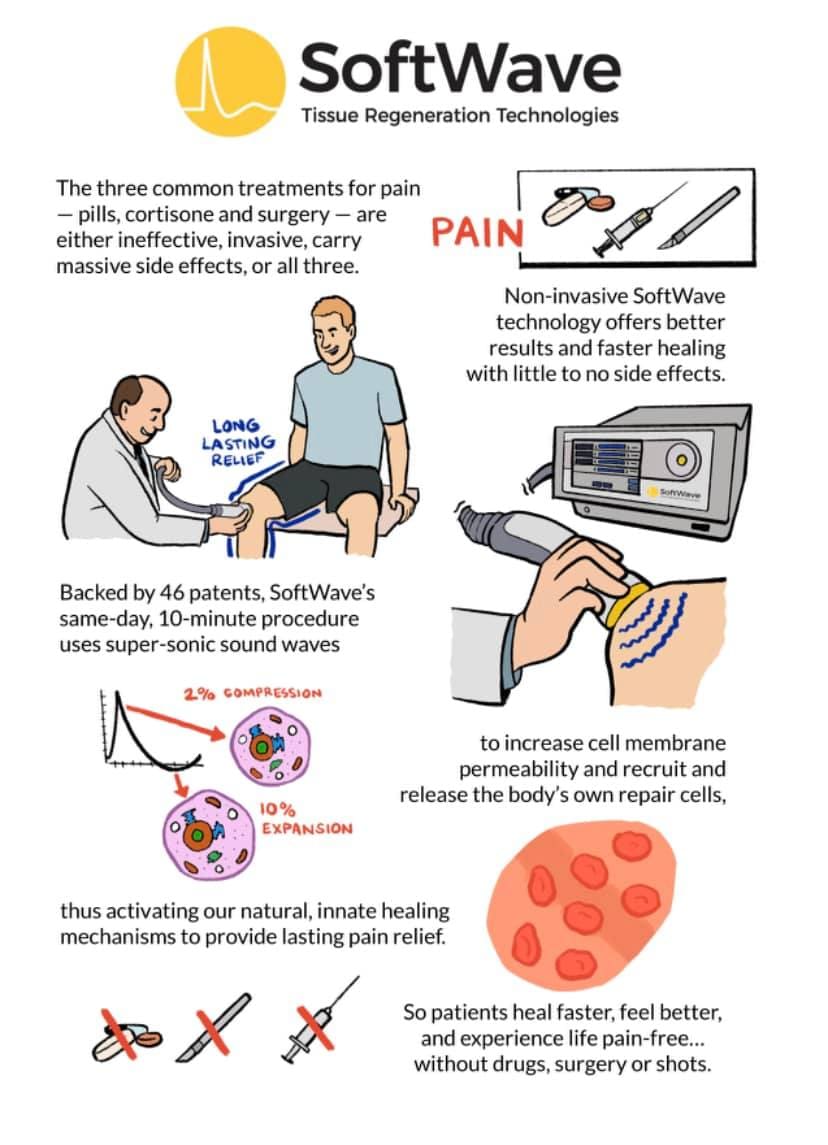
Here’s how the combination tackles the problem from multiple angles:
- PRP delivers a high concentration of growth factors, which are biological signals that serve as blueprints for tissue regeneration, directly to the site of injury. These growth factors, like Platelet-Derived Growth Factor (PDGF), Transforming Growth Factor-beta (TGF-β), and Vascular Endothelial Growth Factor, call in stem cells, stimulate the formation of new collagen (the primary protein in tendons and ligaments), and promote the development of new blood vessels. PRP provides the raw materials and the instruction manual for rebuilding the damaged tissue.
- Shockwave Prepares the “Construction Site” and Amplifies the Signal: The role of shockwave therapy in this combination is multifaceted and crucial.
- PrmultifacetedTerrain: Before and after the PRP injection, we use shockwave therapy on the injured area and the surrounding tissues. This acts like preparing the construction site. It increases blood flow to the region, ensuring that the injected PRP has the oxygen and nutrients it needs to thrive. It also has a powerful anti-inflammatory effect and helps to break down fibrotic, unhealthy scar tissue, creating a more favorable environment for regeneration.
- Activating the PRP: Emerging research suggests that the mechanical energy of shockwave therapy can directly activate the platelets within the injected PRP. This mechanical stimulation causes platelets to degranulate and release their growth-factor payload more effectively and over a longer period. In essence, the shockwave acts as a catalyst, “waking up” the PRP and making it work harder and more efficiently.
 The “Broad Brushstroke” Effect: This concept is critically important in clinical practice. When we perform a PRP injection, even with precise ultrasound guidance, we are targeting specific, discrete structures. In a complex joint like the knee, we might inject the medial meniscus, the medial collateral ligament (MCL), and the patellar tendon. However, chronic pain is rarely isolated to a single structure. It often involves compensatory muscle tightness, widespread inflammation, and the development of myofascial trigger points in the surrounding musculature (e.g., the quadriceps, hamstrings, and calf muscles). These trigger points can be a significant source of ongoing pain and dysfunction. A needle can’t address all of these diffuse issues. Shockwave therapy, however, can. By using a wider treatment head, we can apply the therapy over all these affected muscles and fascial planes. This procedure acts as a “broad brushstroke,” treating the entire dysfunctional kinetic chain, releasing trigger points, reducing myofascial pain, and ensuring that we are addressing not just the primary injury but the entire pain syndrome.
In summary, the decision to use shockwave alone versus a PRP-shockwave combination is highly personalized, guided by a thorough diagnosis and a collaborative discussion with the patient. For mild issues, shockwave alone offers an excellent, noninvasive starting point. For more serious conditions or for those wanting the best results, using both PRP and shockwave together offers a complete solution that enhances healing and treats the area effectively, representing the latest advancements in regenerative orthopedics.
The Synergistic Power of Combination Therapy: Why One Plus One Equals Three
In regenerative medicine, we seek therapies that enhance one another’s effectiveness. This is the principle of synergy, where the combined effect of two treatments is greater than the sum of their individual effects. The combination of Extracorporeal Shockwave Therapy (ESWT) and Platelet-Rich Plasma (PRP) is perhaps one of the most compelling examples of clinical synergy I have witnessed in my practice. To truly appreciate why this combination is so powerful, we need to learn about the distinct yet complementary mechanisms of each therapy and understand how they interact at a biological level.
As I’ve mentioned, in my practice, I almost always recommend the combination of shockwave and PRP for anyone with moderate to severe musculoskeletal issues. The question I often get from patients is, “Why both? Isn’t the PRP enough?” And my answer is always the same: “Why would we settle for a good outcome when an excellent one is achievable?” The evidence, both from leading research and from the real-world results I see in my clinic every day, overwhelmingly supports the idea that this combination leads to better, faster, and more comprehensive healing.
Let’s break down the physiological underpinnings of this synergy. A chronic injury, such as a degenerated rotator cuff tendon, can be compared to a neglected, barren garden plot. The soil is hard and fibrotic (scar tissue), there are no water lines (poor blood supply), and the environment is inhospitable to new growth (chronic inflammation).
PRP: Planting the Seeds of Regeneration
When we inject PRP, we are essentially planting high-quality seeds in this garden. The PRP is a concentration of your body’s own platelets, and each platelet is a microscopic warehouse filled with potent growth factors and cytokines. These signaling proteins orchestrate the entire process of tissue repair. Key players include:
- Platelet-Derived Growth Factor (PDGF): This gene is a key controller that encourages cells to grow, helps create new blood vessels, and supports the making of new tissue. It’s like the initial signal that says, “It’s time to rebuild here!”
- Transforming Growth Factor-beta (TGF-β): This growth factor is crucial for stimulating collagen production, the primary structural protein in our tendons, ligaments, and skin. It provides the scaffolding for the new tissue.
- Vascular Endothelial Growth Factor (VEGF): As its name implies, VEGF is the primary driver of angiogenesis, the formation of new blood vessels. A robust blood supply is absolutely critical for delivering oxygen and nutrients to the healing tissue and for removing waste products. Without it, healing stalls.
- Fibroblast Growth Factor (FGF): This protein stimulates the proliferation of fibroblasts, the cells responsible for creating the collagen-rich extracellular matrix.
So, the PRP injection delivers this powerful cocktail of regenerative signals directly to the site of injury. We are providing the essential biological “blueprints” for repair. However, the hard, barren soil may limit the growth potential of these seeds.
Shockwave: Cultivating the Soil and Nurturing the Seeds
This is where shockwave therapy comes in, serving as the master gardener. Its role is not to plant the seeds but to create the perfect environment for them to germinate, grow, and flourish. Shockwave achieves these goals through several critical mechanisms:
- Tilling the Soil (Breaking Down Scar Tissue): The acoustic pressure waves of ESWT exert a mechanical force on the tissue. This force helps to break down disorganized, dysfunctional fibrotic scar tissue and pathological calcifications. By “tilling” this hardened soil, we create a more pliable, receptive tissue environment for new, healthy cells to grow and organize correctly.
- Installing the Irrigation System (Angiogenesis): One of the most well-documented effects of shockwave therapy is its potent upregulation of VEGF, thereby stimulating angiogenesis. The mechanical stress on the cells triggers a cascade that leads to the sprouting of new capillaries and blood vessels in the chronically underperfused tissue. This act is like installing a new irrigation system in our garden plot, ensuring the “seeds” (the growth factors and cells recruited by PRP) have the vital blood supply they need to thrive.
- Shockwave therapy sends out a signal that attracts the body’s own stem cells to the area being treated. These stem cells are pluripotent, meaning they can differentiate into various cell types needed for repair, such as tenocytes (tendon cells) or chondrocytes (cartilage cells). Additionally, shockwave therapy helps control inflammation by reducing harmful substances like TNF-alpha and IL-1 while increasing helpful ones that fight inflammation. This shifts the tissue from chronic, destructive inflammation to acute, pro-regenerative inflammation.
- Activating the Seeds (Platelet Activation): This procedure is a crucial synergistic link. The mechanical forces from the shockwave can directly stimulate the injected platelets, causing them to degranulate and release their payload of growth factors. Think of it as a switch that “turns on” the PRP. This ensures a more robust and sustained release of the regenerative signals right where they are needed most. Instead of a passive release, we get an active, amplified burst of healing potential.
By combining these two modalities, we are no longer just hoping for the best. We are strategically and systematically addressing every barrier to healing. The PRP provides the “what” (the building blocks and signals), and the shockwave offers the “how” (the ideal environment and the activation signal). This technique is why one plus one truly equals three in the context of regenerative healing. The combination of shockwave therapy and PRP offers a comprehensive, multi-pronged approach to chronic injury, resulting in outcomes that are not achievable with either therapy alone.
The “Broad Brushstroke”: Addressing the Entire Pain Picture
One of the most significant clinical advantages of combining shockwave therapy with PRP, and a concept I emphasize constantly with my patients, is the ability to treat the entire pain picture with what I call the “broad brushstroke” effect. Chronic musculoskeletal pain is usually a complex problem involving multiple anatomical structures. It’s more often a complex, interconnected web of dysfunction that involves the primary injury site as well as the surrounding muscles, fascia, and neural pathways. A failure to address this entire clinical picture is one of the most common reasons why traditional treatments fail.
Let’s use the example of a patient with chronic knee pain diagnosed as moderate osteoarthritis and a medial meniscus tear. Using precise ultrasound guidance, I can perform a PRP injection. I can very accurately place the needle inside the knee joint to address the arthritis, along the path of the torn meniscus, and into any associated ligamentous laxity, like in the MCL. This technique is a highly targeted, precise intervention. The delivery of growth factors precisely targets the most significant structural damage.
However, a person who has been limping and compensating for this knee pain for months or years has developed a host of secondary problems. Their quadriceps muscle is likely weak and inhibited. Their hamstrings and calf muscles (gastrocnemius and soleus) are probably tight and riddled with myofascial trigger points—hyperirritable knots of contracted muscle fiber that can refer pain throughout the leg. The fascia, the connective tissue sheath that envelops these muscles, has become thickened and restricted. The patient’s very movement patterns (motor engrams) have been altered to avoid pain, leading to abnormal stress on the hip, ankle, and even the lower back.
The PRP injection, for all its regenerative power, cannot address these widespread compensatory issues. A needle can’t magically release a trigger point in the quadriceps or stretch the fibrotic fascia over the calf. This is where the limitations of a purely injection-based approach become clear. We might successfully stimulate some cartilage and meniscal repair, but if the patient still has significant pain coming from their tight, dysfunctional muscles, their overall clinical outcome will be disappointing. They might say, “The deep joint pain is a little better, but my whole leg still aches.”
This is precisely where the “broad brushstroke” of shockwave therapy becomes indispensable. After performing the targeted PRP injection, I can switch to the shockwave applicator. Using a wider, radial treatment head, I can now systematically treat all of the affected surrounding tissues.
- Targeting Myofascial Trigger Points: I can run the applicator over the entire quadriceps, hamstrings, adductors, and calf muscles. The shockwaves will directly target and break up those painful trigger points. The process helps by boosting blood flow, removing waste products stuck in the tight area, and breaking apart the connections that keep the muscle tight. This provides immediate pain relief and restores normal muscle function.
- Releasing Fascial Restrictions: The mechanical energy of the shockwave is also highly effective at treating myofascial pain syndromes. It helps to release adhesions between the layers of fascia and muscle, restoring normal glide and movement. The result can have a profound effect on feelings of stiffness and restricted range of motion.
- Enhancing Neuromuscular Function: By reducing pain and releasing muscle tightness, shockwave therapy helps to “reset” the neuromuscular system. It downregulates overactive pain receptors (nociceptors) and allows for the re-establishment of normal muscle firing patterns. This is a crucial step in correcting the compensatory movement strategies that perpetuate the pain cycle.
By adding this “broad brushstroke” of shockwave therapy, we transform the treatment from a simple structural repair into a comprehensive neuro-musculoskeletal reset. We are not just treating the knee; we are treating the entire leg and the dysfunctional patterns that have developed around the primary injury. This holistic approach is why the combination so often succeeds where other treatments have failed. We might find a secondary issue, a hidden trigger point or fascial adhesion that was contributing 30% of the patient’s pain, that would have been completely missed by a targeted injection alone. Shockwave allows us to find and treat these issues, ensuring a more complete and satisfying recovery for the patient. It’s a crucial distinction between simply patching a pothole and repaving the entire road.
Summary
This educational post, authored by myself, Dr. Jimenez, DC, FNP-APRN, has provided an in-depth review of the principles and clinical applications of Extracorporeal Shockwave Therapy (ESWT) and Platelet-Rich Plasma (PRP), with a special focus on the synergistic benefits of their combined use. We began by establishing the foundational philosophy of my practice: the creation of highly customized treatment plans. This approach acknowledges that each patient’s condition, goals, and physiology are unique. We discussed the “dating before we marry” strategy, where for mild musculoskeletal issues, a standalone series of 3-5 shockwave sessions can serve as an effective, non-invasive starting point. This leverages Shockwave’s ability to stimulate healing through mechanotransduction, promoting blood flow and reducing inflammation with minimal downtime. For patients with moderate-to-severe pathology or those seeking the most robust outcome, we explored the rationale for a more comprehensive combination protocol.
The core of our discussion centered on the powerful synergy between shockwave and PRP. We used the analogy of a barren garden plot to illustrate how PRP acts as the “seeds of regeneration,” providing a concentrated dose of growth factors (like PDGF, TGF-β, and VEGF) that are the essential blueprints for tissue repair. We then detailed how shockwave therapy acts as the “master gardener,” cultivating the healing environment. It does this by breaking down scar tissue, stimulating angiogenesis (the formation of new blood vessels), recruiting the body’s own stem cells, and, crucially, activating the injected PRP to enhance its potency. This multi-pronged approach addresses the complex barriers to healing present in chronic injuries. Finally, we introduced the vital concept of the “broad brushstroke” effect. While PRP injections are precise, shockwave therapy allows us to treat the entire clinical picture, including the surrounding compensatory patterns, myofascial trigger points, and fascial restrictions that are often major contributors to a patient’s pain but are missed by targeted injections alone. This holistic strategy ensures we are not just treating an injury but restoring function to the entire kinetic chain, leading to more complete and durable outcomes.
Conclusion
As of February 26, 2026, the field of regenerative medicine is not about finding a single “magic bullet,” but about the intelligent and strategic combination of therapies to amplify the body’s innate healing capabilities. The integration of Platelet-Rich Plasma and Extracorporeal Shockwave Therapy exemplifies this modern, evidence-based approach. By combining the specific healing properties of PRP with the overall stimulating effects of shockwave therapy, we can get past the weaknesses of using each treatment alone. This combination allows us to address not only the structural damage at the core of an injury but also the widespread myofascial and neuromuscular dysfunction that accompanies chronic pain. It represents a paradigm shift from simply managing symptoms to actively engineering a biological environment conducive to true and lasting repair. Traditional methods have failed patients, but this synergistic protocol offers new hope and a tangible pathway back to an active, pain-free life.
Key Insights
- Personalization is crucial: The most effective treatment plans are not universally applicable. They are tailored to the severity of the pathology, patient goals, and tolerance for downtime, ranging from standalone shockwave for mild cases to combination therapy for more complex cases.
- The goal is to create a synergistic effect by combining PRP and shockwave therapy, resulting in an outcome that surpasses the individual contributions. PRP provides the regenerative “seeds” (growth factors), while shockwave cultivates the “soil” (improves blood flow, breaks down scar tissue) and activates the PRP.
- Treat the Whole Picture, Not Just the Point of Pain: The “broad brushstroke” effect of shockwave therapy is critical. It addresses secondary issues like myofascial trigger points and fascial restrictions in surrounding tissues, which are often significant pain generators and are missed by targeted injections alone.
- Mechanism Matters: The combination works because it addresses multiple barriers to healing simultaneously. It provides the biological signals for repair (PRP) while also improving the physiological environment and amplifying the potency of those signals (shockwave). This dual action is the key to successfully treating chronic, recalcitrant injuries.
References:
- Vannini, F., Di Matteo, B., Filardo, G., & Kon, E. (2014). Platelet-rich plasma for cartilage healing and regeneration: a systematic review of the evidence on humans and animals. International Orthopaedics, 38(8), 159.
- Schmitz, C., Császár, N. B., Milz, S., Schieker, M., Maffulli, N., Rompe, J. D., & Furia, J. P. (2015). Efficacy and safety of extracorporeal shock wave therapy for orthopedic conditions: a systematic review of studies listed in the PEDro database. British Medical Bulletin, 116(1), 115–138.
- Chen, Y. J., Wang, C. J., Yang, K. D., Kuo, Y. R., Huang, H. C., & Huang, Y. T. (2004). Extracorporeal shock waves help heal Achilles tendinitis caused by collagenase and boost the levels of T Journal of Orthopaedic Research, 22(4), 854-861.
- Liao, C. D., Tsauo, J. Y., Liou, T. H., Chen, H. C., & Huang, S. W. (2021). Efficacy of extracorporeal shockwave therapy for knee osteoarthritis: a systematic review and meta-analysis. American Journal of Physical Medicine & Rehabilitation, 100(7), 675-684.
- Sciascia, A., & Rodeo, S. A. (2018). The study focuses on the role of platelet-rich plasma in the management of shoulder pathology. Current Reviews in Musculoskeletal Medicine, 11(4), 579–584.
- Zhang, D., Li, Z. L., & Li, Z. J. (2020). The study focused on the combination of platelet-rich plasma and extracorporeal shockwave therapy for the treatment of knee osteoarthritis. Journal of International Medical Research, 48(8), 0300060520949463.
This post is for educational purposes only and should not be taken as medical advice. It is not intended to be a substitute for professional medical advice, diagnosis, or treatment. The content presented reflects the clinical opinions and practices of Dr. Jimenez, DC, FNP-APRN, and is based on current research and clinical experience. However, every individual’s health situation is unique.
All individuals must obtain recommendations for their personal situations from their own qualified medical providers. Never disregard professional medical advice or delay in seeking it because of something you have read here. Always consult your physician or other qualified health provider with any questions you may have regarding a medical condition. Reliance on any information provided in this post is solely at your own risk.
Post Disclaimer
General Disclaimer, Licenses and Board Certifications *
Professional Scope of Practice *
The information herein on "A Deep Dive into Regenerative Medicine: Unlocking the Synergistic Power of Shockwave Therapy and Platelet-Rich Plasma (PRP)" is not intended to replace a one-on-one relationship with a qualified health care professional or licensed physician and is not medical advice. We encourage you to make healthcare decisions based on your research and partnership with a qualified healthcare professional.
Blog Information & Scope Discussions
Welcome to El Paso's Premier Wellness and Injury Care Clinic & Wellness Blog, where Dr. Alex Jimenez, DC, FNP-C, a Multi-State board-certified Family Practice Nurse Practitioner (FNP-BC) and Chiropractor (DC), presents insights on how our multidisciplinary team is dedicated to holistic healing and personalized care. Our practice aligns with evidence-based treatment protocols inspired by integrative medicine principles, similar to those on this site and on our family practice-based chiromed.com site, focusing on naturally restoring health for patients of all ages.
Our areas of multidisciplinary practice include Wellness & Nutrition, Chronic Pain, Personal Injury, Auto Accident Care, Work Injuries, Back Injury, Low Back Pain, Neck Pain, Migraine Headaches, Sports Injuries, Severe Sciatica, Scoliosis, Complex Herniated Discs, Fibromyalgia, Chronic Pain, Complex Injuries, Stress Management, Functional Medicine Treatments, and in-scope care protocols.
Our information scope is multidisciplinary, focusing on musculoskeletal and physical medicine; wellness; contributing etiological viscerosomatic disturbances within clinical presentations; associated somato-visceral reflex clinical dynamics; subluxation complexes; sensitive health issues; and functional medicine articles, topics, and discussions.
We provide and present clinical collaboration with specialists from various disciplines. Each specialist follows their professional scope of practice and licensure jurisdiction. We use functional health & wellness protocols to treat and support care for musculoskeletal injuries or disorders.
Our videos, posts, topics, and insights address clinical matters and issues that directly or indirectly relate to our clinical scope of practice.
Our office has made a reasonable effort to provide supportive citations and has identified relevant research studies that support our posts. We provide copies of supporting research studies upon request to regulatory boards and the public.
For further discussion on how this information relates to specific care plans or treatment protocols, please ask Dr. Alex Jimenez, DC, APRN, FNP-BC, or contact us at 915-850-0900.
We are here to help you and your family.
Blessings
Dr. Alex Jimenez DC, MSACP, APRN, FNP-BC*, CCST, IFMCP, CFMP, ATN
Email: [email protected]
Multidisciplinary Licensing & Board Certifications:
Licensed as a Doctor of Chiropractic (DC) in Texas & New Mexico*
Chiropractic Licenses:
Texas DC License #: TX5807, Verified: TX5807
New Mexico DC License #: NM-DC2182, Verified: NM-DC2182
Nurse Practitioner Licenses:
Texas APRN License #: 1191402, Verified: 1191402 *
New Mexico CNP License #: 90560, Verified 90560
Florida APRN License #: 11043890, Verified: APRN11043890 *
Colorado License #: C-APN.0105610-C-NP, Verified: C-APN.0105610-C-NP
New York License #: N25929, Verified N25929
Georgia APRN License #: GAA-NP005701
Multi-State Advanced Practice Registered Nurse (APRN*) Texas & Multi-States
Multi-state Compact APRN License by Endorsement (43 States)
Compact Status: Multi-State License: Authorized to Practice in 43 States*
Nursing Licensure Compact: Updated Here
DEA Registration: (Drug Enforcement Agency Registered)
All medical (MDs) and family practice providers (FNP-APRN) are registered and licensed to offer various levels of medication.
Verify Providers' DEA Registration Here
License Verification Link: Nursys License Verifier
* Prescriptive Authority Authorized (DEA Registered Providers). Call if Required
Board Certification:
ANCC FNP-BC: Board Certified Nurse Practitioner*
Education:
Graduate with Honors: ICHS: MSN-FNP (Family Nurse Practitioner Program)
Degree Granted. Master's in Family Practice, MSN Diploma (Cum Laude)
Dr. Alex Jimenez, DC, APRN, FNP-BC*, CFMP, IFMCP, ATN, CCST
(Board Certified: Family Practice Nurse Practitioner—Multistate)*
(Licensed Nurse Practitioner & Chiropractor - Multistate)*
Clinical Director
DC & FNP License (Review Above)
Digital Business Card
NPI: 1205907805
Dr. Maria Cardenas, MD
(Board Certified: Internal Medicine)
(Licensed Medical Doctor)
Medical Director, Clinical Director & Collaborative Physician
NPI # 1164426748
MD License #: J2933
Licenses and Board Certifications:
MD: Medical Doctor
DC: Doctor of Chiropractic
APRNP: Advanced Practice Registered Nurse
FNP-BC: Family Practice Specialization (Multi-State Board Certified)
FNP-BC: Family Practice Across Life Span (Neonatal to Geriatrics)
RN: Registered Nurse (Multi-State Compact License)
CFMP: Certified Functional Medicine Provider
MSN-FNP: Master of Science in Family Practice Medicine
MSACP: Master of Science in Advanced Clinical Practice
IFMCP: Institute of Functional Medicine
CCST: Certified Chiropractic Spinal Trauma
ATN: Advanced Translational Neutrogenomics
Family with Primary Care Focus (Family Nurse Practitioner or FNP)
- The Family Nurse Practitioner (FNP) promotes, maintains, and restores health for individuals and families across the lifespan. FNPs also identify health risks, promote wellness, and diagnose and manage acute and chronic illness.
- The FNP focuses on comprehensive primary care, promoting healthy lifestyles for patients across the lifespan in settings such as private practice, physician offices, and community health centers.
Memberships & Associations:
TCA: Texas Chiropractic Association: Member ID: 104311
TNA: Texas Nurse Association: Member ID: 06458222
TNP: Texas Nurse Practitioner Association ID: 2025091511
AANP: American Association of Nurse Practitioners: Member ID: 2198960
ANA: American Nurses Association: Member ID: 06458222 (District TX01)
| Primary Taxonomy | Selected Taxonomy | State | License Number |
|---|---|---|---|
| No | 111N00000X - Chiropractor | NM | DC2182 |
| Yes | 111N00000X - Chiropractor | TX | DC5807 |
| Yes | 363LF0000X - Nurse Practitioner - Family | TX | 1191402 |
| Yes | 363LF0000X - Nurse Practitioner - Family | FL | 11043890 |
| Yes | 363LF0000X - Nurse Practitioner - Family | CO | C-APN.0105610-C-NP |
| Yes | 363LF0000X - Nurse Practitioner - Family | NY | N25929 |
| Yes | 363LF0000X - Nurse Practitioner - Family | NM |
90560 |
| Yes | 363LF0000X - Nurse Practitioner - Family | GA | GAA-NP005701 |
Dr. Alex Jimenez, DC, APRN, FNP-BC*, CFMP, IFMCP, ATN, CCST
(Board Certified: Family Practice Nurse Practitioner—Multistate)*
(Primary Care Across Lifespan—Neonatal / Pediatric / Adult / Geriatrics)
(Licensed Nurse Practitioner & Chiropractor - Multistate)*
Clinical Director
Digital Business Card
NPI: 1205907805
Dr. Maria Cardenas, MD
(Board Certified: Internal Medicine)*
(Licensed Medical Doctor)*
Medical Director, Clinical Director & Collaborative Physician
NPI # 1164426748
MD License #: J2933
📆 Schedule Appointment: Schedule 24/7 (Click Here)