

Explore how TBI recovery through sleep plays a crucial role in the healing process and supports cognitive function.
Table of Contents
Why Sleep Is the Most Important Part of Healing After a Traumatic Brain Injury (TBI)
Healing from a traumatic brain injury (TBI) takes time and the right support. One of the biggest helpers in this process is something simple: good sleep. When the brain gets hurt from a fall, car crash, sports hit, or other event, sleep becomes even more important than usual. During deep sleep, the brain cleans itself, fixes damaged areas, and builds new connections. Without enough quality sleep, recovery slows, symptoms worsen, and daily life becomes harder.
This article explains why sleep matters so much for TBI recovery. It also covers how factors around us can disrupt sleep, how brain disorders can create overlapping problems like headaches and fatigue, and how poor sleep harms the body and muscles. Finally, it shares safe, non-surgical ways to fix sleep issues and a simple bedtime routine anyone can try.
Why Sleep Is Vital for TBI Recovery
The brain needs sleep to heal itself after an injury. When we sleep, especially during the deep stages of slow-wave sleep, the brain undergoes important repair work. One key process is the glymphatic system, which acts like a cleaning crew. It flushes out waste products and harmful proteins that accumulate throughout the day. After a TBI, these wastes can include things linked to long-term problems, such as tau proteins or amyloid-beta (Piantino et al., 2022).
Studies show that people with TBI who get better sleep in the early days after injury often have stronger memory, better thinking skills, and improved executive function years later. For example, less broken sleep, more slow-wave sleep, and certain brain wave patterns called sleep spindles during hospital stays predict good long-term results (Sanchez et al., 2022). On the other hand, poor sleep immediately after the injury is associated with slower healing and more ongoing issues (Sandsmark et al., 2017).
Sleep also helps control brain swelling and inflammation. TBI can cause neuroinflammation that can last for months or years. Good sleep lowers this inflammation and supports the body’s natural balance (Zielinski et al., 2022). In military veterans with TBI, sleep-wake problems often continue long-term, making full recovery harder (Landvater et al., 2024).
Even mild TBI, like a concussion, disrupts sleep in 30% to 70% of cases. Common issues include trouble falling asleep, frequent waking, or feeling sleepy all day. These problems can start soon after the injury or appear later. Poor sleep blocks the brain from performing its nightly repair work, leading to longer recovery times (Aoun et al., 2019; Cognitive FX, n.d.).
In short, sleep is not just rest — it is active medicine for a hurt brain. Prioritizing it gives the best chance at getting back to normal life.
How Environmental Factors Affect Sleep After TBI
The world around us plays a big role in how well we sleep, especially when the brain is trying to heal from TBI. Noise, light, temperature, and even stress from daily life can interrupt the body’s natural sleep signals.
Bright lights from phones, TVs, or street lamps block melatonin, the hormone that tells the body it is time to sleep. After TBI, the brain already struggles to produce enough melatonin due to damage to areas such as the hypothalamus (Aoun et al., 2019). Blue light at night makes this worse and fragments sleep.
Loud sounds or sudden noises trigger the release of stress hormones, such as cortisol. This keeps the nervous system in “fight or flight” mode instead of “rest and digest.” For someone with TBI, even small noises can cause awakenings because the brain becomes extra sensitive (Poulsen et al., 2021).
Room temperature matters too. The body sleeps best in a cool space around 60-67°F (15-19°C). If it is too hot or cold, sleep becomes shallow and less restorative.
Other factors include caffeine, alcohol, heavy meals close to bed, and irregular schedules. These disrupt circadian rhythms — the internal clock that controls sleep and wake times. After TBI, this clock often gets thrown off, making it harder to fall asleep at the right time (Piantino et al., 2022).
Poor air quality or allergens can cause breathing issues, leading to conditions like sleep apnea, which is already more common after TBI. All these things add up and stop the brain from getting the deep, uninterrupted sleep it needs to clear toxins and rebuild.
Neurological Disorders and Overlapping Symptoms After TBI
TBI does not just hurt one part of the brain — it can start a chain reaction that affects the whole nervous system. This leads to many overlapping symptoms that feed into each other.
Common problems include:
- Headaches and migraines
- Insomnia (trouble falling or staying asleep)
- Fatigue that does not go away with rest
- Cognitive issues like foggy thinking, poor memory, or trouble focusing
- Sleep disturbances, such as fragmented sleep or abnormal brain waves
- Muscle weakness, instability, or pain
- Mood changes, anxiety, or depression
These happen because TBI damages pathways that control sleep, arousal, and pain. For example, injury to the brainstem or hypothalamus disrupts signals for wakefulness and rest (Viola-Saltzman & Watson, 2012). Inflammation spreads and affects distant areas, creating widespread issues (Zielinski et al., 2022).
Many people develop secondary conditions, such as obstructive sleep apnea, in which breathing stops briefly during sleep. This reduces oxygen to the brain, worsening fatigue and cognitive problems. Others experience hypersomnia (too much sleepiness) or parasomnias ( unusual behaviors during sleep).
Pain from neck injuries or muscle tension — common after accidents — also keeps people awake. Depression and anxiety, which affect over half of TBI cases, make insomnia worse and create a vicious cycle (Aoun et al., 2019).
The result is a web of symptoms where one problem makes the others stronger. Poor sleep increases pain sensitivity, which raises fatigue, which hurts focus, and so on.
How Sleep Disturbances Hurt the Body and Musculoskeletal System
When sleep remains poor after TBI, the damage spreads beyond the brain. The body suffers in many ways.
First, lack of sleep raises inflammation everywhere. This slows tissue healing and increases pain in muscles and joints. Chronic fatigue weakens and destabilizes muscles because they do not have time to recover overnight.
Hormones get out of balance, too. Growth hormone, released mostly during deep sleep, helps repair muscles and bones. Without it, people feel stiff, weak, and prone to injury.
The musculoskeletal system is also tied to the autonomic nervous system, which controls heart rate, digestion, and rest. Poor sleep shifts the body toward constant stress mode (sympathetic dominance), leading to tight muscles, poor posture, and even spine misalignment over time.
Studies show that ongoing sleep issues after TBI are linked to worse physical function, more pain, and a higher risk of long-term disability (Sandsmark et al., 2017). The glymphatic system fails to clear waste products, so toxins build up and affect the nerves that control movement and balance.
In clinical practice, patients with TBI and bad sleep often report muscle spasms, neck pain, back pain, and trouble walking straight. Fixing sleep helps calm these body-wide effects.
Non-Surgical Ways to Improve Sleep and Support Nervous System Healing After TBI
Good sleep does not happen by chance after a traumatic brain injury. It often needs gentle, targeted help from treatments that calm the nervous system and fix the hidden problems caused by the injury. The approaches below are safe, drug-free, and backed by both research and real-world clinical results. They work by reducing stress on the body, boosting the “rest and digest” part of the nervous system (the parasympathetic system), and helping the brain and body communicate again.
Chiropractic Care: Gentle Adjustments for a Calmer Brain and Better Sleep
After a TBI, the upper neck (cervical spine) is often out of place from the impact. This can pinch nerves, raise stress hormones, and keep the body stuck in “fight or flight” mode — making deep sleep almost impossible.
Chiropractic adjustments, especially to the top two neck bones (atlas and axis), relieve that pressure. This directly supports the vagus nerve, the body’s main “calm down” highway. When the vagus nerve works better (higher vagal tone), heart rate slows, inflammation drops, and the body can finally relax enough for real sleep.
Dr. Alexander Jimenez, DC, APRN, FNP-BC, has seen this thousands of times in his El Paso clinic. Patients who could not sleep more than a few hours because of headaches, dizziness, and constant tension often report their first full night of rest after just a few upper cervical adjustments. He combines these adjustments with functional medicine testing to ensure that hormones and inflammation are balanced, so sleep stays good in the long term (Jimenez, n.d.-a).
Research shows that chiropractic care raises heart rate variability (HRV) — a key sign of strong vagal tone and healthy autonomic balance. Better vagal tone means less anxiety at night, fewer awakenings, and more time in deep, repairing slow-wave sleep.
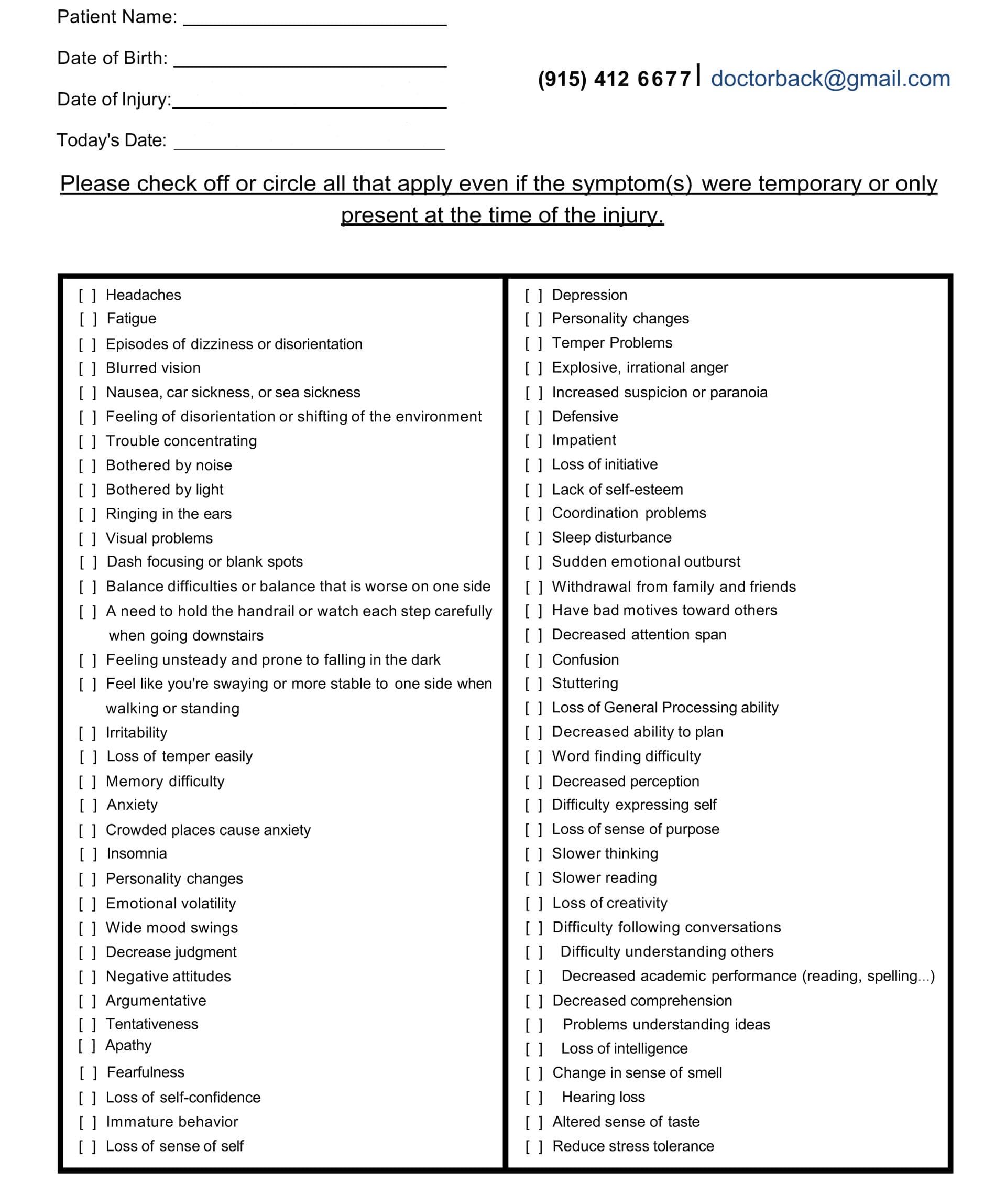
A Questionnaire Example of TBI Symptoms
 Acupuncture: Resetting the Brain’s Sleep Switch
Acupuncture is one of the strongest natural tools for fixing sleep after a concussion or TBI. Thin needles placed at specific points calm overactive parts of the brain, reduce inflammation, and activate the parasympathetic system.
Studies on veterans with mild TBI and sleep problems (many also had PTSD) found that 8–12 weeks of real acupuncture cut insomnia scores in half and improved overall sleep quality much more than fake (sham) acupuncture. Brain scans even showed better blood flow and less swelling in areas that control sleep and mood.
Acupuncture also raises natural melatonin levels, balances cortisol (stress hormone), and reduces headache pain that keeps people awake. For many TBI patients, it is the first thing that stops the 2 a.m. racing thoughts and finally lets them stay asleep.
Massage Therapy and Myofascial Release: Touch That Heals the Nervous System
Massage does more than feel good — it speaks directly to the vagus nerve through gentle pressure on the neck, jaw, and scalp. Slow, rhythmic strokes lower cortisol, raise oxytocin (the “feel-safe” hormone), and shift the body out of constant alert mode.
After TBI, muscles in the neck and shoulders stay tight from whiplash-type forces. This tightness pulls on the skull and irritates nerves that feed into the brainstem. Releasing those muscles with massage or craniosacral therapy calms the entire autonomic system and makes falling asleep easier.
Clinical studies show that even one 45–60-minute massage session increases parasympathetic activity and improves sleep that night. When done weekly, the effects add up: less pain, fewer night wakings, and waking up actually rested.
Physical Therapy: Rebuilding Balance and Teaching the Body to Relax Again
Physical therapists who specialize in concussion use gentle vestibular, balance, and neck exercises to retrain the brain. They also teach breathing techniques that directly stimulate the vagus nerve.
Simple habits like paced breathing (long exhales), progressive muscle relaxation, and light aerobic exercise earlier in the day all improve sleep. Sub-symptom threshold exercise — moving just enough to avoid worsening symptoms — has been shown to speed recovery and fix broken sleep-wake cycles.
Many patients start with only 5–10 minutes of guided movement and breathing, and quickly notice they fall asleep faster and stay asleep longer.
When these therapies are combined — chiropractic to free the nerves, acupuncture to calm the brain, massage to release tension, and physical therapy to retrain movement — the results are powerful. The central nervous system quiets down, vagal tone comes back, and the brain finally gets the deep, healing sleep it needs to repair itself.
Neuromuscular and Neurointegration Therapy
These therapies retrain the brain and body to work together again. By combining movement, breathing, and sensory input, they strengthen somatic-autonomic communication and support glymphatic flow during sleep (Cognitive FX, n.d.).
When combined, these approaches create powerful results. They calm overactive sympathetic activity, boost parasympathetic healing, restore vagal tone, and help the CNS function better. Patients often sleep more deeply, wake refreshed, and notice cognitive and physical gains.
The Science of Motion- Video
A Simple Sleep Routine to Try After TBI
Good habits make a big difference. Here is an easy routine backed by research and clinical experience:
- Set a fixed schedule: Go to bed and wake up at the same time every day, even on weekends. This resets the circadian rhythm.
- Wind down 1-2 hours before bed: Dim lights, avoid screens (or use blue-light blockers), read a book, or listen to calm music.
- Create a sleep-friendly room: Cool (60-67°F), completely dark (use blackout curtains), quiet (a white noise machine if needed), and a comfortable mattress/pillow.
- Daytime habits: Get natural sunlight in the morning, exercise earlier in the day (not close to bed), limit caffeine after noon, and avoid heavy meals at night.
- Evening relaxation: Try 10 minutes of deep breathing (4-7-8 method: inhale 4 seconds, hold 7, exhale 8), gentle stretching, gratitude journaling, or a light neck/shoulder massage.
- Natural aids if needed: Herbal tea (chamomile or valerian), magnesium supplement, or a short acupuncture session earlier in the day.
- Track progress: Use a simple journal or app to note how you feel each morning. Adjust as needed.
Stick with this for at least 2-4 weeks. Many people see better sleep within days, leading to clearer thinking and less pain.
Final Thoughts
Sleep is the foundation of TBI recovery. It allows the brain to clean, repair, and reconnect. When environmental factors, overlapping symptoms, or poor habits get in the way, natural treatments like chiropractic care, acupuncture, physical therapy, massage, and functional wellness can bring balance back to the nervous system, vagal tone, and whole-body communication. By protecting and improving sleep, people give their brains the best chance to heal fully and regain quality of life. Healing from a traumatic brain injury is not just about waiting for time to pass. It is about giving your brain the one thing it needs most: consistent, high-quality sleep. Every night you sleep deeply, your brain washes away toxins, reduces swelling, rebuilds damaged pathways, and lowers the risk of long-term problems.
The good news is that you do not have to rely only on medicine or endless rest. Safe, natural treatments — chiropractic care, acupuncture, massage, physical therapy, and smart daily habits — can turn the tide. They calm an overstressed nervous system, restore healthy vagal tone, and restore clear communication between the brain and body. Thousands of people, including patients guided by experts like Dr. Alexander Jimenez, have gone from sleepless nights filled with pain and fog to waking up refreshed and ready for life again.
If you or someone you love is still struggling weeks or months after a TBI, know this: better sleep is possible, and full recovery is within reach. Start with small changes tonight — dim lights, try the breathing routine, protect your sleep space — and reach out to providers who understand the brain-body connection. Your healing is waiting on the other side of good sleep. Take the first step today.
References
- Aoun, R., Rawal, H., Attarian, H., & Sahni, A. (2019). Impact of traumatic brain injury on sleep: An overview. Nature and Science of Sleep, 11, 131-140. https://pmc.ncbi.nlm.nih.gov/articles/PMC6707934/
- Cognitive FX. (n.d.). Sleep problems after a TBI: Causes & treatment. https://www.cognitivefxusa.com/blog/tbi-sleep-problems-causes-and-treatment
- Huang, W., et al. (2019). Acupuncture for treatment of persistent disturbed sleep: A randomized clinical trial in veterans with mild traumatic brain injury and posttraumatic stress disorder. The Journal of Clinical Psychiatry, 80(1), 18m12266.
- Jimenez, A. (n.d.-a). Nervous system health and chiropractic assistance. https://dralexjimenez.com/nervous-system-health-assistance/
- Jimenez, A. (n.d.-b). The nervous system and chiropractic’s positive effects. https://dralexjimenez.com/nervous-system-chiropractic/
- Jimenez, A. (n.d.-a). Chiropractic care for TBI relief strategies. https://dralexjimenez.com/
- Jimenez, A. (n.d.-b). Functional medicine and nutrition insights. https://www.linkedin.com/in/dralexjimenez/
- Landvater, J., et al. (2024). Traumatic brain injury and sleep in military and veteran populations: A literature review. NeuroRehabilitation, 54(3), 297-310. https://pubmed.ncbi.nlm.nih.gov/39121144/
- Lee, Y. H., Park, B. N., & Kim, S. H. (2011). The effects of heat and massage application on the autonomic nervous system. Yonsei Medical Journal, 52(6), 982–989. https://doi.org/10.3349/ymj.2011.52.6.982
- Piantino, J. A., et al. (2022). The bidirectional link between sleep disturbances and traumatic brain injury symptoms: A role for glymphatic dysfunction? Biological Psychiatry, 91(2), 478-487. https://pubmed.ncbi.nlm.nih.gov/34481662/
- Poulsen, I., et al. (2021). Sleep and agitation during subacute traumatic brain injury rehabilitation: A scoping review. Australian Critical Care, 34(4), 413-421. https://pubmed.ncbi.nlm.nih.gov/32698985/
- Quatman-Yates, C. C., et al. (2020). Physical therapy evaluation and treatment after concussion/mild traumatic brain injury: Clinical practice guidelines. Journal of Orthopaedic & Sports Physical Therapy, 50(4), CPG1–CPG73. https://pubmed.ncbi.nlm.nih.gov/32241234/
- Sánchez, E., et al. (2022). Sleep from acute to chronic traumatic brain injury and cognitive outcomes. Sleep, 45(8), zsac112. https://pubmed.ncbi.nlm.nih.gov/35640250/
- Sandsmark, D. K., et al. (2017). Sleep-wake disturbances after traumatic brain injury: Synthesis of human and animal studies. Sleep, 40(Supplement_1), A283-A284. https://pubmed.ncbi.nlm.nih.gov/28329120/
- Viola-Saltzman, M., & Watson, N. F. (2012). Traumatic brain injury and sleep disorders. Neurologic Clinics, 30(4), 1299-1312. https://pubmed.ncbi.nlm.nih.gov/23099139/
- Zielinski, M. R., et al. (2022). Neuroinflammation, sleep, and circadian rhythms. Frontiers in Cellular and Infection Microbiology, 12, 866990. https://pubmed.ncbi.nlm.nih.gov/35392608/
Post Disclaimer
General Disclaimer, Licenses and Board Certifications *
Professional Scope of Practice *
The information herein on "TBI Recovery and Sleep: Enhance Your Recovery Process" is not intended to replace a one-on-one relationship with a qualified health care professional or licensed physician and is not medical advice. We encourage you to make healthcare decisions based on your research and partnership with a qualified healthcare professional.
Blog Information & Scope Discussions
Welcome to El Paso's Premier Wellness and Injury Care Clinic & Wellness Blog, where Dr. Alex Jimenez, DC, FNP-C, a Multi-State board-certified Family Practice Nurse Practitioner (FNP-BC) and Chiropractor (DC), presents insights on how our multidisciplinary team is dedicated to holistic healing and personalized care. Our practice aligns with evidence-based treatment protocols inspired by integrative medicine principles, similar to those on this site and on our family practice-based chiromed.com site, focusing on naturally restoring health for patients of all ages.
Our areas of multidisciplinary practice include Wellness & Nutrition, Chronic Pain, Personal Injury, Auto Accident Care, Work Injuries, Back Injury, Low Back Pain, Neck Pain, Migraine Headaches, Sports Injuries, Severe Sciatica, Scoliosis, Complex Herniated Discs, Fibromyalgia, Chronic Pain, Complex Injuries, Stress Management, Functional Medicine Treatments, and in-scope care protocols.
Our information scope is multidisciplinary, focusing on musculoskeletal and physical medicine; wellness; contributing etiological viscerosomatic disturbances within clinical presentations; associated somato-visceral reflex clinical dynamics; subluxation complexes; sensitive health issues; and functional medicine articles, topics, and discussions.
We provide and present clinical collaboration with specialists from various disciplines. Each specialist follows their professional scope of practice and licensure jurisdiction. We use functional health & wellness protocols to treat and support care for musculoskeletal injuries or disorders.
Our videos, posts, topics, and insights address clinical matters and issues that directly or indirectly relate to our clinical scope of practice.
Our office has made a reasonable effort to provide supportive citations and has identified relevant research studies that support our posts. We provide copies of supporting research studies upon request to regulatory boards and the public.
For further discussion on how this information relates to specific care plans or treatment protocols, please ask Dr. Alex Jimenez, DC, APRN, FNP-BC, or contact us at 915-850-0900.
We are here to help you and your family.
Blessings
Dr. Alex Jimenez DC, MSACP, APRN, FNP-BC*, CCST, IFMCP, CFMP, ATN
Email: [email protected]
Multidisciplinary Licensing & Board Certifications:
Licensed as a Doctor of Chiropractic (DC) in Texas & New Mexico*
Chiropractic Licenses:
Texas DC License #: TX5807, Verified: TX5807
New Mexico DC License #: NM-DC2182, Verified: NM-DC2182
Nurse Practitioner Licenses:
Texas APRN License #: 1191402, Verified: 1191402 *
New Mexico CNP License #: 90560, Verified 90560
Florida APRN License #: 11043890, Verified: APRN11043890 *
Colorado License #: C-APN.0105610-C-NP, Verified: C-APN.0105610-C-NP
New York License #: N25929, Verified N25929
Georgia APRN License #: GAA-NP005701
Multi-State Advanced Practice Registered Nurse (APRN*) Texas & Multi-States
Multi-state Compact APRN License by Endorsement (43 States)
Compact Status: Multi-State License: Authorized to Practice in 43 States*
Nursing Licensure Compact: Updated Here
DEA Registration: (Drug Enforcement Agency Registered)
All medical (MDs) and family practice providers (FNP-APRN) are registered and licensed to offer various levels of medication.
Verify Providers' DEA Registration Here
License Verification Link: Nursys License Verifier
* Prescriptive Authority Authorized (DEA Registered Providers). Call if Required
Board Certification:
ANCC FNP-BC: Board Certified Nurse Practitioner*
Education:
Graduate with Honors: ICHS: MSN-FNP (Family Nurse Practitioner Program)
Degree Granted. Master's in Family Practice, MSN Diploma (Cum Laude)
Dr. Alex Jimenez, DC, APRN, FNP-BC*, CFMP, IFMCP, ATN, CCST
(Board Certified: Family Practice Nurse Practitioner—Multistate)*
(Licensed Nurse Practitioner & Chiropractor - Multistate)*
Clinical Director
DC & FNP License (Review Above)
Digital Business Card
NPI: 1205907805
Dr. Maria Cardenas, MD
(Board Certified: Internal Medicine)
(Licensed Medical Doctor)
Medical Director, Clinical Director & Collaborative Physician
NPI # 1164426748
MD License #: J2933
Licenses and Board Certifications:
MD: Medical Doctor
DC: Doctor of Chiropractic
APRNP: Advanced Practice Registered Nurse
FNP-BC: Family Practice Specialization (Multi-State Board Certified)
FNP-BC: Family Practice Across Life Span (Neonatal to Geriatrics)
RN: Registered Nurse (Multi-State Compact License)
CFMP: Certified Functional Medicine Provider
MSN-FNP: Master of Science in Family Practice Medicine
MSACP: Master of Science in Advanced Clinical Practice
IFMCP: Institute of Functional Medicine
CCST: Certified Chiropractic Spinal Trauma
ATN: Advanced Translational Neutrogenomics
Family with Primary Care Focus (Family Nurse Practitioner or FNP)
- The Family Nurse Practitioner (FNP) promotes, maintains, and restores health for individuals and families across the lifespan. FNPs also identify health risks, promote wellness, and diagnose and manage acute and chronic illness.
- The FNP focuses on comprehensive primary care, promoting healthy lifestyles for patients across the lifespan in settings such as private practice, physician offices, and community health centers.
Memberships & Associations:
TCA: Texas Chiropractic Association: Member ID: 104311
TNA: Texas Nurse Association: Member ID: 06458222
TNP: Texas Nurse Practitioner Association ID: 2025091511
AANP: American Association of Nurse Practitioners: Member ID: 2198960
ANA: American Nurses Association: Member ID: 06458222 (District TX01)
| Primary Taxonomy | Selected Taxonomy | State | License Number |
|---|---|---|---|
| No | 111N00000X - Chiropractor | NM | DC2182 |
| Yes | 111N00000X - Chiropractor | TX | DC5807 |
| Yes | 363LF0000X - Nurse Practitioner - Family | TX | 1191402 |
| Yes | 363LF0000X - Nurse Practitioner - Family | FL | 11043890 |
| Yes | 363LF0000X - Nurse Practitioner - Family | CO | C-APN.0105610-C-NP |
| Yes | 363LF0000X - Nurse Practitioner - Family | NY | N25929 |
| Yes | 363LF0000X - Nurse Practitioner - Family | NM |
90560 |
| Yes | 363LF0000X - Nurse Practitioner - Family | GA | GAA-NP005701 |
Dr. Alex Jimenez, DC, APRN, FNP-BC*, CFMP, IFMCP, ATN, CCST
(Board Certified: Family Practice Nurse Practitioner—Multistate)*
(Primary Care Across Lifespan—Neonatal / Pediatric / Adult / Geriatrics)
(Licensed Nurse Practitioner & Chiropractor - Multistate)*
Clinical Director
Digital Business Card
NPI: 1205907805
Dr. Maria Cardenas, MD
(Board Certified: Internal Medicine)*
(Licensed Medical Doctor)*
Medical Director, Clinical Director & Collaborative Physician
NPI # 1164426748
MD License #: J2933
📆 Schedule Appointment: Schedule 24/7 (Click Here)