

Uncover the role of peptide therapies in optimizing sleep and circadian health. Evidence-based methods for effective solutions are shared.
Table of Contents
Abstract
In this educational post, I present a comprehensive, first-person narrative on how I utilize modern, evidence-based peptide therapies and neuroendocrine strategies to address sleep disturbances, circadian rhythm misalignment, mood dysregulation, cognitive decline, airway reactivity, cardiometabolic stress, and immune dysfunction in clinical settings. My approach integrates the latest findings from leading researchers and uses validated methodologies to translate peptide science and neuroendocrine physiology into practical, patient-centered protocols. I focus on key biologically active compounds—particularly vasoactive intestinal peptide (VIP) and the synthetic peptide B2228—as well as oxytocin and sleep-optimized combination formulations to enhance parasympathetic tone, airway relaxation, neuroplasticity, memory consolidation, mood stability, mitochondrial efficiency, and metabolically aligned weight-loss strategies. Additionally, I contextualize these treatments within lifestyle and nutritional foundations, including circadian hygiene, micronutrient sufficiency (vitamin D, zinc, selenium, CoQ10), and sleep duration targets.
I begin with the core tenet that improving sleep quality and restoring circadian integrity is foundational to detoxification, immune balance, and recovery. The body’s detoxification systems—glymphatic clearance, hepatic biotransformation, and mitochondrial redox cycling—operate optimally under robust circadian cues. To support these processes, I often use low-dose nasal VIP formulations to entrain peripheral clocks, modulate airway and vascular tone, and regulate glycogen metabolism, while reducing inflammatory signaling. In parallel, for patients experiencing mood, cognitive, and sleep fragmentation, I have found B2228 to be a useful adjunct, given its receptor interactions in brain regions governing memory and affect, such as the amygdala and hippocampus, and evidence for rapid antidepressant-like effects in early phases of care.
Because many patients face complex, overlapping issues—shift work, postpartum sleep disruption, neuroinflammation, cardiometabolic strain—I utilize layered protocols: peptide nasal sprays for timing cues and neural modulation; oxytocin for social-cognitive reinforcement, motivation, and muscle maintenance; and sleep-focused combination peptides (“sleep tide”-style formulations) to activate epithelial and neural pathways that accelerate sleep induction and deepen sleep architecture. These are paired with practical dosing strategies calibrated to the lab’s compounding specifications (microgram per spray, frequency, duration) and with individualized adjustments based on observed responses, tolerability, and concurrent medications.
Throughout this post, I explain the physiology underpinning these interventions, including how peptides influence GPCR signaling, cAMP/cGMP axes, nitric oxide pathways, airway smooth muscle relaxation, and neuroimmune crosstalk. I discuss why each technique is used, the rationale for dosing, how we mitigate risk, how we monitor outcomes, and how we integrate behavioral and nutritional supports to magnify therapeutic benefit. I also present relatable case vignettes—for example, a shift worker who experiences circadian dysregulation or a postpartum patient with fragmented sleep—and demonstrate how peptide strategies and micronutrient correction restore function.
The goal is to provide an extensive, practical resource that clinicians and informed patients can consult to understand better the interplay among sleep, peptides, neuroendocrine physiology, and immune-metabolic resilience. At the end, I include a concise summary, a conclusion, and a section on key insights, along with references, keywords, and disclaimers, emphasizing that individualized medical guidance is essential before pursuing any of the strategies described herein.
The Physiology of Sleep, Detoxification, and Circadian Restoration — Why Nighttime Recovery Matters
Sleep is the body’s master regulator of detoxification, cellular repair, and systemic homeostasis. When I emphasize “detoxifying during comfort sleep,” I mean this in a physiologically precise sense: during consolidated, high-quality sleep, several synchronized systems ramp up to remove metabolic byproducts, recalibrate immune activity, consolidate memory, and restore autonomic balance.
- Glymphatic Clearance: The glymphatic system—glial-dependent cerebrospinal fluid exchange—expands interstitial spaces during slow-wave sleep, facilitating the removal of neurotoxic metabolites like beta-amyloid, tau fragments, lactate, and oxidized lipids. This process is circadian-dependent; misaligned sleep reduces the amplitude of glymphatic flow.
- Hepatic Biotransformation: The liver’s phase I and phase II detoxification enzymes, including CYP450 systems and conjugation pathways (glutathione, sulfation, glucuronidation), follow circadian patterns influenced by central and peripheral clocks. Robust sleep consolidates NAD+/NADH cycling, supports mitochondrial respiration, and optimizes antioxidant defense.
- Mitochondrial Redox Balance: Nighttime respiration shifts cellular priorities toward repair, mitophagy, and ROS/RNS regulation. Adequate sleep maintains glutathione recycling, SOD catalysis, catalase activity, and peroxiredoxin function—preventing oxidative stress accumulation.
- Immune Modulation: Sleep consolidates immune memory, tuning T-cell trafficking, cytokine rhythms, and macrophage activity. Dysregulated sleep elevates IL-6, TNF-α, and CRP, while aligned sleep promotes anti-inflammatory signaling and adaptive immune precision.
In practice, I teach patients that their “events vary” across life—shift work, postpartum care, stress, illness—and this makes consistent sleep hygiene even more essential. When these events disrupt circadian timing, I strategically use peptide therapies and environmental timing cues to re-entrain physiology.
 Vasoactive Intestinal Peptide (VIP) — A Multifunctional Peptide for Circadian Rhythm, Airway Relaxation, Vascular Tone, and Immune Modulation
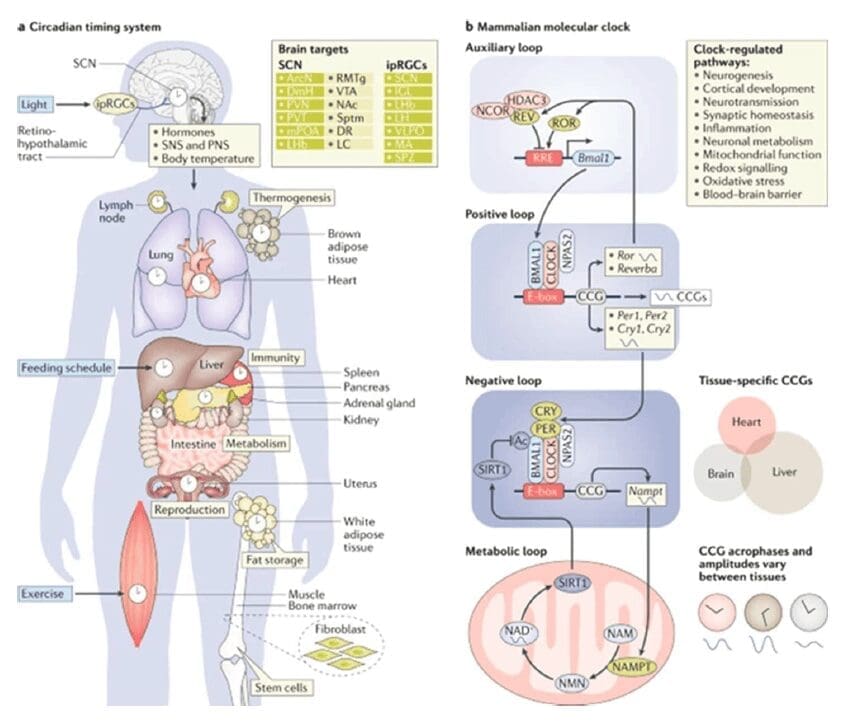 VIP is one of the most versatile peptides in clinical neuroendocrinology. It’s produced in the gastrointestinal tract, pancreas, central and peripheral nervous systems, and is also expressed in endocrine tissues—including the thyroid. Mechanistically, VIP signals through VPAC1 and VPAC2 receptors (class B GPCRs), activating adenylate cyclase, increasing cAMP, and modulating protein kinase A (PKA) and downstream gene expression. It influences smooth muscle relaxation, vasodilation, glycogen metabolism, endocrine secretions, and immunoregulation.
- Circadian Rhythm Regulation: VIP is integral to the suprachiasmatic nucleus (SCN) coupling; it synchronizes clock gene expression (PER, CRY, BMAL1) across SCN neurons, enhancing rhythm robustness. Clinical application: low-dose intranasal VIP can deliver central and peripheral cues that improve circadian coherence, making it valuable for individuals with irregular schedules, jet lag, or neuroinflammatory states.
- Airway Relaxation: VIP induces non-cholinergic relaxation of airway smooth muscle via cAMP-PKA-mediated reductions in intracellular calcium, resulting in bronchodilation. This proves helpful in patients with airway hyperreactivity, nocturnal asthma, or pulmonary vasoconstriction. Patients often report easier breathing at night and fewer awakenings due to respiratory discomfort.
- Vascular Smooth Muscle and Perfusion: VIP induces vasodilation by increasing nitric oxide release and inhibiting vasoconstrictive pathways. Clinically, improved perfusion may reduce nocturnal blood pressure variability and support tissue oxygenation during sleep.
- Glycogen Metabolism: VIP can enhance glycogenolysis in certain tissues, modulate insulin secretion, and support glucose homeostasis under circadian control—functions that are critical for patients with metabolic syndrome who experience nighttime dysglycemia.
- Immune Regulation: VIP downregulates pro-inflammatory cytokines (e.g., TNF-α, IL-12), supports Treg activity, and reduces macrophage activation. I often consider VIP spray as part of protocols for patients with immune dysregulation, chronic inflammatory conditions, or post-infectious fatigue, when aiming to restore immune rhythm and reduce hyperinflammation.
- Thyroid and Endocrine Effects: VIP receptors are present in endocrine tissues, including the thyroid; VIP may modulate local perfusion and cellular signaling, thereby indirectly affecting thyroid hormone dynamics.
Why intranasal VIP? The nasal route is noninvasive, provides rapid CNS access via the olfactory and trigeminal pathways, and enables low-dose titration tailored to patient tolerance. I often start conservatively, aligning dosing with the individual’s circadian window (e.g., early evening to facilitate nighttime processes), while also assessing airway response.
B2228 — A Synthetic Peptide Targeting Mood, Memory, and Rapid Neuroadaptive Effects
B2228 is a synthetic peptide derivative discussed in neuropeptide research as a potential antagonist at specific brain receptors implicated in mood and cognitive regulation. In my clinical experience, B2228’s receptor interactions influence brain regions such as the amygdala and hippocampus, which are central to affective processing, memory consolidation, stress responses, and contextual learning. Patients who struggle with depression, anxiety, sleep fragmentation, and cognitive fog often benefit from carefully timed intranasal B2228 as part of a multimodal plan.
- Mechanism and Receptor Considerations: While the translational literature explores several receptor families, I focus clinically on their effects in limbic circuits and prefrontal pathways that govern executive function and mood regulation. By attenuating maladaptive excitatory signaling and strengthening adaptive neuromodulation, B2228 may exert antidepressant-like effects within days.
- Rapid Onset Observations: In selected patients, B2228 has shown improvements in mood within approximately four days of initiation. This fast response makes it useful when patients cannot tolerate conventional antidepressants or when a bridge is needed while engaging in psychotherapy, neurocognitive rehabilitation, or light-based circadian entrainment.
- Neuroprotection and Neurogenesis: Emerging research suggests that B2228 can support neuroplasticity, facilitate synaptic remodeling, and attenuate neurodegenerative signaling cascades. In clinics, patients often report improved clarity, motivation, and sleep continuity when B2228 is integrated with behavioral tasks that consolidate cognitive gains.
- Safety Profile: Though early animal research raised theoretical concerns about seizure activity or cardiac ischemia with certain related compounds, studies in mice with B2228-like molecules have not demonstrated those adverse effects under controlled dosing. Clinically, I still screen patients for seizure history, cardiac symptoms, and medication interactions, and I titrate dosing cautiously with follow-up.
- Dosing Strategy (Intranasal): Typical entry protocol: one spray per nostril every 12 hours for the first phase. If patient benefit is incomplete and tolerability is good, I may increase to three to four times daily, then taper to a maintenance frequency. Dosing depends on the lab’s formulation strength, patient size, comorbidities, and response curves.
Why B2228? For patients intolerant of SSRIs/SNRIs, or those on stimulants (e.g., for ADHD) who require mood stabilization without oversedation, B2228 offers an avenue to modulate limbic-prefrontal circuits while avoiding common side effects from conventional agents. It integrates well with neurogenic protocols, cognitive training, and light therapy.
Oxytocin — The Social-Cognitive Peptide for Mood Elevation, Weight Management, Muscle Maintenance, and Bone Support
Oxytocin is widely known as the “love hormone” for its role in social bonding, trust, and prosocial behavior. Clinically, it extends beyond affect regulation into metabolic, musculoskeletal, and cognitive domains.
- Mood and Motivation: Oxytocin enhances social salience processing, reduces amygdala hyperreactivity to threat, and supports parasympathetic tone, which can improve anxiety and depressive symptoms.
- Weight Loss and Appetite: Oxytocin decreases hedonic feeding, modulates reward pathways (nucleus accumbens), and can reduce hyperphagia. It also influences lipolysis and energy expenditure under certain conditions.
- Muscle Maintenance and Bone Health: In some preclinical and translational studies, oxytocin supports myogenesis and may help mitigate sarcopenia. It has been explored for the treatment of osteopenia, given its potential to regulate osteoblast activity and bone remodeling signaling.
- Clinical Use Case: I often recommend a nasal oxytocin spray post-exercise for patients focused on weight management and motivation. Exercise increases neurotrophic factors and primes reward circuits; oxytocin, when layered on this window, can reinforce adherence, mood elevation, and appetite control. This timing reduces the risk of daytime sleepiness and aligns with metabolic activation.
Why post-exercise dosing? Exercise triggers BDNF, improves insulin sensitivity, and enhances mitochondrial biogenesis. Oxytocin administered after this physiological priming enhances the patient’s sense of reward, reduces stress eating, and increases willingness to engage in sustained lifestyle change.
“Sleep Tide” Combination Peptides — Multimodal Activation for Better Sleep Architecture
Some compounding labs provide combination sleep peptides (often referred to as “sleep tide”-style formulations) that assemble synergistic agents designed to:
- Activate nasal epithelium pathways for direct CNS access
- Promote sleep induction via GABAergic and melatonin-related signaling
- Improve slow-wave sleep and REM cycling
- Reduce nocturnal arousals and alleviate anxieties that fragment sleep
These blends can be particularly useful for:
- Shift workers whose circadian rhythm is misaligned
- Postpartum individuals experiencing night awakenings and fragmented sleep
- Patients with sleep onset insomnia or maintenance insomnia
- Individuals with neuroinflammatory or autonomic dysregulation symptoms at night
The rationale is to stack mechanistic supports: enhancing circadian entrainment (VIP), modulating limbic tone (B2228), and improving sleep drive with targeted peptide combinations. Patients typically report improved sleep continuity, fewer nighttime awakenings, and more refreshing mornings.
Intranasal Delivery — Why Nasal Sprays Offer Unique Advantages
I frequently choose intranasal delivery for peptides because:
- Rapid CNS Access: The olfactory and trigeminal pathways bypass first-pass hepatic metabolism.
- Lower Dose Requirements: Microgram-level dosing can be effective.
- Flexible Timing: Sprays can be synchronized to circadian cues (e.g., morning light exposure, evening wind-down).
- User-Friendly: For patients reluctant to take oral medications or injections, nasal sprays are more acceptable.
Compounding laboratories may list strengths such as 15–500 micrograms per spray, and dosing frequency can range from once daily to multiple times daily, depending on tolerance and therapeutic goal. I match dosing with the lab’s specifications and the patient’s response.
Clinical Dosing Frameworks — VIP, B2228, and Oxytocin
VIP (Intranasal):
- Typical strengths include 15–100 micrograms per spray.
- Starting frequency: 1 spray per nostril daily or every other day, often in the early evening for sleep support or morning for circadian anchoring, depending on phenotype.
- Adjust titration based on airway comfort, sleep quality, and daytime alertness.
B2228 (Intranasal):
- Initiation: 1 spray per nostril every 12 hours.
- If needed: Up to 3–4 times daily in early phases for pronounced mood/cognitive symptoms, then taper to maintenance.
Oxytocin (Intranasal):
- Timing: 1 spray post-exercise session for weight management, mood motivation, and adherence reinforcement.
- Adjust frequency based on the patient’s exercise schedule and response.
Note: Exact microgram values vary by compounding lab; clinicians must verify lot strength and counsel patients carefully. I also monitor for nasal mucosa sensitivity and rotate nostrils.
Integrative Protocols for Complex Patients — Shift Work, Postpartum, ADHD, Dementia, Cardiometabolic Stress
Patients rarely present with isolated concerns; they often face overlapping sleep, attention, mood, cognitive, airway, and metabolic issues. Here’s how I integrate peptide strategies:
Shift Workers:
- Problem: Circadian misalignment, eating at biologically inappropriate times, reduced slow-wave sleep, metabolic strain.
- Strategy:
-
- Light therapy: morning bright light on off-days; pre-shift light to align; evening blue light reduction.
- Sleep window consolidation: block 7–8 hours, even during the day; mask noise; cool environment.
- VIP for rhythm cues; sleep tide for induction/maintenance; B2228 for mood regulation and cognitive clarity.
- Nutritional correction: vitamin D, zinc, selenium, CoQ10 for oxidative balance and mitochondrial resilience.
Postpartum Individuals:
- Problem: Fragmented sleep, stress, anxiety, mood lability.
- Strategy:
-
- Gentle VIP dosing to stabilize circadian cues.
- Sleep tide for safe, short-duration sleep support.
- Consider oxytocin for mood regulation, bonding, and appetite regulation when appropriate and under supervision.
- Nutrient repletion and hydration; lactation considerations with obstetric clearance.
ADHD and Attention Deficits:
- Problem: Executive dysfunction, sleep variability, stimulant side effects.
- Strategy:
-
- B2228 to reduce limbic hyperreactivity and improve mood stability.
- VIP to enhance sleep regularity for better daytime focus.
- Behavioral scaffolding: timed breaks, structured routines, and consistent sleep window.
Dementia, Cognitive Decline, and Brain Loss:
- Problem: Impaired memory consolidation, neuroinflammation, and disrupted sleep.
- Strategy:
-
- VIP for circadian synchronization; B2228 for mood/cognition; sleep tide for architecture restoration.
- Exercise-induced oxytocin to reinforce motivation for rehabilitation.
- Anti-inflammatory nutrition; micronutrients; caregiver sleep hygiene support.
Cardiometabolic Stress and Heart Disease:
- Problem: Poor sleep increases blood pressure variability, insulin resistance, and inflammatory tone.
- Strategy:
-
- VIP to support vascular relaxation and nighttime perfusion.
- Sleep optimization reduces catecholamine burden.
- Nutrients: CoQ10 for cardiac mitochondrial function, selenium for thyroid-related metabolic tuning, and vitamin D for endothelial health.
Airway Physiology — How VIP Relaxes Smooth Muscle and Supports Breathing During Sleep
Patients with nocturnal dyspnea or airway hyperreactivity often benefit from VIP’s bronchodilatory properties:
- VIP elevates cAMP in airway smooth muscle cells.
- cAMP activates PKA, phosphorylating targets that lower intracellular calcium and reduce myosin light chain phosphorylation.
- The result is smooth muscle relaxation, improved airway diameter, and reduced ventilatory effort.
- VIP also modulates mast cell and eosinophil activity, contributing to anti-inflammatory effects in the airway.
Clinically, reduced nighttime wheezing and fewer awakenings allow deeper slow-wave sleep, enhancing glymphatic clearance and systemic recovery.
Vascular and Metabolic Effects — VIP in Glycogen Metabolism and Perfusion
VIP’s effects on vascular smooth muscle increase perfusion to tissues prone to ischemia under sympathetic dominance. By improving microvascular flow during sleep, tissues receive better oxygen and nutrient delivery, enabling:
- Mitochondrial ATP generation
- Redox cycling and ROS detoxification
- Glycogen storage and mobilization are patterned by circadian timing
For patients with nighttime hypoglycemia or hyperglycemia swings, restoring rhythm through VIP plus dietary timing (front-loading protein earlier, controlled carbs aligned with activity) stabilizes energy availability and reduces autonomic stress.
Immune System Modulation — Macrophage Deactivation and Cytokine Balance
VIP reduces macrophage activation, decreases pro-inflammatory cytokines, and supports regulatory T-cell function. Chronic inflammation blunts sleep quality through nocturnal cytokine surges; VIP promotes a balanced, anti-inflammatory set point.
Patients with post-infectious syndromes or autoimmune features often report:
- Less nighttime joint pain
- Reduced morning stiffness
- Improved mental clarity due to lower neuroinflammatory load
Optimizing Your Wellness-Video
Mood, Memory, and Limbic Circuitry — B2228’s Role in Rapid Affective Stabilization
When sleep is compromised, memory consolidation is impaired, and limbic circuits drive stress responses. B2228 provides a counterweight:
- Amygdala modulation reduces hypervigilance and dampens fear conditioning.
- Hippocampal support enhances contextual memory and spatial learning.
- Rapid antidepressant-like effects in select patients encourage therapy engagement and behavioral compliance.
I often pair B2228 with daytime light exposure, structured cognitive tasks, and exercise to build momentum.
Addressing Safety and Tolerability — Seizure, Cardiac, and Drug Interactions
Safety is central. While rodent studies with related molecules have raised theoretical concerns, controlled use of B2228 has not demonstrated seizure or cardiac ischemia issues in mice. Nevertheless:
- I screen for seizure history, arrhythmias, and ischemic symptoms.
- I review medication lists to prevent interactions, especially with psychoactive or cardiovascular drugs.
- I start with low doses, monitor, and titrate based on clinical feedback.
For VIP and oxytocin:
- Monitor blood pressure, airway comfort, and mood shifts.
- Observe for nasal irritation; recommend saline rinses if needed.
Practical Examples — Real-World Scenarios Patients Relate To
- Night-Shift Nurse: Wakes at irregular times, eats between 2–4 AM, gains weight, and has brain fog. Protocol: morning bright light on days off; VIP early evening on off-days; sleep tide on post-shift sleep attempt; B2228 for mood stability; nutrients (vitamin D, selenium, zinc, CoQ10). Within weeks, she reports fewer awakenings, improved energy, and reduced cravings.
- Postpartum Parent: Fragmented sleep due to infant care, anxiety surges at night. Protocol: gentle VIP dosing and sleep tide formulations for targeted nights; postpartum-compatible nutrition; stress-reduction practices; consider oxytocin when approved. Outcomes: calmer nights, improved daytime function.
- Executive with ADHD: Reliant on stimulants, experiences evening rebound anxiety, and poor sleep. Protocol: B2228 twice daily; VIP for circadian stability; structured bedtime routine; exercise timed earlier in the day; oxytocin post-exercise for motivation. Outcomes: better focus, fewer crashes, sustained sleep window.
Nutrient Co-Factors — Vitamin D, Zinc, Selenium, CoQ10 for Mitochondrial and Thyroid Support
Peptide interventions work best when micronutrient sufficiency is addressed:
- Vitamin D: Modulates immune function, neurotransmission, and circadian gene expression; deficiency exacerbates inflammation and sleep disturbances.
- Zinc: Crucial for synaptic plasticity, neurotransmitter metabolism, and immune balance.
- Selenium: Supports thyroid deiodinase activity, enabling proper T4-to-T3 conversion and metabolic rhythm alignment.
- CoQ10: Integral to electron transport chain function; supports cardiac and skeletal muscle mitochondria, reducing fatigue and oxidative stress.
In shift workers, I often supplement these to stabilize oxidative stress and metabolic rhythms disrupted by irregular sleep.
Building a Sustainable Sleep Plan — Targets, Timing, and Behaviors
My sleep roadmap emphasizes:
- 7–8 hours of consolidated sleep when possible
- Consistent sleep window: even for shift workers, anchor a block
- Light management: bright light in the biological morning; reduce blue light before sleep
- Temperature: cooler bedroom for deeper sleep
- Routine: pre-sleep wind-down rituals, nasal peptides timed to promote relaxation and airway comfort
- Nutrition timing: avoid large meals right before sleep; balance macronutrients according to schedule
- Stress tools: breathing exercises, progressive muscle relaxation
Peptides complement—not replace—behavioral foundations.
Lab Variability and Dosing Precision — Navigating Microgram Strengths and Frequency
Compounding labs differ:
- VIP sprays may range from 15 to 100+ micrograms per spray.
- Some labs provide B2228 exclusively as nasal sprays.
- “Sleep tide” formulations vary in constituent peptides and concentrations.
I:
- Verify lab credentials, stability data, and sterility
- Track exact microgram strengths
- Document patient response and side effects
- Adjust frequency (e.g., twice daily for VIP or B2228; once post-exercise for oxytocin)
- Rotate nostril application; advise gentle saline rinses if dryness occurs
When Conventional Medications Are Not Tolerated — Peptides as Bridging or Alternative Strategies
Patients unable to tolerate SSRIs/SNRIs or certain hypnotics may benefit from peptide strategies:
- B2228: mood stabilization without typical SSRI side effects
- VIP: circadian and airway support without sedative burden
- Sleep tide: targeted sleep induction without heavy residual daytime sedation
This allows concurrent psychotherapy, CBT-I, coaching, and exercise to progress as symptoms improve.
Cognitive Rehabilitation Synergy — Pairing Peptides with Neurogenics and Light Therapy
I often pair B2228 with:
- Neurogenic training: cognitive tasks, memory exercises
- Light therapy: morning exposure to anchor the circadian rhythm
- Exercise: to increase BDNF and neuroplasticity
This triad supports synaptic remodeling, mood stabilization, and attention.
Special Populations — Alzheimer’s, Heart Disease, Attention Deficit, Brain Loss, Dementia
- Alzheimer’s and Dementia: Improve sleep architecture, reduce nocturnal agitation, and enhance daytime alertness by anchoring circadian cues with VIP and sleep formulations; consider B2228 for mood and engagement; reinforce caregiver strategies.
- Heart Disease: VIP’s vasodilatory effects may reduce nighttime vascular strain; optimize CoQ10 and sleep hygiene to support cardiac function.
- Attention Deficit Disorder: Use B2228 to calm limbic overdrive; maintain regular sleep windows and light exposure; monitor stimulant interactions.
Troubleshooting — If Sleep Doesn’t Improve, What Should I Adjust
- Timing: Shift VIP to earlier/later based on alertness profile.
- Frequency: Increase B2228 temporarily for mood stabilization, then taper.
- Environment: Optimize light, noise, and temperature; evaluate sleep apnea risk.
- Nutrition: Adjust evening macronutrients; ensure micronutrient sufficiency.
- Behavioral Add-ons: CBT-I, meditation, guided breathing.
- Medical Workup: Thyroid panel, iron studies, OSA evaluation, and inflammatory markers.
Follow-Up and Outcome Tracking — Metrics That Matter
I track:
- Sleep diary: onset latency, awakenings, total sleep time, subjective refreshment
- Mood scales: PHQ-9, GAD-7
- Cognitive metrics: short-term memory tasks
- Physiologic data: resting heart rate, HRV
- Inflammatory markers: CRP, ESR when indicated
- Nutrients: vitamin D, zinc, selenium, CoQ10 status
Adjustments are made every 2–4 weeks, depending on response.
Clinical Pearls — Practical Tips for Patients and Providers
- Start low and proceed slowly with nasal peptides.
- Anchor dosing to consistent times linked with sleep or exercise.
- Combine with bright light in the morning and dim light at night.
- Reinforce hydration and nasal care to prevent irritation.
- Reassess after 4–7 days for early response (particularly with B2228).
Ethical Use and Access — Compounding Standards and Patient Education
Ensure:
- Lab adheres to sterility, stability, and quality control
- Clear informed consent about off-label use
- Thorough education on benefits, risks, and alternatives
- Integration with primary care and specialist oversight when needed
Summary
This educational post outlines how I, Dr. Alex Jimenez, DC, FNP-APRN, use evidence-based peptide strategies—particularly VIP, B2228, oxytocin, and sleep-tide combinations—to restore sleep, circadian rhythm, mood, cognition, airway function, vascular tone, and immune balance. VIP helps synchronize the body’s clock systems, relaxes airways, modulates vascular tone, and supports metabolism and immune regulation. B2228 provides rapid mood stabilization and cognitive support by modulating limbic circuitry, often within 4 days of initiation. Oxytocin, applied post-exercise, enhances motivation, reduces stress eating, and supports muscle and bone. Sleep-focused combinations provide multi-pathway support to improve sleep architecture and continuity. These interventions work best when layered with behavioral foundations—light management, consistent sleep windows, temperature control, structured routines—and micronutrient sufficiency (vitamin D, zinc, selenium, CoQ10).
Conclusion
Patients with complex, overlapping symptoms—shift work, postpartum sleep disruption, attention deficits, cognitive decline, cardiometabolic stress—benefit from a mechanistic, integrative approach that combines peptides, neuroendocrine physiology, and lifestyle alignment. Intranasal delivery offers a practical pathway for rapid CNS effects with flexible dosing. Safety remains paramount: I screen for seizure and cardiac risks, titrate carefully, and rigorously monitor outcomes. Ultimately, restoring sleep and circadian integrity unlocks downstream benefits across detoxification, immune balance, metabolism, and cognitive resilience.
Key Insights
- Circadian restoration is foundational: peptides such as VIP are powerful tools for re-entraining central and peripheral clocks, thereby improving sleep-dependent detoxification and recovery.
- Rapid mood support matters: B2228 can provide early antidepressant-like benefits, enabling patients to engage in therapy and lifestyle change.
- Synergy amplifies outcomes: Combining peptides with light therapy, exercise, structured routines, and micronutrient sufficiency yields durable improvements.
- Tailored dosing and lab precision are critical: Verify microgram strengths, titrate based on response, and ensure compounding quality.
- Safety and individualized care: Screen for risks, monitor closely, and always coordinate with the patient’s primary healthcare team.
References:
- Harmar AJ, et al. VIP and PACAP in circadian rhythm regulation and neuroprotection (peer-reviewed literature on VPAC receptors).
- Gozes I, et al. Neuropeptides in mood and cognition: translational implications.
- Kalinchuk AV, et al. Sleep-dependent immune and metabolic regulation.
- Nedergaard M, et al. Glymphatic system and sleep-related waste clearance.
- Thayer JF, Lane RD. Autonomic balance, vagal tone, and health outcomes.
- Porges SW. Polyvagal theory and social engagement (relevant to oxytocin and vagal regulation).
- Cajochen C, et al. Light’s impact on circadian and sleep architecture.
Keywords: VIP, B2228, oxytocin, sleep tide, circadian rhythm, glymphatic system, airway relaxation, vasodilation, mood stabilization, neurogenesis, neuroprotection, shift work, postpartum, ADHD, dementia, cardiometabolic health, vitamin D, zinc, selenium, CoQ10, intranasal peptides, evidence-based integrative care
Disclaimer: This content is for educational purposes only and should not be used as medical advice. Always consult your own licensed medical providers for personalized recommendations and treatment decisions tailored to your specific health situation.
Post Disclaimer
General Disclaimer, Licenses and Board Certifications *
Professional Scope of Practice *
The information herein on "Peptide Therapies for Sleep Strategies & Circadian Health" is not intended to replace a one-on-one relationship with a qualified health care professional or licensed physician and is not medical advice. We encourage you to make healthcare decisions based on your research and partnership with a qualified healthcare professional.
Blog Information & Scope Discussions
Welcome to El Paso's Premier Wellness and Injury Care Clinic & Wellness Blog, where Dr. Alex Jimenez, DC, FNP-C, a Multi-State board-certified Family Practice Nurse Practitioner (FNP-BC) and Chiropractor (DC), presents insights on how our multidisciplinary team is dedicated to holistic healing and personalized care. Our practice aligns with evidence-based treatment protocols inspired by integrative medicine principles, similar to those on this site and on our family practice-based chiromed.com site, focusing on naturally restoring health for patients of all ages.
Our areas of multidisciplinary practice include Wellness & Nutrition, Chronic Pain, Personal Injury, Auto Accident Care, Work Injuries, Back Injury, Low Back Pain, Neck Pain, Migraine Headaches, Sports Injuries, Severe Sciatica, Scoliosis, Complex Herniated Discs, Fibromyalgia, Chronic Pain, Complex Injuries, Stress Management, Functional Medicine Treatments, and in-scope care protocols.
Our information scope is multidisciplinary, focusing on musculoskeletal and physical medicine; wellness; contributing etiological viscerosomatic disturbances within clinical presentations; associated somato-visceral reflex clinical dynamics; subluxation complexes; sensitive health issues; and functional medicine articles, topics, and discussions.
We provide and present clinical collaboration with specialists from various disciplines. Each specialist follows their professional scope of practice and licensure jurisdiction. We use functional health & wellness protocols to treat and support care for musculoskeletal injuries or disorders.
Our videos, posts, topics, and insights address clinical matters and issues that directly or indirectly relate to our clinical scope of practice.
Our office has made a reasonable effort to provide supportive citations and has identified relevant research studies that support our posts. We provide copies of supporting research studies upon request to regulatory boards and the public.
For further discussion on how this information relates to specific care plans or treatment protocols, please ask Dr. Alex Jimenez, DC, APRN, FNP-BC, or contact us at 915-850-0900.
We are here to help you and your family.
Blessings
Dr. Alex Jimenez DC, MSACP, APRN, FNP-BC*, CCST, IFMCP, CFMP, ATN
Email: [email protected]
Multidisciplinary Licensing & Board Certifications:
Licensed as a Doctor of Chiropractic (DC) in Texas & New Mexico*
Chiropractic Licenses:
Texas DC License #: TX5807, Verified: TX5807
New Mexico DC License #: NM-DC2182, Verified: NM-DC2182
Nurse Practitioner Licenses:
Texas APRN License #: 1191402, Verified: 1191402 *
New Mexico CNP License #: 90560, Verified 90560
Florida APRN License #: 11043890, Verified: APRN11043890 *
Colorado License #: C-APN.0105610-C-NP, Verified: C-APN.0105610-C-NP
New York License #: N25929, Verified N25929
Georgia APRN License #: GAA-NP005701
Multi-State Advanced Practice Registered Nurse (APRN*) Texas & Multi-States
Multi-state Compact APRN License by Endorsement (43 States)
Compact Status: Multi-State License: Authorized to Practice in 43 States*
Nursing Licensure Compact: Updated Here
DEA Registration: (Drug Enforcement Agency Registered)
All medical (MDs) and family practice providers (FNP-APRN) are registered and licensed to offer various levels of medication.
Verify Providers' DEA Registration Here
License Verification Link: Nursys License Verifier
* Prescriptive Authority Authorized (DEA Registered Providers). Call if Required
Board Certification:
ANCC FNP-BC: Board Certified Nurse Practitioner*
Education:
Graduate with Honors: ICHS: MSN-FNP (Family Nurse Practitioner Program)
Degree Granted. Master's in Family Practice, MSN Diploma (Cum Laude)
Dr. Alex Jimenez, DC, APRN, FNP-BC*, CFMP, IFMCP, ATN, CCST
(Board Certified: Family Practice Nurse Practitioner—Multistate)*
(Licensed Nurse Practitioner & Chiropractor - Multistate)*
Clinical Director
DC & FNP License (Review Above)
Digital Business Card
NPI: 1205907805
Dr. Maria Cardenas, MD
(Board Certified: Internal Medicine)
(Licensed Medical Doctor)
Medical Director, Clinical Director & Collaborative Physician
NPI # 1164426748
MD License #: J2933
Licenses and Board Certifications:
MD: Medical Doctor
DC: Doctor of Chiropractic
APRNP: Advanced Practice Registered Nurse
FNP-BC: Family Practice Specialization (Multi-State Board Certified)
FNP-BC: Family Practice Across Life Span (Neonatal to Geriatrics)
RN: Registered Nurse (Multi-State Compact License)
CFMP: Certified Functional Medicine Provider
MSN-FNP: Master of Science in Family Practice Medicine
MSACP: Master of Science in Advanced Clinical Practice
IFMCP: Institute of Functional Medicine
CCST: Certified Chiropractic Spinal Trauma
ATN: Advanced Translational Neutrogenomics
Family with Primary Care Focus (Family Nurse Practitioner or FNP)
- The Family Nurse Practitioner (FNP) promotes, maintains, and restores health for individuals and families across the lifespan. FNPs also identify health risks, promote wellness, and diagnose and manage acute and chronic illness.
- The FNP focuses on comprehensive primary care, promoting healthy lifestyles for patients across the lifespan in settings such as private practice, physician offices, and community health centers.
Memberships & Associations:
TCA: Texas Chiropractic Association: Member ID: 104311
TNA: Texas Nurse Association: Member ID: 06458222
TNP: Texas Nurse Practitioner Association ID: 2025091511
AANP: American Association of Nurse Practitioners: Member ID: 2198960
ANA: American Nurses Association: Member ID: 06458222 (District TX01)
| Primary Taxonomy | Selected Taxonomy | State | License Number |
|---|---|---|---|
| No | 111N00000X - Chiropractor | NM | DC2182 |
| Yes | 111N00000X - Chiropractor | TX | DC5807 |
| Yes | 363LF0000X - Nurse Practitioner - Family | TX | 1191402 |
| Yes | 363LF0000X - Nurse Practitioner - Family | FL | 11043890 |
| Yes | 363LF0000X - Nurse Practitioner - Family | CO | C-APN.0105610-C-NP |
| Yes | 363LF0000X - Nurse Practitioner - Family | NY | N25929 |
| Yes | 363LF0000X - Nurse Practitioner - Family | NM |
90560 |
| Yes | 363LF0000X - Nurse Practitioner - Family | GA | GAA-NP005701 |
Dr. Alex Jimenez, DC, APRN, FNP-BC*, CFMP, IFMCP, ATN, CCST
(Board Certified: Family Practice Nurse Practitioner—Multistate)*
(Primary Care Across Lifespan—Neonatal / Pediatric / Adult / Geriatrics)
(Licensed Nurse Practitioner & Chiropractor - Multistate)*
Clinical Director
Digital Business Card
NPI: 1205907805
Dr. Maria Cardenas, MD
(Board Certified: Internal Medicine)*
(Licensed Medical Doctor)*
Medical Director, Clinical Director & Collaborative Physician
NPI # 1164426748
MD License #: J2933
📆 Schedule Appointment: Schedule 24/7 (Click Here)