

Table of Contents
The Herniated Disc That Does Not Need a Fusion Conversation Yet
Abstract: A lumbar MRI can sound frightening when it uses words such as “herniation,” “extrusion,” or “nerve-root compression.” But an MRI finding does not automatically mean fusion surgery is the next step. For many workers with leg pain, the better question is whether the scan matches the examination, whether strength and nerve function are stable, and whether a monitored trial of conservative care is reasonable. This second-opinion guide explains disc bulges, herniations, decompression, walking, epidural injections, and the warning signs that change the plan.
You finish a long data center shift or an Amazon workday with pain shooting from your low back into your leg. Maybe your foot tingles after standing at a rack, pushing a cart, lifting a tote, or getting in and out of a vehicle. Then the MRI report arrives.
It says disc herniation.
That phrase sounds like a structural emergency. Add words like “extrusion,” “foraminal narrowing,” or “nerve-root impingement,” and it is easy to imagine the spine is damaged beyond repair.
Those words don’t mean that.
A good second opinion starts by matching the MRI to the person in front of us. The scan matters, but so do your strength, reflexes, sensation, walking tolerance, pain pattern, work demands, and whether symptoms are improving, stable, or worsening.
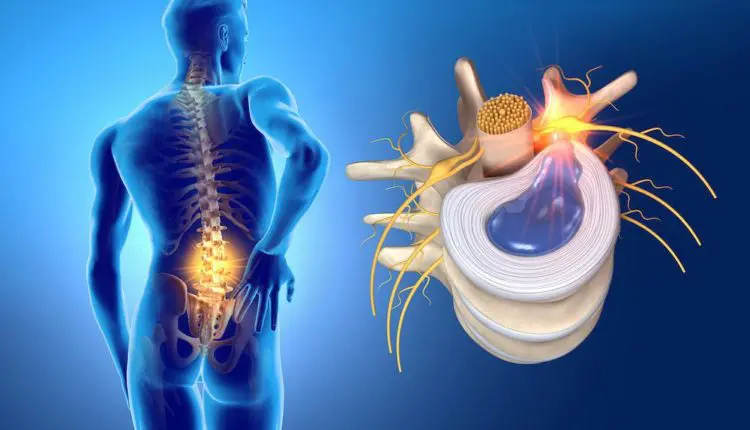
What Causes Disc Herniation? | El Paso, TX
Disc Bulge Versus Herniation: The Plain-Language Difference
A disc is a shock-absorbing structure between two vertebrae. Its tougher outer ring surrounds a softer center. With age, repeated loading, genetics, injury, or normal wear, the disc can change shape.
A disc bulge is generally a broad extension of the disc contour. A herniation is more localized: disc material has moved beyond the normal disc-space boundary in a focal or broad-based area. Herniations may be described as protrusions, extrusions, or sequestrations depending on their shape and relationship to the parent disc (Fardon et al., 2014).
Those labels describe anatomy. They do not, by themselves, measure how disabled you are.
The Question Is Not “How Bad Does the MRI Look?”
The better questions are:
- Does the MRI finding match the side and level of your leg symptoms?
- Is there measurable weakness?
- Are reflexes or sensations changing?
- Can you walk farther than last week?
- Is the pain moving out of the leg and becoming more centralized?
- Can you sleep, work, sit, stand, and lift with improving tolerance?
- Are bowel or bladder function and saddle sensation normal?
When serious neurologic deficits are absent, international spine guidance supports conservative treatment as the first-line approach for many lumbar disc herniations (Yaman et al., 2024).
That does not mean “ignore it.” It means using the examination to decide whether the nerve has enough safety and time for a non-surgical plan.
Why Some Herniated Discs Improve Without Surgery
A herniated disc is not necessarily a permanent chunk of material that stays the same forever. Herniated tissue can shrink or partially resorb over time. A 2024 meta-analysis found substantial spontaneous resorption across conservatively treated lumbar disc herniations, with higher rates reported for extrusions and sequestrations than for simple bulges (Zou et al., 2024).
That does not guarantee that your disc will disappear or that symptoms will resolve on a predictable schedule. It does explain why a stable patient may deserve time before a fusion conversation dominates the room.
The body can calm inflammation around the nerve, adapt to loading, and sometimes reduce the volume of displaced disc material. Meanwhile, rehabilitation can rebuild the strength and endurance needed for real life.
What a Trial of Conservative Care Can Include
Conservative care should not be random. It should have goals, checkpoints, and reasons for each treatment.
1. Walking and graded activity
Complete bed rest usually does not rebuild confidence or work capacity. When medically appropriate, short walks can keep the patient moving without demanding heavy spinal loading. Adjust the distance, pace, and frequency to symptoms.
The goal is not to “walk off” a nerve injury. The goal is to identify a level of movement that doesn’t cause progressive weakness or steadily worsening leg symptoms.
2. Rehabilitation and load management
Rehabilitation may address trunk control, hip strength, mobility, lifting technique, work positioning, and gradual exposure to the tasks the patient actually needs to perform. Activity modification is different from permanent avoidance.
A warehouse worker may temporarily reduce repeated floor-to-waist lifting while building tolerance. A technician may alter rack position or break up prolonged crouching. The long-term objective is capacity, not fear.
3. Chiropractic and manual care
Selected patients may benefit from carefully chosen manual or chiropractic approaches as part of a broader rehabilitation plan. The examination should guide technique and intensity, especially when leg pain, nerve tension, or neurologic findings are present.
The purpose is not to claim that an adjustment “pushes the disc back in.” A more defensible goal is to improve mechanical tolerance, reduce pain where possible, and help the patient move well enough to participate in rehabilitation.
4. Spinal decompression or traction
Mechanical traction or non-surgical decompression may be considered as a monitored adjunct for selected patients with lumbar radicular symptoms. Evidence suggests possible short-term benefit in some settings, but results are mixed, and study quality varies (Vanti et al., 2021).
When an Epidural Is a Window, Not the Finish Line
A 2025 American Academy of Neurology systematic review found that epidural steroid injections probably reduce short-term pain and disability in cervical and lumbar radiculopathy, while evidence for long-term pain relief remains limited (Armon et al., 2025).
If pain falls enough to let you walk farther, sleep better, or participate in rehabilitation, that window can be valuable. The injection becomes part of a larger recovery strategy, not the entire strategy.
At Injury Medical Clinic PA, Dr. Alex Jimenez, DC, APRN, FNP-BC, CFMP, IFMCP, coordinates conservative spine care, rehabilitation, diagnostic review, and medically indicated image-guided pain management with Medical Director Dr. Maria Guadalupe Cardenas, MD, Board Certified in Internal Medicine, and the patient’s existing medical team.
When the Conversation Changes
Some findings deserve faster surgical or emergency evaluation. These include:
- New bowel or bladder dysfunction
- Saddle-area numbness
- Progressive or severe motor weakness
- Rapidly worsening neurologic loss
- Severe symptoms that remain functionally disabling despite an appropriate conservative trial
- Clinical findings suggesting another serious diagnosis
For first-time lumbar disc herniation, routine fusion is not recommended. Surgical guidance reserves fusion for selected situations, such as instability or certain chronic axial-pain patterns, rather than treating it as the default response to a new herniation (Costa et al., 2024).
If surgery becomes necessary for persistent nerve compression, the discussion may involve decompression or discectomy rather than automatically jumping to fusion.
Why MFAT Does Not Belong in a Fresh-Disc Conversation
Microfragmented adipose tissue, or MFAT, belongs to a different clinical discussion. It may be considered in selected degenerative joint or orthobiologic cases, but it is not a first-line treatment for a fresh lumbar disc herniation causing acute leg pain.
Adding an advanced procedure simply because the MRI sounds serious can violate a basic rule of good care: match the intervention to the actual problem.
A Second Opinion Should Give You More Control
Patient autonomy matters. You should understand what the MRI shows, what it doesn’t, why a treatment is recommended, what improvement should look like, and what findings would trigger a different plan.
Beneficence means choosing care that reasonably can help you regain sleep, mobility, work tolerance, and confidence. Non-maleficence means avoiding unnecessary invasive treatment when a safer option is clinically appropriate—and recognizing quickly when conservative care is no longer enough.
For many workers with a new herniated disc and leg pain, the next conversation does not have to be fusion. It can be a structured trial of walking, rehabilitation, carefully selected chiropractic care, and possibly decompression, with an epidural considered when pain is blocking progress.
That is how a second opinion protects both recovery options and patient choice.
Multidisciplinary Second-Opinion CTA
If your MRI says “herniated disc” and you have been told that surgery is your only path, bring the report and images for a multidisciplinary review. Dr. Alex Jimenez and Dr. Maria Guadalupe Cardenas can correlate imaging with neurological findings, work demands, movement tolerance, and recovery goals, then coordinate conservative care or referral when needed.
The goal is not to delay necessary surgery. The goal is to ensure the next step fits your diagnosis, function, and informed choice.
References
Armon, C., Narayanaswami, P., Potrebic, S., Gronseth, G., Bačkonja, M.-M., Cai, V. L., Dorman, J., Gilligan, C., Heller, S. A., Silsbee, H. M., & Smith, D. B. (2025). Epidural steroids for cervical and lumbar radicular pain and spinal stenosis systematic review summary: Report of the AAN Guidelines Subcommittee. Neurology, 104(5), e213361.
Costa, F., Oertel, J., Zileli, M., Restelli, F., Zygourakis, C. C., & Sharif, S. (2024). Role of surgery in primary lumbar disk herniation: WFNS Spine Committee recommendations. World Neurosurgery: X, 22, 100276.
Fardon, D. F., Williams, A. L., Dohring, E. J., Murtagh, F. R., Rothman, S. L. G., & Sze, G. K. (2014). Lumbar disc nomenclature: Version 2.0. The Spine Journal, 14(11), 2525–2545.
Vanti, C., Panizzolo, A., Turone, L., Guccione, A. A., Violante, F. S., Pillastrini, P., & Bertozzi, L. (2021). Effectiveness of mechanical traction for lumbar radiculopathy: A systematic review and meta-analysis. Physical Therapy, 101(3), pzaa231.
Yaman, O., Guchkha, A., Vaishya, S., Zileli, M., Zygourakis, C., & Oertel, J. (2024). The role of conservative treatment in lumbar disc herniations: WFNS Spine Committee recommendations. World Neurosurgery: X, 22, 100277.
Zou, T., Liu, X.-Y., Wang, P.-C., Chen, H., Wu, P.-G., Feng, X.-M., & Sun, H.-H. (2024). Incidence of spontaneous resorption of lumbar disc herniation: A meta-analysis. Clinical Spine Surgery, 37(6), 256–269.
Post Disclaimer
General Disclaimer, Licenses and Board Certifications *
Professional Scope of Practice *
The information herein on "Herniated Disc Without Fusion: Alternative Approaches" is not intended to replace a one-on-one relationship with a qualified health care professional or licensed physician and is not medical advice. We encourage you to make healthcare decisions based on your research and partnership with a qualified healthcare professional.
Blog Information & Scope Discussions
Welcome to El Paso's Premier Wellness and Injury Care Clinic & Wellness Blog, where Dr. Alex Jimenez, DC, FNP-C, a Multi-State board-certified Family Practice Nurse Practitioner (FNP-BC) and Chiropractor (DC), presents insights on how our multidisciplinary team is dedicated to holistic healing and personalized care. Our practice aligns with evidence-based treatment protocols inspired by integrative medicine principles, similar to those on this site and on our family practice-based chiromed.com site, focusing on naturally restoring health for patients of all ages.
Our areas of multidisciplinary practice include Wellness & Nutrition, Chronic Pain, Personal Injury, Auto Accident Care, Work Injuries, Back Injury, Low Back Pain, Neck Pain, Migraine Headaches, Sports Injuries, Severe Sciatica, Scoliosis, Complex Herniated Discs, Fibromyalgia, Chronic Pain, Complex Injuries, Stress Management, Functional Medicine Treatments, and in-scope care protocols.
Our information scope is multidisciplinary, focusing on musculoskeletal and physical medicine; wellness; contributing etiological viscerosomatic disturbances within clinical presentations; associated somato-visceral reflex clinical dynamics; subluxation complexes; sensitive health issues; and functional medicine articles, topics, and discussions.
We provide and present clinical collaboration with specialists from various disciplines. Each specialist follows their professional scope of practice and licensure jurisdiction. We use functional health & wellness protocols to treat and support care for musculoskeletal injuries or disorders.
Our videos, posts, topics, and insights address clinical matters and issues that directly or indirectly relate to our clinical scope of practice.
Our office has made a reasonable effort to provide supportive citations and has identified relevant research studies that support our posts. We provide copies of supporting research studies upon request to regulatory boards and the public.
For further discussion on how this information relates to specific care plans or treatment protocols, please ask Dr. Alex Jimenez, DC, APRN, FNP-BC, or contact us at 915-850-0900.
We are here to help you and your family.
Blessings
Dr. Alex Jimenez DC, MSACP, APRN, FNP-BC*, CCST, IFMCP, CFMP, ATN
Email: [email protected]
Multidisciplinary Licensing & Board Certifications:
Licensed as a Doctor of Chiropractic (DC) in Texas & New Mexico*
Chiropractic Licenses:
Texas DC License #: TX5807, Verified: TX5807
New Mexico DC License #: NM-DC2182, Verified: NM-DC2182
Nurse Practitioner Licenses:
Texas APRN License #: 1191402, Verified: 1191402 *
New Mexico CNP License #: 90560, Verified 90560
Florida APRN License #: 11043890, Verified: APRN11043890 *
Colorado License #: C-APN.0105610-C-NP, Verified: C-APN.0105610-C-NP
New York License #: N25929, Verified N25929
Georgia APRN License #: GAA-NP005701
Multi-State Advanced Practice Registered Nurse (APRN*) Texas & Multi-States
Multi-state Compact APRN License by Endorsement (43 States)
Compact Status: Multi-State License: Authorized to Practice in 43 States*
Nursing Licensure Compact: Updated Here
DEA Registration: (Drug Enforcement Agency Registered)
All medical (MDs) and family practice providers (FNP-APRN) are registered and licensed to offer various levels of medication.
Verify Providers' DEA Registration Here
License Verification Link: Nursys License Verifier
* Prescriptive Authority Authorized (DEA Registered Providers). Call if Required
Board Certification:
ANCC FNP-BC: Board Certified Nurse Practitioner*
Education:
Graduate with Honors: ICHS: MSN-FNP (Family Nurse Practitioner Program)
Degree Granted. Master's in Family Practice, MSN Diploma (Cum Laude)
Dr. Alex Jimenez, DC, APRN, FNP-BC*, CFMP, IFMCP, ATN, CCST
(Board Certified: Family Practice Nurse Practitioner—Multistate)*
(Licensed Nurse Practitioner & Chiropractor - Multistate)*
Clinical Director
DC & FNP License (Review Above)
Digital Business Card
NPI: 1205907805
Dr. Maria Cardenas, MD
(Board Certified: Internal Medicine)
(Licensed Medical Doctor)
Medical Director, Clinical Director & Collaborative Physician
NPI # 1164426748
MD License #: J2933
Licenses and Board Certifications:
MD: Medical Doctor
DC: Doctor of Chiropractic
APRNP: Advanced Practice Registered Nurse
FNP-BC: Family Practice Specialization (Multi-State Board Certified)
FNP-BC: Family Practice Across Life Span (Neonatal to Geriatrics)
RN: Registered Nurse (Multi-State Compact License)
CFMP: Certified Functional Medicine Provider
MSN-FNP: Master of Science in Family Practice Medicine
MSACP: Master of Science in Advanced Clinical Practice
IFMCP: Institute of Functional Medicine
CCST: Certified Chiropractic Spinal Trauma
ATN: Advanced Translational Neutrogenomics
Family with Primary Care Focus (Family Nurse Practitioner or FNP)
- The Family Nurse Practitioner (FNP) promotes, maintains, and restores health for individuals and families across the lifespan. FNPs also identify health risks, promote wellness, and diagnose and manage acute and chronic illness.
- The FNP focuses on comprehensive primary care, promoting healthy lifestyles for patients across the lifespan in settings such as private practice, physician offices, and community health centers.
Memberships & Associations:
TCA: Texas Chiropractic Association: Member ID: 104311
TNA: Texas Nurse Association: Member ID: 06458222
TNP: Texas Nurse Practitioner Association ID: 2025091511
AANP: American Association of Nurse Practitioners: Member ID: 2198960
ANA: American Nurses Association: Member ID: 06458222 (District TX01)
| Primary Taxonomy | Selected Taxonomy | State | License Number |
|---|---|---|---|
| No | 111N00000X - Chiropractor | NM | DC2182 |
| Yes | 111N00000X - Chiropractor | TX | DC5807 |
| Yes | 363LF0000X - Nurse Practitioner - Family | TX | 1191402 |
| Yes | 363LF0000X - Nurse Practitioner - Family | FL | 11043890 |
| Yes | 363LF0000X - Nurse Practitioner - Family | CO | C-APN.0105610-C-NP |
| Yes | 363LF0000X - Nurse Practitioner - Family | NY | N25929 |
| Yes | 363LF0000X - Nurse Practitioner - Family | NM |
90560 |
| Yes | 363LF0000X - Nurse Practitioner - Family | GA | GAA-NP005701 |
Dr. Alex Jimenez, DC, APRN, FNP-BC*, CFMP, IFMCP, ATN, CCST
(Board Certified: Family Practice Nurse Practitioner—Multistate)*
(Primary Care Across Lifespan—Neonatal / Pediatric / Adult / Geriatrics)
(Licensed Nurse Practitioner & Chiropractor - Multistate)*
Clinical Director
Digital Business Card
NPI: 1205907805
Dr. Maria Cardenas, MD
(Board Certified: Internal Medicine)*
(Licensed Medical Doctor)*
Medical Director, Clinical Director & Collaborative Physician
NPI # 1164426748
MD License #: J2933
📆 Schedule Appointment: Schedule 24/7 (Click Here)