
Table of Contents
Functional Orthopedics for Modern Injury Recovery
Abstract
Welcome to our educational post, where we will explore a new frontier in musculoskeletal health: Functional Orthopedics. This comprehensive approach goes beyond simply treating pain to identify and address the root causes of dysfunction throughout the body. We will journey through the core principles of interventional and functional orthopedics, understanding how treating the entire “functional unit”—not just the site of pain—leads to more comprehensive and lasting patient outcomes. This discussion will integrate the latest evidence-based research, showcasing how procedures like intraosseous injections of orthobiologics are revolutionizing care for conditions like osteoarthritis. We will also introduce our unique, multidisciplinary team approach at Injury Medical Clinic, where integrative chiropractic care, functional medicine, and traditional medical oversight converge to create a truly holistic healing environment for our patients.
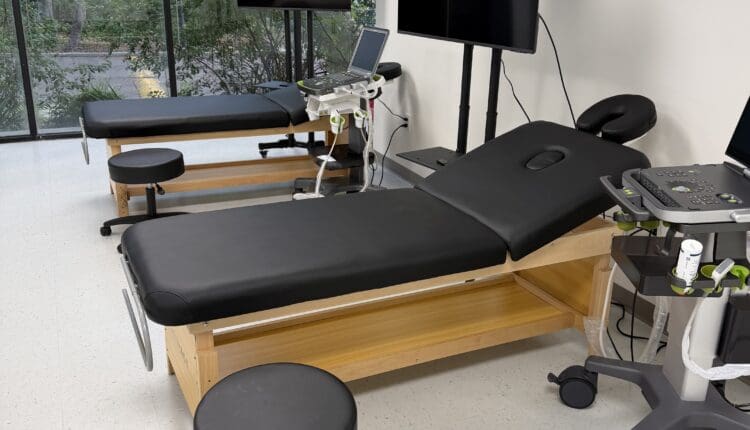
A New Era of Integrative Care in El Paso
I am thrilled to announce a significant and exciting development at our practice, Injury Medical Clinic PA. We are honored to welcome Dr. Maria Guadalupe Cardenas, MD, as our Medical Director and Collaborative Physician. Dr. Cardenas is a highly respected, board-certified internist with over 40 years of invaluable experience in internal medicine (Texas MD License #J2933, NPI #1164426749).
This collaboration marks a pivotal moment in our commitment to providing the most comprehensive, patient-centered care possible. Our clinic has long been dedicated to a functional and integrative model, and with Dr. Cardenas’s medical oversight, we are elevating that mission. This multidisciplinary structure allows us to blend the best of several worlds:
- Medical Direction (Dr. Cardenas): Provides essential medical oversight, diagnostic expertise, and a deep understanding of systemic health, ensuring patient safety and comprehensive medical management.
- Chiropractic & Functional Neurology (Dr. Jimenez): Focuses on biomechanics, spinal health, nervous system function, and the structural integrity of the body through advanced chiropractic techniques.
- Functional & Regenerative Medicine: Our combined team delves into the root causes of illness, utilizing advanced diagnostics and therapies to optimize the body’s innate healing capabilities.
Together, we offer a seamless continuum of care that includes personal injury rehabilitation, advanced chiropractic adjustments, functional medicine protocols, and now, enhanced medical diagnostics and management. This synergy ensures that our patients receive a truly holistic evaluation and a treatment plan that addresses their health from every angle.
Understanding Interventional Orthopedics: Precision-Guided Healing
Let’s begin by defining a key concept: interventional orthopedics. This isn’t just about managing pain; it’s a sophisticated approach that uses advanced imaging, such as ultrasound and fluoroscopy, to precisely target and treat specific anatomical structures. Instead of a generalized injection into a painful area, we identify the specific ligaments, tendons, joint spaces, or even bones contributing to the problem. This allows us to deliver therapeutic agents—like orthobiologics—directly to the source of injury or degeneration with unparalleled accuracy.
The core idea is to move away from treating symptoms and toward correcting the underlying pathology. We are not just looking at the “thing” that hurts; we are looking at the entire interconnected system and using modern technology to intervene with purpose and precision. But this leads to a critical question: how do we know what to target? This is where functional orthopedics comes into play.
The Philosophy of Functional Orthopedics: A Holistic Blueprint
I’ve coined the term “functional orthopedics” to describe a philosophy deeply rooted in my background as both an osteopathic- and chiropractic-minded practitioner and a physical medicine and rehabilitation (PM&R) specialist. This isn’t a new invention but rather a synthesis of time-tested principles applied through a modern lens. The philosophy is built upon several core tenets:
- The body is a single, integrated unit. No part works in isolation. An issue in the foot can manifest as pain in the hip or back.
- Structure and function are reciprocally interrelated. The alignment and integrity of your body’s structure directly impact its ability to function, and vice versa. Poor function will eventually degrade structure.
- The body possesses powerful self-healing mechanisms. Our role as clinicians is to identify and remove barriers to this innate healing process and provide the necessary support to facilitate it.
- Rational treatment is based on understanding these principles. A truly effective treatment plan must consider the whole person and their unique biomechanics.
This approach is beautifully illustrated by the functional medicine tree model. Instead of just trimming the leaves (symptoms), we examine the roots—the underlying causes of dysfunction. In orthopedics, this means considering biomechanics, systemic inflammation, nutritional status, and neuromuscular control to develop a truly personalized and effective treatment strategy.
The Functional Unit Approach: Treating the System, Not Just the Joint
A cornerstone of functional orthopedics is the concept of the functional unit. Originally described in surgical literature as the “functional spinal unit,” this concept acknowledges that a joint or spinal segment does not exist in a vacuum. It is part of a complex system of interconnected bones, ligaments, muscles, and nerves.
For example, when we treat the spine, we understand that the problem is rarely confined to a single disc or facet joint. We must also consider the stability provided by the surrounding ligaments, the function of the paraspinal muscles, and the body’s overall center of gravity.
Emerging research in orthobiologics powerfully supports this comprehensive view. Recent studies have demonstrated that treating the entire functional unit of the spine—injecting not only the epidural space but also the facet joints, interspinous ligaments, and deep multifidus muscles—yields significantly better and more durable outcomes. Patients experience longer-term relief because the entire support system is being repaired and stabilized, not just the primary pain generator.
This principle extends beyond the spine. A landmark study on knee osteoarthritis compared two groups: one receiving only an intra-articular (in-the-joint) injection, and the other receiving both intra-articular and extra-articular injections targeting surrounding supportive structures. While both groups improved, the group treated more comprehensively experienced superior and more lasting benefits. This paradigm shift is critical: effective treatment must address both the inside and the outside of the joint capsule.
Beyond the Joint: The Critical Role of Subchondral Bone
For decades, the narrative around osteoarthritis has focused almost exclusively on cartilage. Patients often come to me saying, “My cartilage is gone.” We now understand that cartilage loss itself does not always correlate with pain. The story is much deeper, and it goes right to the bone.
When cartilage wears away, the underlying subchondral bone becomes exposed to abnormal stress. This bone is not inert; it is a living, dynamic tissue rich with blood vessels, nerves, and progenitor cells (including mesenchymal stem cells) that are vital for tissue repair.
Pioneering work by Dr. Philippe Hernigou, a giant in regenerative medicine, has shed light on this process. His research compared the concentration of healing cells in the bone marrow of the iliac crest (a common harvest site) to that in the subchondral bone of an osteoarthritic knee. He found that as osteoarthritis progresses, the population of these vital healing cells in the subchondral bone declines dramatically. The local environment loses its ability to self-repair.
This discovery has paved the way for a groundbreaking treatment: intraosseous injection. By injecting orthobiologics like Platelet-Rich Plasma (PRP) or Bone Marrow Aspirate Concentrate (BMAC) directly into the subchondral bone, we are essentially “re-seeding” the depleted environment with the cells and growth factors needed to reduce inflammation, improve blood flow, and stimulate a healing response.
- A recent meta-analysis and a consensus statement we helped develop for the American Academy of Physical Medicine and Rehabilitation (AAPM&R) confirmed that intraosseous PRP injections have significant merit for knee osteoarthritis, especially in more advanced cases.
- Perhaps the most compelling evidence comes from a remarkable set of sister studies on intraosseous BMAC for severe knee osteoarthritis, with an average follow-up of 15 years. In one study, patients who had already undergone a knee replacement on one knee underwent an intraosseous BMAC procedure on their other arthritic knee. An astounding 80% of these patients avoided a knee replacement on the treated side and overwhelmingly preferred their “BMAC knee” to their artificial one.
This indicates that for moderate-to-severe osteoarthritis, the most robust approach is to treat the entire functional unit: the intra-articular space, the extra-articular soft tissues, and the subchondral bone.
Clinical Detective Work: Assembling the Biomechanical Puzzle
So, how do we decide what to inject? It’s not a matter of guesswork. This is where we put on our clinical detective hats and perform a thorough investigation. A comprehensive physical examination and diagnostic ultrasound are our primary tools.
Let’s consider a patient with medial (inner) knee pain due to osteoarthritis or a meniscus tear. It’s not enough to simply inject the medial compartment. We must analyze their biomechanics.
- Varus Deformity (Bow-Legged): If a patient has a varus alignment, there is excess stress on the medial compartment. In this case, the lateral collateral ligament (LCL) is likely under constant tension, resulting in stretching and functional weakness. To restore stability, we must treat not only the damaged medial structures but also tighten and support the overstretched lateral ligament.
- Valgus Deformity (Knock-Kneed): Conversely, in a valgus alignment, the lateral compartment is compressed, and the medial soft tissues, like the medial collateral ligament (MCL), are stretched. A comprehensive plan would address both.
- Patellofemoral Pain: If the kneecap (patella) is tracking improperly, often pulled laterally, the medial patellofemoral ligament (MPFL) may be lax. Strengthening this ligament is key to restoring proper tracking and alleviating pain.
But our investigation doesn’t stop at the knee. We must look up and down the kinetic chain. If a patient presents with non-traumatic knee pain, I am immediately asking:
- What is happening at the foot and ankle? Is there overpronation or a lack of big toe extension (a weak extensor hallucis longus muscle), causing the knee to collapse inward?
- What is happening at the hip? Is there weakness in the gluteal muscles, particularly the gluteus medius, which is essential for pelvic stability? Hip weakness is a notorious culprit in downstream knee problems.
- Is there a neurologic component? Could a “subclinical radiculopathy” (a subtle nerve irritation in the lower back) be causing weakness in the muscles that control the leg, leading to biomechanical breakdown at the knee?
By strength-testing key muscles, assessing nerve tension, and analyzing the patient’s gait, we can uncover the true drivers of their condition. Treating the knee in isolation when the root cause is hip weakness or poor foot mechanics will only provide temporary relief. For lasting results, we must address the entire dysfunctional pattern. This is how we move from being a “pain generator” focused clinic to a “treatment generator” focused one—by looking at the patient as a whole.
This philosophy—blending deep biomechanical analysis, precise interventional techniques, and a commitment to treating the entire functional unit—is the future of musculoskeletal medicine. It is a profoundly rewarding way to practice, and it offers our patients the very real possibility of long-term healing and restored function.
References
- Centeno, C., et al. (2020). A prospective multi-site registry study of a specific protocol of autologous bone marrow concentrate for the treatment of shoulder rotator cuff tears and osteoarthritis. Journal of Pain Research, 13, 1573–1586.
- Centeno, C., et al. (2018). The use of lumbar epidural injection of platelet lysate for treatment of radicular pain. Journal of Experimental Orthopaedics, 5(1), 38.
- Darrow, M., et al. (2019). Treatment of unresolved lower back pain with platelet-rich plasma injections. Cogent Medicine, 6(1), 1581449.
- Hernigou, P., et al. (2021). Subchondral bone stem cells in knee and shoulder osteoarthritis: a review of the literature. Stem Cells International, 2021, 8884222.
- Hernigou, P., et al. (2020). Subchondral bone marrow concentrate is a better alternative to total knee arthroplasty than intra-articular injection for advanced osteoarthritis: A 15-year prospective study. Stem Cell Research & Therapy, 11(1), 220.
- Pourcho, A. M., et al. (2023). Systematic review and meta-analysis of intra-articular and intraosseous platelet-rich plasma for knee osteoarthritis: an AAPM&R special interest group collaboration. PM&R: The Journal of Injury, Function, and Rehabilitation, 15(S1), S1-S18.
- Sánchez, M., et al. (2016). Intra-articular and extra-articular injections of platelet-rich plasma in knee osteoarthritis: a controlled clinical trial. Clinical Journal of Sport Medicine, 26(4), 304–311.
Post Disclaimer
General Disclaimer, Licenses and Board Certifications *
Professional Scope of Practice *
The information herein on "Functional Orthopedics for Modern Injury Recovery Benefits" is not intended to replace a one-on-one relationship with a qualified health care professional or licensed physician and is not medical advice. We encourage you to make healthcare decisions based on your research and partnership with a qualified healthcare professional.
Blog Information & Scope Discussions
Welcome to El Paso's Premier Wellness and Injury Care Clinic & Wellness Blog, where Dr. Alex Jimenez, DC, FNP-C, a Multi-State board-certified Family Practice Nurse Practitioner (FNP-BC) and Chiropractor (DC), presents insights on how our multidisciplinary team is dedicated to holistic healing and personalized care. Our practice aligns with evidence-based treatment protocols inspired by integrative medicine principles, similar to those on this site and on our family practice-based chiromed.com site, focusing on naturally restoring health for patients of all ages.
Our areas of multidisciplinary practice include Wellness & Nutrition, Chronic Pain, Personal Injury, Auto Accident Care, Work Injuries, Back Injury, Low Back Pain, Neck Pain, Migraine Headaches, Sports Injuries, Severe Sciatica, Scoliosis, Complex Herniated Discs, Fibromyalgia, Chronic Pain, Complex Injuries, Stress Management, Functional Medicine Treatments, and in-scope care protocols.
Our information scope is multidisciplinary, focusing on musculoskeletal and physical medicine; wellness; contributing etiological viscerosomatic disturbances within clinical presentations; associated somato-visceral reflex clinical dynamics; subluxation complexes; sensitive health issues; and functional medicine articles, topics, and discussions.
We provide and present clinical collaboration with specialists from various disciplines. Each specialist follows their professional scope of practice and licensure jurisdiction. We use functional health & wellness protocols to treat and support care for musculoskeletal injuries or disorders.
Our videos, posts, topics, and insights address clinical matters and issues that directly or indirectly relate to our clinical scope of practice.
Our office has made a reasonable effort to provide supportive citations and has identified relevant research studies that support our posts. We provide copies of supporting research studies upon request to regulatory boards and the public.
For further discussion on how this information relates to specific care plans or treatment protocols, please ask Dr. Alex Jimenez, DC, APRN, FNP-BC, or contact us at 915-850-0900.
We are here to help you and your family.
Blessings
Dr. Alex Jimenez DC, MSACP, APRN, FNP-BC*, CCST, IFMCP, CFMP, ATN
Email: [email protected]
Multidisciplinary Licensing & Board Certifications:
Licensed as a Doctor of Chiropractic (DC) in Texas & New Mexico*
Chiropractic Licenses:
Texas DC License #: TX5807, Verified: TX5807
New Mexico DC License #: NM-DC2182, Verified: NM-DC2182
Nurse Practitioner Licenses:
Texas APRN License #: 1191402, Verified: 1191402 *
New Mexico CNP License #: 90560, Verified 90560
Florida APRN License #: 11043890, Verified: APRN11043890 *
Colorado License #: C-APN.0105610-C-NP, Verified: C-APN.0105610-C-NP
New York License #: N25929, Verified N25929
Georgia APRN License #: GAA-NP005701
Multi-State Advanced Practice Registered Nurse (APRN*) Texas & Multi-States
Multi-state Compact APRN License by Endorsement (43 States)
Compact Status: Multi-State License: Authorized to Practice in 43 States*
Nursing Licensure Compact: Updated Here
DEA Registration: (Drug Enforcement Agency Registered)
All medical (MDs) and family practice providers (FNP-APRN) are registered and licensed to offer various levels of medication.
Verify Providers' DEA Registration Here
License Verification Link: Nursys License Verifier
* Prescriptive Authority Authorized (DEA Registered Providers). Call if Required
Board Certification:
ANCC FNP-BC: Board Certified Nurse Practitioner*
Education:
Graduate with Honors: ICHS: MSN-FNP (Family Nurse Practitioner Program)
Degree Granted. Master's in Family Practice, MSN Diploma (Cum Laude)
Dr. Alex Jimenez, DC, APRN, FNP-BC*, CFMP, IFMCP, ATN, CCST
(Board Certified: Family Practice Nurse Practitioner—Multistate)*
(Licensed Nurse Practitioner & Chiropractor - Multistate)*
Clinical Director
DC & FNP License (Review Above)
Digital Business Card
NPI: 1205907805
Dr. Maria Cardenas, MD
(Board Certified: Internal Medicine)
(Licensed Medical Doctor)
Medical Director, Clinical Director & Collaborative Physician
NPI # 1164426748
MD License #: J2933
Licenses and Board Certifications:
MD: Medical Doctor
DC: Doctor of Chiropractic
APRNP: Advanced Practice Registered Nurse
FNP-BC: Family Practice Specialization (Multi-State Board Certified)
FNP-BC: Family Practice Across Life Span (Neonatal to Geriatrics)
RN: Registered Nurse (Multi-State Compact License)
CFMP: Certified Functional Medicine Provider
MSN-FNP: Master of Science in Family Practice Medicine
MSACP: Master of Science in Advanced Clinical Practice
IFMCP: Institute of Functional Medicine
CCST: Certified Chiropractic Spinal Trauma
ATN: Advanced Translational Neutrogenomics
Family with Primary Care Focus (Family Nurse Practitioner or FNP)
- The Family Nurse Practitioner (FNP) promotes, maintains, and restores health for individuals and families across the lifespan. FNPs also identify health risks, promote wellness, and diagnose and manage acute and chronic illness.
- The FNP focuses on comprehensive primary care, promoting healthy lifestyles for patients across the lifespan in settings such as private practice, physician offices, and community health centers.
Memberships & Associations:
TCA: Texas Chiropractic Association: Member ID: 104311
TNA: Texas Nurse Association: Member ID: 06458222
TNP: Texas Nurse Practitioner Association ID: 2025091511
AANP: American Association of Nurse Practitioners: Member ID: 2198960
ANA: American Nurses Association: Member ID: 06458222 (District TX01)
| Primary Taxonomy | Selected Taxonomy | State | License Number |
|---|---|---|---|
| No | 111N00000X - Chiropractor | NM | DC2182 |
| Yes | 111N00000X - Chiropractor | TX | DC5807 |
| Yes | 363LF0000X - Nurse Practitioner - Family | TX | 1191402 |
| Yes | 363LF0000X - Nurse Practitioner - Family | FL | 11043890 |
| Yes | 363LF0000X - Nurse Practitioner - Family | CO | C-APN.0105610-C-NP |
| Yes | 363LF0000X - Nurse Practitioner - Family | NY | N25929 |
| Yes | 363LF0000X - Nurse Practitioner - Family | NM |
90560 |
| Yes | 363LF0000X - Nurse Practitioner - Family | GA | GAA-NP005701 |
Dr. Alex Jimenez, DC, APRN, FNP-BC*, CFMP, IFMCP, ATN, CCST
(Board Certified: Family Practice Nurse Practitioner—Multistate)*
(Primary Care Across Lifespan—Neonatal / Pediatric / Adult / Geriatrics)
(Licensed Nurse Practitioner & Chiropractor - Multistate)*
Clinical Director
Digital Business Card
NPI: 1205907805
Dr. Maria Cardenas, MD
(Board Certified: Internal Medicine)*
(Licensed Medical Doctor)*
Medical Director, Clinical Director & Collaborative Physician
NPI # 1164426748
MD License #: J2933
📆 Schedule Appointment: Schedule 24/7 (Click Here)