
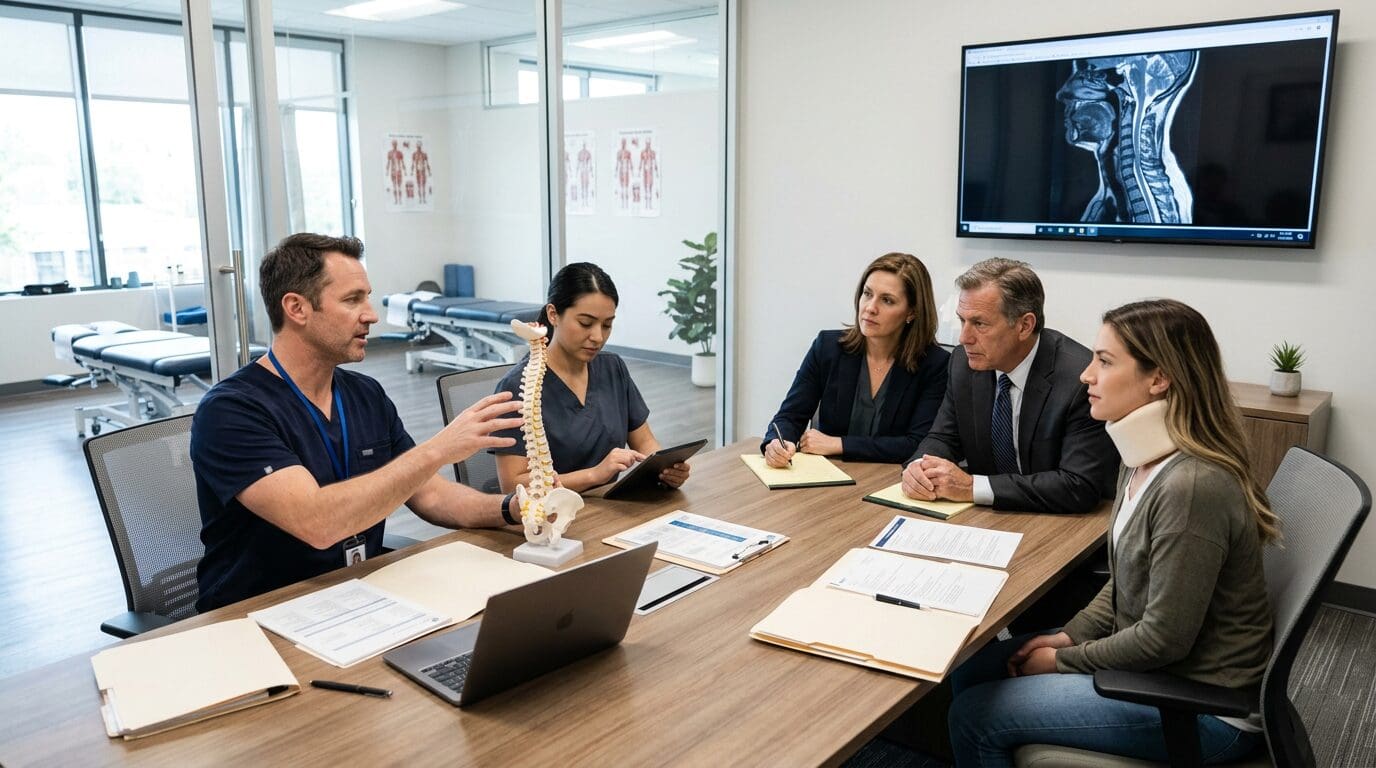
Explore the link between causation and chiropractic care. Discover effective treatment options to relieve neck pain.
Table of Contents
Abstract
Neck pain represents one of the most prevalent and disabling musculoskeletal conditions worldwide, affecting hundreds of millions of individuals and imposing substantial personal, social, and economic burdens. This educational post, authored by Dr. Alexander Jimenez, DC, APRN, FNP-BC, CFMP, IFMCP, ATN, CCST, explores the multifaceted ways neck pain influences the body through detailed physiological mechanisms, common symptoms, and associated comorbidities. It examines the profound effects on day-to-day functioning, the critical role of establishing causation in personal injury courtroom proceedings involving cervical injuries, and the evidence-based contributions of chiropractic care. Readers will journey through how integrative chiropractic care, combined with non-surgical treatments under medical oversight, addresses pain, restores function, and supports long-term wellness. The discussion highlights collaborative practice with Dr. Maria Guadalupe Cardenas, MD, Board Certified in Internal Medicine, at Injury Medical Clinic PA (Mission Plaza Injury Medical Clinic) in El Paso, Texas, drawing on modern research to illustrate why these approaches succeed where isolated interventions often fall short. This resource aims to empower individuals seeking understanding and relief.
Understanding the Global Burden and Physiological Foundations of Neck Pain
Neck pain arises from complex interactions among the cervical spine’s intricate anatomy, neurological pathways, muscular systems, and central nervous system processing. According to the Global Burden of Disease Study 2021, neck pain affected about 203 million people globally in 2020, with age-standardized prevalence remaining relatively stable over decades. Yet, absolute case numbers are projected to rise significantly by 2050 due to population growth and aging (GBD 2021 Neck Pain Collaborators, 2024). Females experience higher rates than males, and prevalence peaks in middle to older adulthood. These statistics underscore why understanding the underlying physiology is essential for effective management.
The cervical spine consists of seven vertebrae (C1 through C7), intervertebral discs, facet joints, ligaments, and surrounding soft tissues. C1 (atlas) and C2 (axis) enable specialized head rotation and nodding, while lower segments provide flexibility and load-bearing capacity. Facet joints, richly innervated by medial branches of dorsal rami, contain mechanoreceptors and nociceptors that transmit proprioceptive and pain signals. The capsular ligaments of these joints are particularly vulnerable during abnormal motions, as seen in acceleration-deceleration injuries. Intervertebral discs absorb shock and allow motion, but degenerative changes or trauma can cause annular tears, nuclear migration, or chemical irritation of nearby nerve roots.
Muscles such as the trapezius, sternocleidomastoid, levator scapulae, and deep suboccipital group stabilize the head and neck while allowing precise movements. Chronic overload or protective spasm alters length-tension relationships, generating myofascial trigger points that refer pain locally or to the head and shoulders. The sympathetic chain runs anterior to the vertebral column, so mechanical irritation can influence autonomic function, contributing to symptoms beyond pure nociception.
When tissue injury occurs, peripheral sensitization develops rapidly. Damaged cells release inflammatory mediators including prostaglandins, bradykinin, and cytokines that lower the activation threshold of nociceptors (A-delta and C fibers). This explains immediate sharp or aching pain and heightened sensitivity at the injury site. If input persists, central sensitization emerges in the spinal dorsal horn and higher centers. NMDA receptor activation, increased excitatory neurotransmission (glutamate, substance P), reduced inhibitory control (GABA, glycine), and glial cell activation amplify signals, expand receptive fields, and produce temporal summation or wind-up. The result is pain from normally innocuous stimuli (allodynia), exaggerated responses to noxious stimuli (hyperalgesia), and symptom spread to non-injured areas. Recent neuroimaging meta-analyses confirm structural and functional brain changes in chronic neck pain, involving regions responsible for pain perception, cognition, and emotion regulation (various 2025-2026 reviews). These central changes help explain why pain often outlasts detectable peripheral tissue damage and why purely local treatments may prove incomplete.
In traumatic cases such as whiplash, biomechanical phases produce sequential forces: initial hyperextension, rebound hyperflexion, and secondary extension. Facet capsular strain, muscle strain, and ligamentous stretch initiate the cascade described above. Non-traumatic neck pain, common in office workers with prolonged static postures, arises from cumulative microtrauma, reduced disc nutrition from immobility, and psychosocial stressors that amplify central processing. Both pathways converge on similar neuroimmune responses, justifying integrated assessment that evaluates local mechanics, neurological integrity, systemic inflammation, and lifestyle contributors.
Common Symptoms of Neck Pain and Their Clinical Significance
Patients present with a spectrum of symptoms whose patterns guide diagnosis and treatment selection. Local neck pain is typically described as dull, aching, or sharp and is often aggravated by movement, prolonged sitting, or specific positions. Stiffness and reduced cervical range of motion limit daily activities; extension, rotation, or lateral flexion may be particularly restricted when facet joints or surrounding musculature are involved. Radiating pain into the shoulder, arm, or hand suggests radicular involvement when a nerve root is compressed or chemically irritated, accompanied by possible sensory changes, weakness, or altered reflexes.
Headaches, especially cervicogenic types originating from upper cervical structures, arise via convergence in the trigeminocervical complex where cervical afferents and trigeminal inputs share second-order neurons. This explains occipital, frontal, or temporal pain that improves with neck treatment. Other common symptoms include dizziness or unsteadiness from altered proprioceptive input from cervical mechanoreceptors, visual disturbances, and, in some cases, tinnitus. Muscle spasm and trigger points produce palpable bands of taut tissue that reproduce familiar pain patterns upon pressure.
Systemic or associated symptoms such as fatigue, sleep disruption, and mood changes frequently coexist. In acute post-injury settings, symptoms may appear immediately or be delayed by hours to days as inflammation peaks. Chronic presentations often feature fluctuating intensity influenced by activity, stress, or weather. Clinicians document these through pain scales, range-of-motion measurements, orthopedic tests, neurological screening, and functional assessments. Objective findings such as segmental hypomobility, muscle hypertonicity, and positive provocation tests support the diagnosis of mechanical dysfunction while helping differentiate from red-flag conditions requiring urgent medical attention (progressive weakness, bowel or bladder changes, fever, unexplained weight loss).
Comorbidities Associated with Neck Pain
Neck pain rarely exists in isolation. Comorbidities amplify disability and complicate recovery. Temporomandibular disorders show elevated prevalence; systematic reviews report odds ratios around 3.6 for association with neck pain or cervicogenic headache, with reduced jaw mobility and lower pressure pain thresholds in masticatory muscles. Shared trigeminocervical convergence and postural influences explain the overlap.
Psychological comorbidities are prominent. Longitudinal data link depressive symptoms, chronic disease accumulation, and impaired activities of daily living with incident neck pain. Bidirectional relationships exist: pain promotes central sensitization and HPA-axis dysregulation that worsen mood, while depression lowers pain thresholds and reduces adherence to movement-based therapies. Sleep disturbances both result from and perpetuate pain through impaired descending inhibition and heightened inflammatory signaling.
Other musculoskeletal comorbidities include shoulder pain, upper back pain, and headaches. Driving disability is common; posterior cervical surgery studies show substantial baseline impairment that may improve or, in some subgroups (older age, multilevel fusion), worsen. Office workers experience higher rates related to ergonomic strain, with psychosocial factors (job stress, low control) contributing independently. Systemic associations appear in conditions such as rheumatoid arthritis or fibromyalgia, where widespread sensitization and inflammatory load increase neck pain risk and severity.
These comorbidities justify multimodal assessment. Treating only the local cervical complaint without addressing sleep, mood, posture, or coexisting joint dysfunction yields incomplete results. Functional medicine perspectives evaluate nutritional status, metabolic health, and environmental exposures that influence systemic inflammation and tissue repair capacity.
How Neck Pain Affects Day-to-Day Life and Overall Function
The lived experience of neck pain extends far beyond local discomfort. Simple movements such as checking blind spots while driving, turning the head during conversation, or looking upward become effortful or impossible. Work productivity declines; computer users report difficulty maintaining posture, leading to frequent breaks or reduced concentration. Manual laborers face limitations lifting, carrying, or performing overhead tasks. Sleep quality suffers when pain disrupts comfortable positioning, creating a cycle of fatigue that heightens pain sensitivity the next day.
Social and recreational participation diminishes. Individuals avoid social gatherings, exercise, or hobbies that involve neck motion or prolonged sitting. Mood changes, irritability, and reduced confidence often follow. Driving disability restricts independence, particularly in communities reliant on personal vehicles. For older adults, cumulative effects compound age-related changes in balance and strength, increasing fall risk. Economic impacts include lost wages, medical costs, and reduced quality of life measured by years lived with disability.
Clinical observations consistently show that early intervention focused on restoring mobility, reducing nociceptive input, and educating patients about graded activity prevents chronicity. When left unaddressed, central sensitization and deconditioning reinforce avoidance behaviors, further limiting function. Personalized plans that progressively reintroduce movement while managing load prove essential for returning patients to valued activities.
Causation Justification and Requirements in Personal Injury Courtroom Cases Involving Neck Pain
In personal injury litigation, establishing medical causation is indispensable. The plaintiff must demonstrate that the defendant’s negligence (commonly a motor vehicle collision) caused or substantially contributed to the claimed cervical injury and resulting damages. Temporal relationship alone is insufficient; courts and insurers require a coherent chain linking the mechanism of injury to the diagnosed pathology, consistent with the patient’s history, examination findings, and clinical course.
Whiplash biomechanics provide a classic example. Rear-end impacts rapidly accelerate the torso while the head lags, generating shear and tensile forces across cervical facets, discs, and ligaments. Documented patterns of facet joint strain, muscle injury, and subsequent inflammatory and sensitizing cascades align with patient complaints of neck pain, stiffness, and referred symptoms. Objective evidence strengthens the argument: reduced intersegmental motion on digital motion X-ray, positive orthopedic tests, measurable range-of-motion deficits, neurological findings, and consistent pain and disability scores over time.
Thorough documentation begins at the first visit. History must capture the precise mechanism, immediate and delayed symptom onset, prior status, and functional limitations. Examination records specific segmental dysfunction, muscle findings, and neurological status. Treatment notes track response, including improvements in pain, motion, and function or the need for continued care. Explicit causation language, such as “cervical strain and segmental dysfunction consistent with and causally related to the hyperflexion-hyperextension mechanism of the motor vehicle collision on [date],” helps connect clinical findings to the event. Gaps in treatment, preexisting conditions, or intervening trauma must be addressed transparently; failure to do so invites challenges.
Chiropractic records contribute valuable detail because they document mechanical findings and response to targeted care that standard medical notes may omit. When combined with medical oversight that rules out serious pathology and coordinates any necessary imaging or specialist referral, the multidisciplinary record provides a robust foundation for causation opinions. Objective measurements that withstand independent medical examination scrutiny, early diagnosis, and a clear link between mechanism and pathology are particularly persuasive. Ultimately, expert testimony grounded in these records allows the fact-finder to conclude that the incident more likely than not produced the injury and the need for treatment.
Chiropractic Care for Neck Pain Relief | El Paso, TX (2025 Recovery Guide) Chiropractic Treatment- Video
What Chiropractic Care Is and Its Core Principles
Chiropractic care is a health profession focused on diagnosing, treating, and preventing neuromusculoskeletal disorders, with particular emphasis on the spine and its relationship to overall function. Doctors of Chiropractic (DCs) employ spinal manipulative therapy (SMT), also called adjustments, along with mobilization, soft-tissue techniques, therapeutic exercise, and patient education. The foundational premise is that restricted joint motion (subluxation or segmental dysfunction) alters biomechanics, increases nociceptive input, disrupts proprioception, and contributes to pain and dysfunction. Restoring motion through high-velocity, low-amplitude thrusts or gentler mobilizations reduces mechanical irritation, improves afferent signaling, and facilitates normal neuromuscular control.
Modern chiropractic care is evidence-informed and frequently integrated with other conservative modalities. Clinical practice guidelines from multiple organizations recommend SMT and exercise for neck pain. The approach is non-invasive, emphasizes active patient participation, and prioritizes restoration of function over passive symptom suppression. When properly applied, safety profiles are favorable; serious adverse events are rare, and most side effects are mild and transient.
How Chiropractic Care Reduces Neck Pain and Its Comorbidities
Systematic reviews and meta-analyses demonstrate that SMT reduces pain intensity and disability in both acute and chronic neck pain. One 2025 meta-analysis of randomized trials found significant improvements in pain and cervical range of motion with SMT compared with controls, without serious adverse events (Diao et al., 2025). Earlier syntheses similarly reported superior or comparable outcomes versus medication or other therapies, with benefits often enhanced by multimodal combinations including exercise (Liu et al., various; Bronfort et al., classic trials). Pain reductions on visual analog scales and improvements in neck disability indices are clinically meaningful for many patients, and some evidence indicates persistence beyond the treatment period.
Physiologically, SMT influences multiple levels. Locally, it restores facet joint mobility, reduces capsular strain, and decreases inflammatory mediator concentrations around the joint. Mechanoreceptor stimulation modulates segmental reflexes, reducing muscle hypertonicity. Afferent input from the adjustment can engage descending inhibitory pathways from the periaqueductal gray and rostroventral medulla, elevating pain thresholds. With central sensitization, repeated reduction of peripheral nociceptive drive may help reverse hyperexcitability over time. Improved proprioception supports better postural control and reduces compensatory muscle overuse that perpetuates pain.
Comorbidities respond indirectly and directly. Cervicogenic headaches often improve as upper cervical dysfunction is addressed through the trigeminocervical complex. Reduced pain and improved sleep lessen depressive symptoms and fatigue. Better cervical mobility facilitates exercise adherence, which itself reduces systemic inflammation and improves mood. When chiropractic care is paired with functional medicine strategies that address nutrition, stress, and metabolic health, the synergistic effect further dampens inflammatory drivers of both local and central sensitization.
Clinical reasoning dictates selecting techniques individually. Acute, irritable presentations may begin with gentle mobilization and soft-tissue work before progressing to full SMT. Chronic cases with marked restriction often benefit from targeted adjustments combined with strengthening and endurance exercise for the deep neck flexors and scapular stabilizers. Clinicians monitor progress through repeated functional measures to keep care goal-directed.
Integrative Chiropractic Care Within Non-Surgical Treatment Approaches
Most individuals with neck pain do not require surgery. Clinical guidelines endorse supervised exercise and manual therapy, including combinations, as first-line care. Integrative chiropractic care fits naturally into this framework by combining SMT with therapeutic exercise, postural education, ergonomic advice, and adjunctive modalities such as soft-tissue techniques or, when indicated, acupuncture or electroacupuncture. Multimodal approaches consistently rank among the most effective for reducing both pain intensity and disability in network meta-analyses.
Functional medicine expands the model by evaluating root contributors: inflammatory diet patterns, micronutrient insufficiencies affecting tissue repair, sleep hygiene, stress physiology, and metabolic factors. Correcting these supports the mechanical gains achieved through chiropractic and exercise. Medical oversight ensures appropriate differential diagnosis, management of comorbidities, and coordination of any necessary pharmacological or specialist care. This collaborative structure allows patients to receive comprehensive, non-surgical management that addresses both the local cervical problem and the broader physiological context.
At Injury Medical Clinic PA, this integration is standard. Patients benefit from chiropractic rehabilitation, functional assessments, rehabilitation protocols, and medical direction that together promote natural recovery while monitoring safety and progress.
The Multidisciplinary Collaboration with Dr. Maria Guadalupe Cardenas and the Team at Injury Medical Clinic PA
Dr. Maria Guadalupe Cardenas, MD, Board Certified in Internal Medicine (NPI #1164426749, Texas MD License #J2933), brings more than 40 years of experience as an internist to her role as Medical Director and Collaborative Physician at Injury Medical Clinic PA (also known as Mission Plaza Injury Medical Clinic) in El Paso, Texas. In this multidisciplinary setting common to integrative and injury-care clinics, the MD provides medical direction, oversees differential diagnosis, manages systemic comorbidities, and collaborates on treatment planning. At the same time, the chiropractor delivers specialized neuromusculoskeletal care.
Dr. Alexander Jimenez, DC, APRN, FNP-BC, CFMP, IFMCP, ATN, CCST, serves as Clinical Director. His dual credentials as a Doctor of Chiropractic and board-certified Family Nurse Practitioner enable seamless integration of spinal care with primary-care perspectives, functional medicine protocols, and advanced clinical practice. The team coordinates chiropractic adjustments and rehabilitation with medical evaluation, functional medicine assessments (genetics, nutrition, lifestyle, environmental factors), personal injury documentation and recovery programs, physical therapy elements, and related services, including regenerative options when appropriate. This structure ensures that mechanical findings are interpreted within the patient’s overall medical context, red flags are promptly addressed, and care remains comprehensive yet non-surgical whenever possible.
Locations in El Paso make care accessible, and the clinic’s emphasis on evidence-based, patient-centered protocols has supported recovery for thousands of individuals with spinal and soft-tissue injuries. The collaboration shows how chiropractic expertise and internal-medicine oversight work together to optimize outcomes for both acute personal-injury cases and chronic wellness needs.
Benefits of Chiropractic Care and Non-Surgical Treatments as Part of a Health and Wellness Routine
Beyond acute relief, chiropractic care and complementary non-surgical strategies offer lasting value when incorporated into routine health maintenance. Periodic assessment and care can identify and correct emerging segmental restrictions before they produce significant pain or compensatory patterns. Improved spinal mobility supports better posture, reduces cumulative strain from daily activities, and enhances proprioceptive accuracy that contributes to balance and injury prevention.
Regular movement-based care, combined with exercise prescription and lifestyle guidance, helps maintain muscle endurance, joint nutrition, and descending pain modulation. Functional medicine components address systemic factors that influence tissue resilience, such as anti-inflammatory nutrition and stress management, thereby lowering the likelihood of recurrent episodes. For individuals with prior injuries, maintenance care can preserve functional gains and reduce the risk of chronicity.
Patients often report improved energy, better sleep, easier movement, and greater overall vitality when these elements are part of an ongoing wellness plan. The non-invasive nature makes the approach suitable for long-term use across the lifespan and complements other healthy habits. Clinical experience at the clinic demonstrates that individuals who adopt integrated chiropractic and wellness strategies experience sustained improvements in function and quality of life.
Clinical Observations from Dr Alexander Jimenez
Drawing from extensive clinical practice documented at dralexjimenez.com and professional profiles, Dr. Jimenez observes that patients with neck pain, particularly those recovering from motor-vehicle collisions or managing chronic postural strain, achieve meaningful recovery through personalized, non-invasive protocols. The focus is on restoring segmental mobility, reducing protective muscle spasm, and progressively rebuilding strength and endurance while addressing functional medicine contributors. Many individuals report not only decreased pain but also improved ability to work, drive, sleep, and engage in recreational activities. The multidisciplinary model, incorporating medical collaboration, allows comprehensive management of comorbidities and clear documentation that supports both clinical progress and, when relevant, personal-injury recovery. These observations align with the broader research literature showing benefit from multimodal conservative care and underscore the importance of early, coordinated intervention.
Conclusion
Neck pain exerts wide-ranging effects through local tissue injury, inflammatory cascades, and central nervous system sensitization, producing symptoms and comorbidities that disrupt daily life. Establishing clear causation is essential in personal injury contexts and is strengthened by detailed, objective documentation. Chiropractic care, especially when integrated with exercise, functional medicine, and medical oversight, offers evidence-based pain and disability reduction while supporting functional restoration. At Injury Medical Clinic PA in El Paso, the collaborative practice of Dr. Alexander Jimenez and Dr. Maria Guadalupe Cardenas exemplifies this comprehensive, non-surgical approach. Incorporating these strategies into a regular health and wellness routine can help individuals maintain mobility, reduce recurrence, and enhance overall well-being. Modern research continues to refine our understanding, reinforcing the value of addressing both mechanical and systemic contributors for optimal outcomes.
References
- Diao, Y., Liu, Y., Pan, J., Chen, J., & Liao, L. (2025). Efficacy and safety of spinal manipulative therapy in the management of acute neck pain: a systematic review and meta-analysis. Systematic Reviews, 14, 97. doi.org/10.1186/s13643-025-02855-7
- GBD 2021 Neck Pain Collaborators. (2024). Global, regional, and national burden of neck pain, 1990–2020, and projections to 2050: a systematic analysis of the Global Burden of Disease Study 2021. The Lancet Rheumatology. doi.org/10.1016/S2665-9913(23)00321-1
- Liu, Z., Shi, J., Huang, Y., Zhou, X., Huang, H., Wu, H., Lv, L., & Lv, Z. (2023). A systematic review and meta-analysis of randomized controlled trials of manipulative therapy for patients with chronic neck pain. Complementary Therapies in Clinical Practice, 52, 101751.
- Additional supporting literature includes reviews on central sensitization (Woolf, 2011; various meta-analyses 2020-2026), cervicogenic mechanisms (trigeminocervical complex studies), and clinical guidelines recommending multimodal conservative care for neck pain.
SEO Tags
neck pain, chiropractic care for neck pain, personal injury neck pain causation, integrative chiropractic care El Paso, non-surgical neck pain treatment, Dr Alex Jimenez, Dr Maria Cardenas, Injury Medical Clinic PA, cervical spine physiology, central sensitization, whiplash injury, neck pain comorbidities, functional medicine neck pain, spinal manipulative therapy, wellness routine chiropractic, El Paso chiropractor neck pain, evidence-based neck pain relief, multidisciplinary injury care, cervicogenic headache, neck pain daily life impact
Post Disclaimer
General Disclaimer, Licenses and Board Certifications *
Professional Scope of Practice *
The information herein on "Chiropractic Care and Neck Pain Relief With Causation" is not intended to replace a one-on-one relationship with a qualified health care professional or licensed physician and is not medical advice. We encourage you to make healthcare decisions based on your research and partnership with a qualified healthcare professional.
Blog Information & Scope Discussions
Welcome to El Paso's Premier Wellness and Injury Care Clinic & Wellness Blog, where Dr. Alex Jimenez, DC, FNP-C, a Multi-State board-certified Family Practice Nurse Practitioner (FNP-BC) and Chiropractor (DC), presents insights on how our multidisciplinary team is dedicated to holistic healing and personalized care. Our practice aligns with evidence-based treatment protocols inspired by integrative medicine principles, similar to those on this site and on our family practice-based chiromed.com site, focusing on naturally restoring health for patients of all ages.
Our areas of multidisciplinary practice include Wellness & Nutrition, Chronic Pain, Personal Injury, Auto Accident Care, Work Injuries, Back Injury, Low Back Pain, Neck Pain, Migraine Headaches, Sports Injuries, Severe Sciatica, Scoliosis, Complex Herniated Discs, Fibromyalgia, Chronic Pain, Complex Injuries, Stress Management, Functional Medicine Treatments, and in-scope care protocols.
Our information scope is multidisciplinary, focusing on musculoskeletal and physical medicine; wellness; contributing etiological viscerosomatic disturbances within clinical presentations; associated somato-visceral reflex clinical dynamics; subluxation complexes; sensitive health issues; and functional medicine articles, topics, and discussions.
We provide and present clinical collaboration with specialists from various disciplines. Each specialist follows their professional scope of practice and licensure jurisdiction. We use functional health & wellness protocols to treat and support care for musculoskeletal injuries or disorders.
Our videos, posts, topics, and insights address clinical matters and issues that directly or indirectly relate to our clinical scope of practice.
Our office has made a reasonable effort to provide supportive citations and has identified relevant research studies that support our posts. We provide copies of supporting research studies upon request to regulatory boards and the public.
For further discussion on how this information relates to specific care plans or treatment protocols, please ask Dr. Alex Jimenez, DC, APRN, FNP-BC, or contact us at 915-850-0900.
We are here to help you and your family.
Blessings
Dr. Alex Jimenez DC, MSACP, APRN, FNP-BC*, CCST, IFMCP, CFMP, ATN
Email: [email protected]
Multidisciplinary Licensing & Board Certifications:
Licensed as a Doctor of Chiropractic (DC) in Texas & New Mexico*
Chiropractic Licenses:
Texas DC License #: TX5807, Verified: TX5807
New Mexico DC License #: NM-DC2182, Verified: NM-DC2182
Nurse Practitioner Licenses:
Texas APRN License #: 1191402, Verified: 1191402 *
New Mexico CNP License #: 90560, Verified 90560
Florida APRN License #: 11043890, Verified: APRN11043890 *
Colorado License #: C-APN.0105610-C-NP, Verified: C-APN.0105610-C-NP
New York License #: N25929, Verified N25929
Georgia APRN License #: GAA-NP005701
Multi-State Advanced Practice Registered Nurse (APRN*) Texas & Multi-States
Multi-state Compact APRN License by Endorsement (43 States)
Compact Status: Multi-State License: Authorized to Practice in 43 States*
Nursing Licensure Compact: Updated Here
DEA Registration: (Drug Enforcement Agency Registered)
All medical (MDs) and family practice providers (FNP-APRN) are registered and licensed to offer various levels of medication.
Verify Providers' DEA Registration Here
License Verification Link: Nursys License Verifier
* Prescriptive Authority Authorized (DEA Registered Providers). Call if Required
Board Certification:
ANCC FNP-BC: Board Certified Nurse Practitioner*
Education:
Graduate with Honors: ICHS: MSN-FNP (Family Nurse Practitioner Program)
Degree Granted. Master's in Family Practice, MSN Diploma (Cum Laude)
Dr. Alex Jimenez, DC, APRN, FNP-BC*, CFMP, IFMCP, ATN, CCST
(Board Certified: Family Practice Nurse Practitioner—Multistate)*
(Licensed Nurse Practitioner & Chiropractor - Multistate)*
Clinical Director
DC & FNP License (Review Above)
Digital Business Card
NPI: 1205907805
Dr. Maria Cardenas, MD
(Board Certified: Internal Medicine)
(Licensed Medical Doctor)
Medical Director, Clinical Director & Collaborative Physician
NPI # 1164426748
MD License #: J2933
Licenses and Board Certifications:
MD: Medical Doctor
DC: Doctor of Chiropractic
APRNP: Advanced Practice Registered Nurse
FNP-BC: Family Practice Specialization (Multi-State Board Certified)
FNP-BC: Family Practice Across Life Span (Neonatal to Geriatrics)
RN: Registered Nurse (Multi-State Compact License)
CFMP: Certified Functional Medicine Provider
MSN-FNP: Master of Science in Family Practice Medicine
MSACP: Master of Science in Advanced Clinical Practice
IFMCP: Institute of Functional Medicine
CCST: Certified Chiropractic Spinal Trauma
ATN: Advanced Translational Neutrogenomics
Family with Primary Care Focus (Family Nurse Practitioner or FNP)
- The Family Nurse Practitioner (FNP) promotes, maintains, and restores health for individuals and families across the lifespan. FNPs also identify health risks, promote wellness, and diagnose and manage acute and chronic illness.
- The FNP focuses on comprehensive primary care, promoting healthy lifestyles for patients across the lifespan in settings such as private practice, physician offices, and community health centers.
Memberships & Associations:
TCA: Texas Chiropractic Association: Member ID: 104311
TNA: Texas Nurse Association: Member ID: 06458222
TNP: Texas Nurse Practitioner Association ID: 2025091511
AANP: American Association of Nurse Practitioners: Member ID: 2198960
ANA: American Nurses Association: Member ID: 06458222 (District TX01)
| Primary Taxonomy | Selected Taxonomy | State | License Number |
|---|---|---|---|
| No | 111N00000X - Chiropractor | NM | DC2182 |
| Yes | 111N00000X - Chiropractor | TX | DC5807 |
| Yes | 363LF0000X - Nurse Practitioner - Family | TX | 1191402 |
| Yes | 363LF0000X - Nurse Practitioner - Family | FL | 11043890 |
| Yes | 363LF0000X - Nurse Practitioner - Family | CO | C-APN.0105610-C-NP |
| Yes | 363LF0000X - Nurse Practitioner - Family | NY | N25929 |
| Yes | 363LF0000X - Nurse Practitioner - Family | NM |
90560 |
| Yes | 363LF0000X - Nurse Practitioner - Family | GA | GAA-NP005701 |
Dr. Alex Jimenez, DC, APRN, FNP-BC*, CFMP, IFMCP, ATN, CCST
(Board Certified: Family Practice Nurse Practitioner—Multistate)*
(Primary Care Across Lifespan—Neonatal / Pediatric / Adult / Geriatrics)
(Licensed Nurse Practitioner & Chiropractor - Multistate)*
Clinical Director
Digital Business Card
NPI: 1205907805
Dr. Maria Cardenas, MD
(Board Certified: Internal Medicine)*
(Licensed Medical Doctor)*
Medical Director, Clinical Director & Collaborative Physician
NPI # 1164426748
MD License #: J2933
📆 Schedule Appointment: Schedule 24/7 (Click Here)